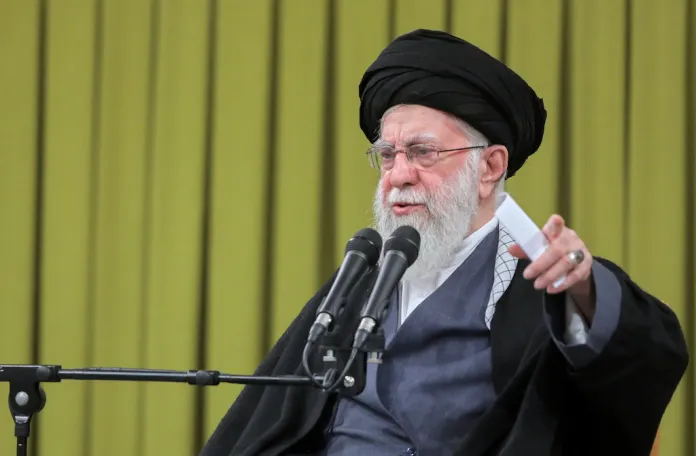
The United States and Israel initiated a significant military operation, dubbed "Operation Epic Fury," against the Islamic Republic of Iran on February 28, marking a dramatic escalation in regional tensions. This coordinated action, as reported by various sources, led to the elimination of Iran's long-standing Supreme Leader, Ali Khamenei, alongside 48 other high-ranking Iranian officials. War Secretary Pete Hegseth, speaking at a press briefing on March 2, characterized the operation as "the most lethal, most complex, and most precise operation" ever undertaken, highlighting its unprecedented nature in modern warfare. The precision strikes, which unfolded over a period of just over two days, have been widely recognized as a major "decapitation strike," fundamentally altering the leadership landscape within Iran and sending shockwaves across the Middle East. This development signals a new chapter in the complex relationship between Western powers and Tehran, with immediate and profound implications for regional stability and global geopolitics.
The recent military engagement, "Operation Epic Fury," unfolds against a backdrop of extensive American involvement in the Middle East, a region that has frequently served as the primary arena for U.S. military operations since the conclusion of the Cold War. This latest development resonates with a recurring theme of the United States finding itself drawn back into a complex geopolitical landscape, which some historical analysts have characterized as a "labyrinth." The Islamic Republic of Iran, the target of these strikes, itself has a foundational history rooted in intense upheaval and violence, emerging under the leadership of its founder, Ayatollah Ruhollah Khomeini. His successor, Ali Khamenei, who assumed the role of Supreme Leader in 1989, had maintained an autocratic grip on power for decades. At 86 years old, Khamenei was, until his demise, the longest-serving authoritarian leader on the global stage and was consistently identified by U.S. officials as a formidable adversary in the region, embodying the persistent challenges posed by the Iranian regime.
Further details emerging from the operation underscore its extraordinary nature. Reports confirm that the precision strikes successfully neutralized at least 48 senior Iranian officials, a significant blow to the regime's command structure. The most prominent casualty, Supreme Leader Ali Khamenei, had presided over Iran for an extensive period since 1989, making him, at 86 years old, the world's longest-reigning dictator prior to the operation. His death marks what observers are calling the most substantial "decapitation strike" in contemporary history, targeting the very pinnacle of the Iranian leadership. War Secretary Pete Hegseth, in his March 2 statement, emphasized the unprecedented characteristics of "Epic Fury," declaring it to be the "most lethal, most complex, and most precise operation" ever conducted. This assessment suggests a significant evolution in military strategy and technological capability. The swiftness and effectiveness of these initial salvos, occurring within just over two days, have established this conflict as a "war of firsts," fundamentally redefining expectations for future military engagements in the region.
The elimination of Supreme Leader Ali Khamenei and numerous other high-ranking officials through "Operation Epic Fury" is anticipated to trigger profound and far-reaching consequences for Iran and the broader Middle East. Analysts suggest that the sudden removal of such a deeply entrenched leader, who had governed with an "iron fist" for decades, will inevitably create a significant power vacuum within the Islamic Republic. This situation could lead to intense internal struggles for succession, potentially destabilizing the regime from within or prompting a more hardline stance from remaining factions. The broader implications for regional stability are equally substantial, with experts weighing the potential for increased volatility or, conversely, a re-evaluation of Iran's foreign policy and proxy activities. The United States had long identified Khamenei as one of its primary adversaries in the region, viewing his leadership as a perpetuator of a regime established in "bloodshed and terror" by his predecessor, Ayatollah Ruhollah Khomeini. This dramatic shift in leadership could redefine the trajectory of U.S.-Iran relations, prompting a global reassessment of strategies concerning Tehran's nuclear ambitions and its role in regional conflicts.
In summary, "Operation Epic Fury" represents a pivotal moment in the ongoing geopolitical landscape of the Middle East, characterized by an unprecedented military intervention by the United States and Israel against Iran. The precision strikes on February 28, resulting in the death of Supreme Leader Ali Khamenei and dozens of top officials, have fundamentally reshaped the leadership structure of the Islamic Republic. As the international community grapples with the immediate aftermath, attention will now turn to the internal power dynamics within Iran, including the process of succession and the potential for shifts in its domestic and foreign policies. Observers will also closely monitor the nature of any retaliatory actions from Tehran and the broader reactions from regional and global powers. This operation, hailed by U.S. officials as a landmark achievement in military precision and lethality, undeniably opens a new and uncertain chapter in the intricate history of conflict and diplomacy in a region long accustomed to turbulence.