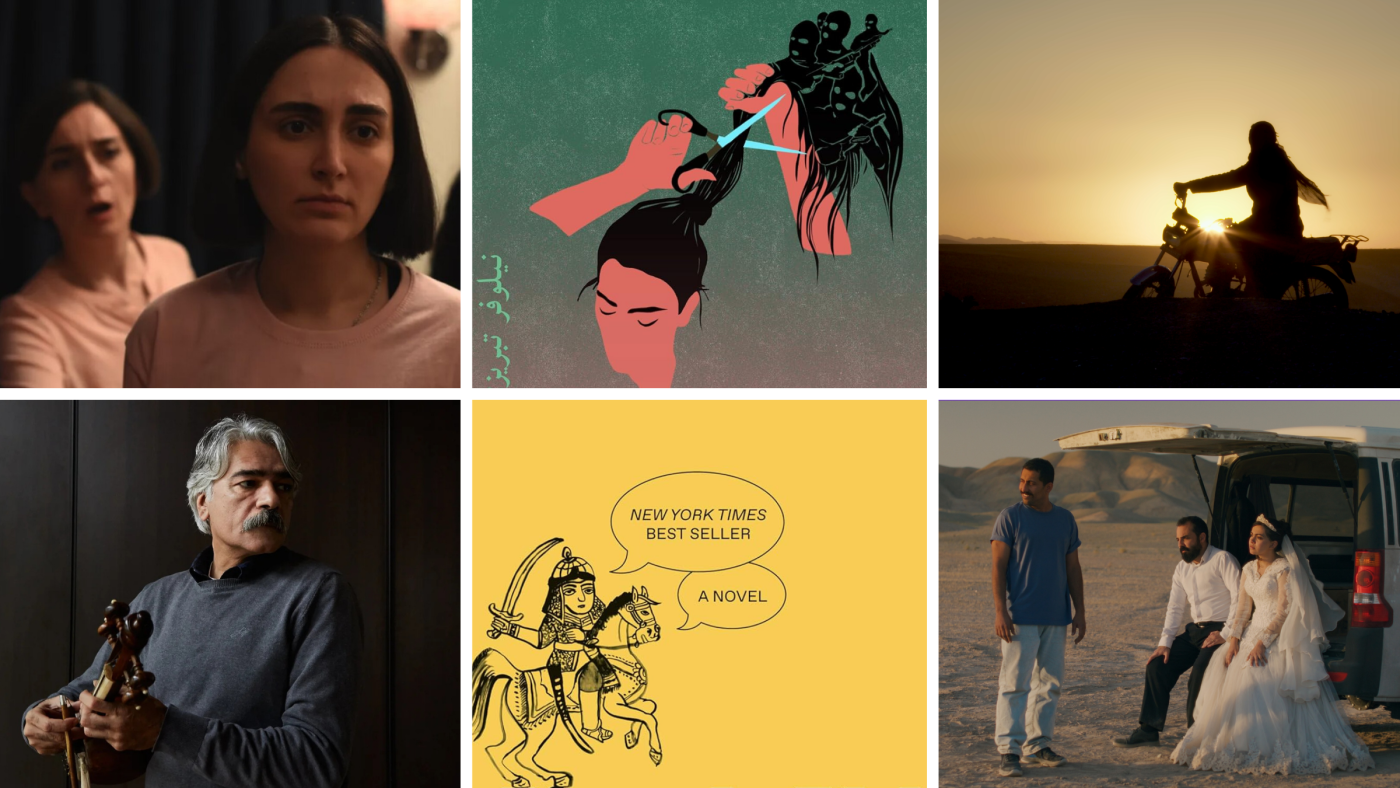
As geopolitical tensions escalate, understanding the intricate social and political landscape of Iran becomes increasingly vital, yet challenging for many in the United States. The nation, home to over 90 million people and boasting a rich ethnic diversity, has largely remained inaccessible to American visitors since the pivotal Iranian Revolution of 1979. In the current climate, with reports indicating a U.S. and Israeli-led war on Iran underway, the perspectives and experiences of ordinary Iranians risk becoming even more obscured. However, a growing body of recent creative works—including literature, cinema, and music—produced by Iranian artists and journalists, both within the country and across its global diaspora, offers an invaluable window into this ancient culture and its contemporary realities. These original expressions provide a critical counter-narrative, emphasizing authentic internal viewpoints over external interpretations, and serving as a crucial starting point for deeper engagement with the nation's complex identity.
The historical context of Iran's relationship with the United States is marked by nearly half a century of diplomatic estrangement following the 1979 revolution, which fundamentally reshaped the geopolitical dynamics of the Middle East. This prolonged period of isolation has significantly limited direct cultural exchange and fostered a climate where understanding between the two nations is often filtered through political rhetoric and media narratives. Consequently, many Americans have had few opportunities to engage directly with Iranian society, its people, or its vibrant cultural heritage. In this environment, the contributions of Iranian artists and journalists become particularly significant. Their works serve as cultural ambassadors, bridging the informational gap and offering nuanced insights into the daily lives, aspirations, and challenges faced by Iranians, thereby providing a more comprehensive and humanized perspective than what might be gleaned from official channels or international headlines alone. This emphasis on indigenous voices is crucial for fostering genuine understanding.
Among the notable recent contributions illuminating contemporary Iran is the acclaimed book, *For the Sun After Long Nights: The Story of Iran's Women-Led Uprising*, co-authored by journalists Fatemeh Jamalpour and Nilo Tabrizy. This compelling work, which garnered a National Book Award nomination, stands out for its timely and immediate chronicle of the 'Woman, Life, Freedom' movement. This significant social uprising commenced in 2022, capturing global attention for its powerful advocacy. The book offers an almost real-time account of these events, drawing heavily on Jamalpour's clandestine journalistic activities within Tehran during the movement's peak. Unlike many historical analyses that delve into Iran's ancient past or the Pahlavi Dynasty, Jamalpour and Tabrizy's narrative focuses squarely on the present, providing essential context for comprehending the Iran of today and the evolving aspirations of its populace.
The emergence of works like *For the Sun After Long Nights* carries profound implications for global understanding of Iran, particularly amidst heightened international tensions. Such narratives, crafted by those intimately connected to the nation, offer a vital counterpoint to often monolithic or politicized external portrayals. By focusing on a women-led uprising, the book not only highlights significant internal social dynamics but also underscores the agency and resilience of Iranian citizens in shaping their own future. Expert perspectives suggest that these cultural artifacts are indispensable for fostering a more nuanced international dialogue, moving beyond simplistic geopolitical frameworks to acknowledge the rich tapestry of human experience within Iran. These works serve as a crucial reminder that beneath the surface of political headlines lies a society grappling with its own complex internal struggles and aspirations, offering a pathway for deeper empathy and informed engagement.
In conclusion, as Iran navigates a period of intense geopolitical scrutiny and internal change, the authentic voices of its artists and journalists provide an indispensable resource for global audiences. Their recent contributions, spanning literature, film, and music, offer unique and deeply personal insights into a nation often misunderstood due to decades of isolation and escalating international tensions. Works like *For the Sun After Long Nights* exemplify the power of insider perspectives to illuminate complex social movements and contemporary realities, moving beyond historical accounts to capture the pulse of present-day Iran. For those seeking to comprehend the multifaceted identity of this ethnically diverse nation, engaging with these original Iranian narratives remains paramount, offering a critical lens through which to observe its ongoing evolution and the aspirations of its people.