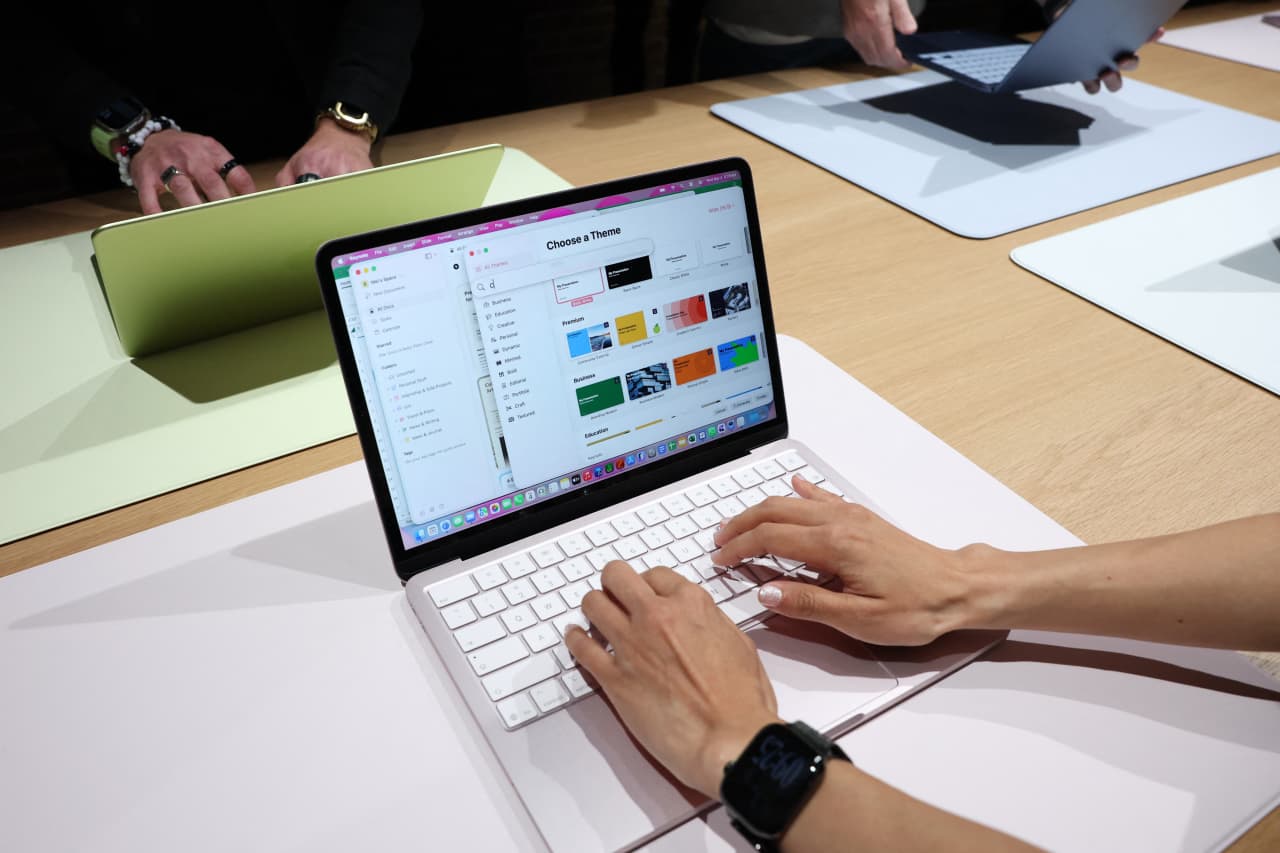
Apple has concluded a series of product unveilings, culminating in the introduction of its most economically priced laptop to date, the MacBook Neo. Priced at an accessible $599, this new device reportedly integrates an iPhone-derived processor, a significant departure from the company's traditional higher-end computing offerings. This strategic launch, which wrapped up three days of new product announcements, is widely interpreted by market observers as a deliberate effort by the Cupertino-based technology giant to penetrate and expand its footprint within the highly competitive budget-laptop market segment. The move represents a notable shift for Apple, which has historically focused on premium-priced hardware, and sources indicate it aims to attract a broader demographic of consumers seeking more affordable yet capable computing solutions. The integration of mobile-grade silicon into a full-fledged laptop also signals an evolution in Apple's hardware strategy, leveraging its robust in-house chip development for a wider array of devices.
For years, Apple's laptop lineup, primarily consisting of the MacBook Air and MacBook Pro series, has been positioned at the premium end of the personal computing spectrum, often starting well above the $1,000 mark. This pricing strategy has cultivated a loyal user base but has also limited the company's reach into segments dominated by more affordable Windows-based PCs and Chromebooks. The introduction of the $599 MacBook Neo therefore marks a pivotal moment, challenging Apple's long-standing market approach and potentially reshaping consumer perceptions of the brand's accessibility. The decision to equip the Neo with an iPhone chip underscores Apple's broader strategy of leveraging its advanced custom silicon, which has already seen success in its M-series processors for higher-end Macs. This move could allow for significant cost efficiencies while still delivering a performance profile suitable for everyday computing tasks, thereby making the Apple ecosystem more attainable for a wider audience. This expansion into a more budget-conscious category reflects a growing trend in the tech industry to cater to diverse economic segments.
The specific details surrounding the MacBook Neo highlight its distinct positioning within Apple's product portfolio. At its reported price point of $599, it stands as the most affordable laptop Apple has ever released, a stark contrast to previous entry-level models. A key technical innovation, according to reports, is its reliance on an iPhone-derived processor. While specific performance benchmarks are yet to be fully detailed, this choice of silicon suggests an emphasis on power efficiency, silent operation, and seamless integration with Apple's iOS and macOS ecosystems, potentially offering a compelling user experience for its price. This approach allows Apple to capitalize on the economies of scale from its mobile chip production, translating into cost savings passed on to consumers. The Neo's launch was part of a broader three-day product showcase, indicating a comprehensive update or expansion across various Apple device categories, with the budget laptop serving as a strategic anchor to attract new users into the Apple hardware and software ecosystem.
Industry analysts are closely scrutinizing Apple's foray into the budget laptop market, with many suggesting it could significantly disrupt the competitive landscape. Experts like those at TechInsights, for example, indicate that the $599 price point positions the MacBook Neo directly against popular Chromebooks and entry-level Windows laptops, segments where Apple has historically had little presence. This strategic pivot could enable Apple to capture a substantial share of students, first-time laptop buyers, and users in emerging markets who prioritize affordability without compromising on brand reputation or ecosystem benefits. Furthermore, the utilization of an iPhone chip could set a new standard for performance and battery life in the budget category, potentially forcing competitors to innovate more aggressively. However, some commentators also raise questions about potential cannibalization of sales from the higher-priced MacBook Air, and whether the "budget" label might dilute Apple's premium brand image among certain consumer segments. The success of the Neo will likely hinge on its ability to deliver a robust Apple experience at an unprecedented price point.
In summary, Apple's introduction of the $599 MacBook Neo, powered by an iPhone chip, marks a significant strategic shift for the company, aiming to capture a larger share of the budget-laptop market. This move concludes a three-day series of product launches and signals Apple's intent to broaden its appeal beyond premium consumers. The new laptop's competitive pricing and innovative use of mobile silicon position it as a potential game-changer in the entry-level computing segment. Moving forward, industry observers will be keenly watching consumer adoption rates, the MacBook Neo's actual performance in real-world usage, and how competitors respond to Apple's aggressive new pricing strategy. The success of this venture could redefine Apple's market positioning and its long-term growth trajectory in the global personal computing arena.