In a significant escalation, Iran has reportedly launched a series of retaliatory strikes primarily targeting its Persian Gulf neighbors, a move interpreted as a response to recent military actions attributed to the United States and Israel. These attacks are increasingly jeopardizing the region's carefully cultivated status as a premier destination for international financial institutions, ultra-high-net-worth individuals, and affluent tourists. The Gulf states, particularly the United Arab Emirates, have spent decades diversifying their economies away from oil, successfully attracting vast amounts of global capital. However, according to reports, this very success now renders them vulnerable, potentially posing a significant threat to global markets should the conflict intensify. The immediate impact has been tangible, with social media platforms inundated with images depicting luxury landmarks engulfed in flames or shrouded in smoke, underscoring the direct threat to the region's economic pillars and the sense of unease spreading among its residents and expatriate workforce.
The current wave of Iranian actions is understood by analysts as a direct response to a bombing campaign attributed to the United States and Israel. This strategic targeting of Gulf allies, including the United Arab Emirates, is reportedly designed to inflict economic and social pressure, with the ultimate aim of compelling these nations to exert influence on the U.S. to cease combat operations, particularly those that occurred during the administration of President Donald Trump. The Persian Gulf region has long been a magnet for international investment, flourishing as a tax-free haven that has drawn financial giants, billionaires, and a steady stream of wealthy visitors. Its impressive economic growth and diversification efforts have transformed it into a critical node in the global economy. However, the escalating tensions are now casting a long shadow over this prosperity, with one finance sector worker reportedly quipping on social media platform X about moving to Qatar to avoid taxes only to find himself now evading missiles, illustrating the profound shift in perceived security and stability within the region.
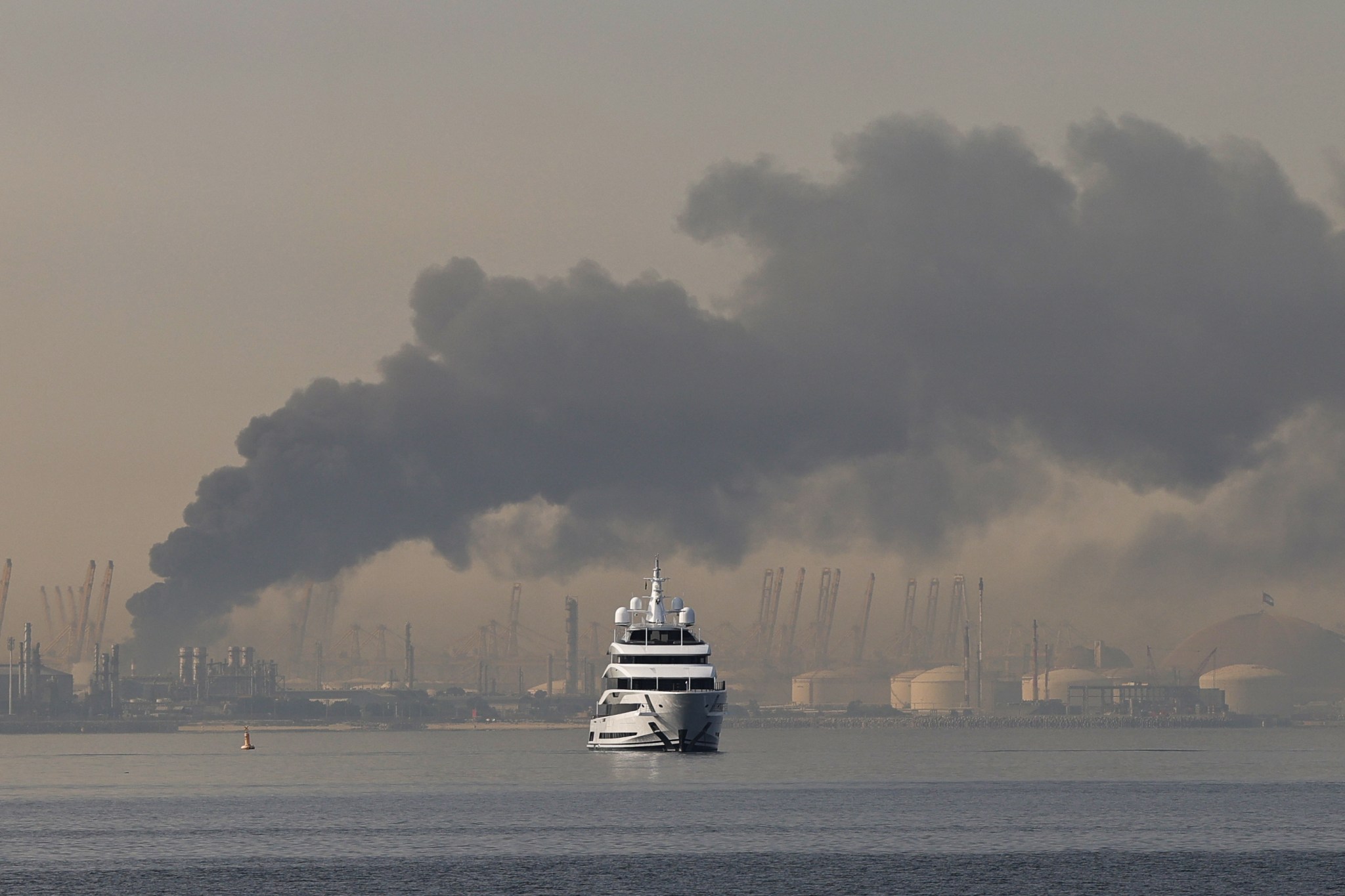
The recent spate of attacks has directly impacted critical infrastructure and prominent landmarks across the Gulf. In Dubai, a reported airstrike on the Fairmont The Palm Hotel ignited a fire, triggering widespread panic across the exclusive Palm Jumeirah artificial island, home to many of the city's wealthiest residents. Further incidents include smoke observed near the iconic Burj Khalifa, the world's tallest building, following what appeared to be the interception and explosion of a drone. Neighboring Abu Dhabi also experienced the fallout, with debris from another drone impacting the Etihad Towers. Beyond the UAE, Kuwait City's international airport was reportedly targeted by a drone. A particularly significant incident involved DP World suspending operations at Dubai's Jebel Ali Port, the largest container port in the Middle East and a vital component of the emirate's economy, after a berth caught fire due to debris from an intercepted missile. This port, along with its adjacent free-trade zone, contributes a substantial 36% to Dubai's Gross Domestic Product, and concerns over its operational integrity have led to hundreds of ships near the crucial Strait of Hormuz freezing their movements, fearing Iran might close this vital maritime chokepoint. Furthermore, the attacks have caused widespread airspace closures around the Gulf, disrupting a region that has emerged as a major global airline hub.
Analysts are closely scrutinizing Iran's calculated strategy, suggesting its intent is to inflict significant economic and reputational damage on America's regional partners, thereby pressuring them to advocate for a cessation of U.S. military engagements. This approach directly challenges the Gulf's meticulously crafted image as a secure and stable environment for global commerce and luxury tourism. The implications for regional stability are profound, with expert perspectives indicating that a sustained campaign could lead to a 'catastrophic' fallout, potentially triggering capital flight, a sharp decline in tourism, and a general erosion of investor confidence. The disruption to key logistical hubs like Jebel Ali Port and the potential closure of the Strait of Hormuz, a critical artery for global oil shipments, could send 'shockwaves globally,' impacting international supply chains and energy markets far beyond the Middle East. Such an environment threatens to unravel years of economic diversification efforts, pushing these nations back towards a greater reliance on hydrocarbon revenues if international capital and talent begin to withdraw.
The ongoing Iranian strikes represent a critical juncture for the Persian Gulf's economic future and global stability. The immediate threats to vital infrastructure, luxury destinations, and critical shipping lanes underscore the vulnerability of a region that has become a linchpin for international finance and trade. As the conflict unfolds, the world will be watching for the potential for further escalation, the nature of any responses from the United States and its allies, and the broader diplomatic efforts to de-escalate tensions. The ability of these Gulf nations to maintain their economic momentum and reassure international investors and tourists will be severely tested. The specter of global market shockwaves, stemming from disruptions in energy supplies and trade routes, remains a significant concern, emphasizing the far-reaching consequences of this regional conflict on the interconnected global economy.