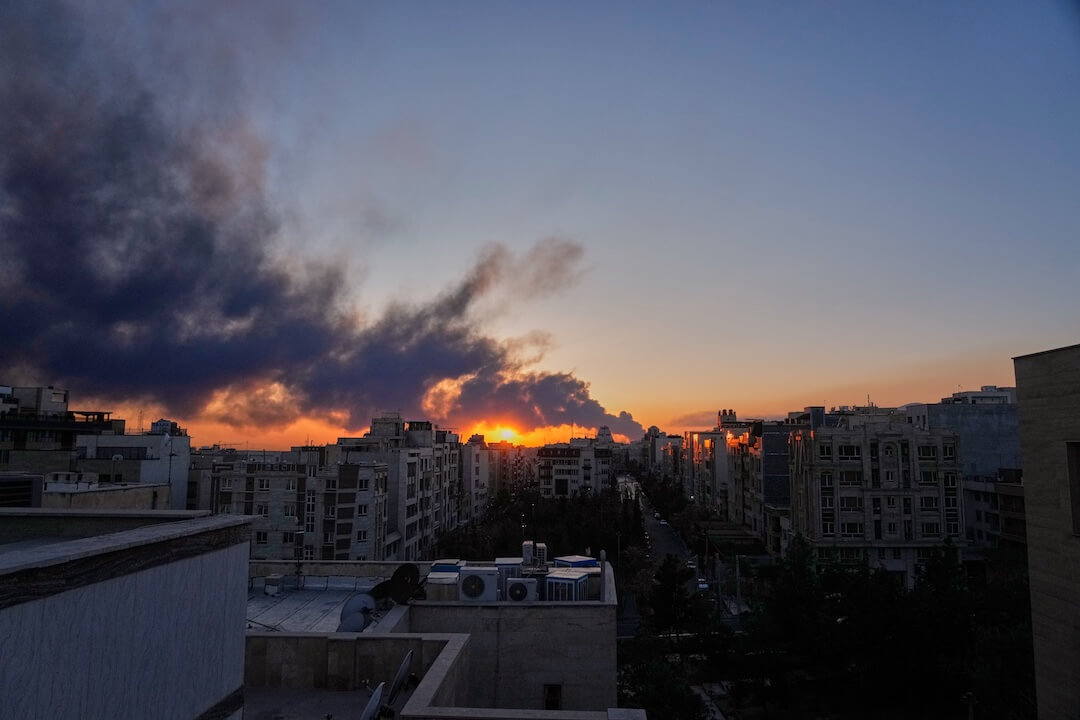
As military operations unfold involving U.S. and Israeli forces against Iran, the imperative for critical media consumption has never been more pronounced. Reports indicate that any information disseminated by parties engaged in conflict inherently aims to shape public perception and understanding of events on the ground. The current series of strikes targeting Iran, reportedly conducted by the United States and Israel, are no exception to this dynamic. Iranian leadership has asserted its continued capability for significant retaliatory actions, a claim whose veracity remains unconfirmed. Similarly, pronouncements from American officials warrant careful scrutiny. Observers and news consumers are urged to recognize that factual clarity often becomes elusive when aerial bombardments, drone deployments, and missile launches are actively occurring, creating an environment ripe for selective framing of reality by all involved entities. This necessitates a vigilant approach to news consumption, distinguishing between verified information and strategically presented narratives.
The justification for these military actions has been a key point of contention and a prime example of conflicting narratives. According to statements from prominent figures, the operation was framed as an unavoidable necessity. Former President Donald Trump, for instance, reportedly characterized the military intervention on March 2 as the 'last, best chance to strike.' Concurrently, the Israeli Defense Ministry publicly declared the commencement of the campaign as a 'preemptive strike,' suggesting an urgent need to neutralize an imminent threat. Secretary of State Marco Rubio further elaborated on the American rationale, informing reporters that the U.S. acted based on intelligence indicating Israel's impending move against Iran, which, in turn, was anticipated to provoke attacks against American personnel. Rubio reportedly stated that without preemptive action against these threats, American forces would have incurred higher casualties. However, this narrative of immediate danger was challenged by a report from The Associated Press, which cited two White House officials who had informed congressional staff that Iran was not, in fact, preparing for an imminent strike, thus introducing a significant discrepancy in the official justification.
Operational details, particularly regarding the scale and precision of the strikes, have also been presented in ways that require careful contextualization. By the third day of the military campaign, The Wall Street Journal, citing unnamed sources, reported that more than 2,000 targets within Iran had been successfully hit. While this figure appears substantial, its true significance remains ambiguous without further context. The sheer number of strikes does not inherently convey whether this represents a large, moderate, or small proportion of the total sites posing a potential threat to the United States and its allies. Crucially, not all potential targets carry equal strategic importance or present the same level of danger. Furthermore, the total universe of potential targets remains undisclosed. For example, if Iran initially possessed 4,000 locations capable of producing or launching drones or missiles, then a significant number of such sites could still be operational. Additionally, defense officials have frequently emphasized the 'pinpoint accuracy' of their targeting. While claims of precision may be technically accurate regarding the ability to hit specific locations, such statements do not fully encompass the broader strategic implications or potential unintended consequences that can arise from strikes on any governmental or strategic infrastructure, regardless of accuracy.
The discrepancies and selective framing observed in official communications underscore the profound challenges of navigating information during active conflict. Expert perspectives often highlight that while official narratives may contain elements of truth, they are frequently curated to achieve specific strategic objectives, whether to bolster public support, justify military actions, or influence enemy morale. The public's ability to form a comprehensive and unbiased understanding is significantly hampered when information is tightly controlled and presented through a particular lens. This environment necessitates a heightened degree of media literacy, urging individuals to actively seek independent verification and cross-reference information from a diverse array of credible, non-aligned sources. The psychological impact of wartime communication also plays a role, as narratives are often designed to evoke strong emotional responses, further complicating the objective assessment of facts. Understanding these inherent biases is crucial for discerning the full scope of events and avoiding manipulation.
In conclusion, the ongoing U.S.-Israeli military actions against Iran serve as a stark reminder of the inherent difficulties in obtaining unbiased information during periods of armed conflict. The conflicting accounts regarding the justification for the strikes, the contextual limitations of reported strike counts, and the nuanced implications of precision targeting claims all highlight the necessity for a critical approach to news consumption. As events continue to unfold, both readers and viewers must remain vigilant, questioning official statements from all sides, seeking out diverse perspectives, and prioritizing verified facts over strategically crafted narratives. The ability to separate genuine information from spin will be paramount in understanding the true nature and trajectory of this evolving geopolitical situation.