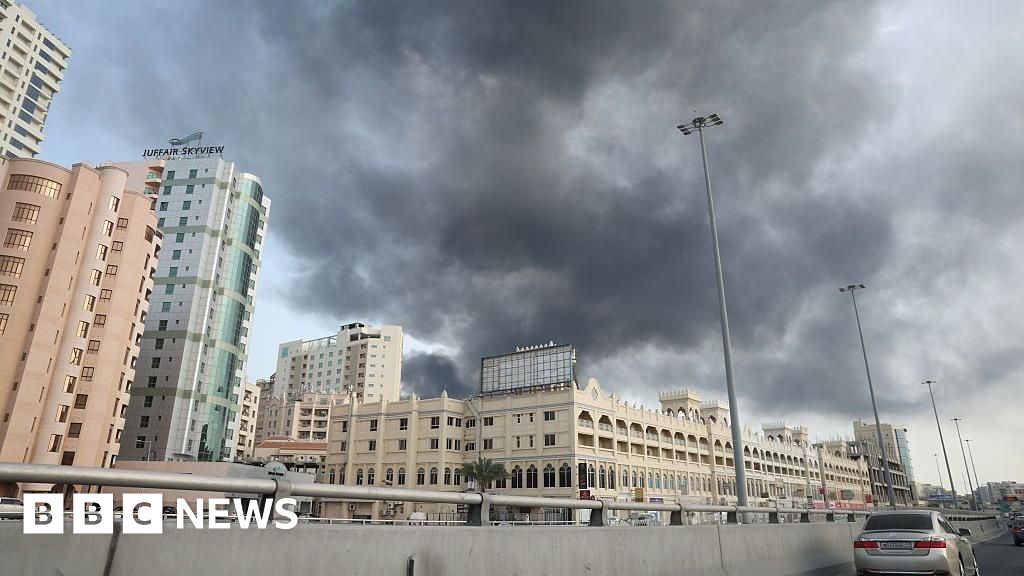
Recent attacks targeting the vicinity of the United States Navy's Fifth Fleet headquarters in Bahrain have brought into sharp focus potential vulnerabilities within existing air defense systems across the region, according to various reports. Videos circulating appear to depict missiles and drones striking areas close to the critical US military installation. While initial assessments indicate no casualties have been reported, the incident has prompted significant concern in Washington and among its key allies in the Middle East regarding the efficacy of current protective measures against evolving threats. The nature of the assault, attributed to Iranian-linked assets, suggests a deliberate probing of defensive capabilities, raising urgent questions about how the US can effectively counter such tactics in a complex operational environment. This event underscores a persistent challenge in maintaining comprehensive security across a vast array of strategic interests in a volatile region.
The choice of Bahrain as a target holds considerable strategic significance, given its role as the home of the US Fifth Fleet, a cornerstone of American naval power in the Middle East. According to Tom Sharpe, a former Royal Navy Commander, Bahrain has historically been perceived by adversaries, including Iran, as a high-profile target that may have possessed comparatively fewer robust air defenses in the past. This perceived vulnerability now appears to have been exploited, with video evidence reportedly showing a relatively slow-moving Iranian Shahed drone successfully penetrating the area's defensive perimeter. This type of unmanned aerial vehicle, while not cutting-edge, has proven challenging to intercept in other conflict zones, such as Ukraine, where even basic high-caliber machine guns are often employed to down them. The incident therefore highlights not only the strategic importance of the location but also the evolving nature of asymmetric warfare and the difficulties in defending against a spectrum of aerial threats.
In response to escalating regional tensions, the United States has reportedly augmented its defensive posture in the Middle East over recent weeks, deploying advanced air defense systems such as the Terminal High Altitude Area Defense (THAAD) and Patriot systems. These sophisticated assets are designed to intercept ballistic missiles, offering a crucial layer of protection against high-end threats. However, officials indicate that these systems are both expensive and limited in number. For context, reports suggest Ukraine, despite facing intense aerial bombardment, operates fewer than ten Patriot batteries and still struggles to adequately defend its capital, Kyiv. This comparison underscores the challenge facing the US, as it is unlikely to possess sufficient numbers of these high-value systems to protect all its extensive military bases and strategic interests spread across the Middle East. Complementing these land-based defenses, the US Navy has also deployed approximately a dozen Arleigh Burke-class Destroyers to critical waterways, including the Gulf and the eastern Mediterranean. These formidable vessels are equipped with advanced air defense capabilities and have demonstrated their effectiveness in the Red Sea against Iranian-backed Houthi rebels in Yemen, with reports indicating US forces intercepted nearly 400 Houthi drones and missiles in the period between 2024 and 2026. Furthermore, over 100 US fighter jets are stationed in the region, also capable of intercepting aerial threats.
Despite the substantial military capabilities deployed by the United States, including advanced missile defense systems, naval destroyers, and a significant air force presence, expert analysis suggests these resources may not be entirely sufficient to prevent all successful strikes by adversaries. The sheer number of potential targets, coupled with the varied and often low-cost nature of threats like drones, presents a complex defensive challenge. This situation creates a strategic dilemma for Washington, requiring a delicate balance between protecting critical assets and maintaining a credible deterrent posture against Iran and its proxies. The incident in Bahrain underscores the evolving landscape of regional security, where traditional air defense strategies are being tested by new forms of asymmetric warfare. Broader implications include the potential for increased instability, a heightened risk of miscalculation, and the urgent need for continuous adaptation of defensive strategies to counter a wide array of aerial threats, from sophisticated missiles to ubiquitous, slow-moving drones.
The recent strikes near the US Fifth Fleet headquarters in Bahrain serve as a stark reminder of the persistent vulnerabilities in regional air defenses and the ongoing challenges posed by Iranian-linked aggression. While the United States has significant military assets deployed, including advanced missile defense systems and a robust naval and air presence, the incident highlights the difficulty of achieving complete protection against a diverse range of threats. The strategic imperative for Washington remains to develop and implement multi-layered defense strategies that can effectively counter both high-end ballistic missiles and more rudimentary, yet effective, drone attacks. Moving forward, observers will be closely watching for any adjustments in US military posture, potential diplomatic responses, and further developments in the technological arms race between defensive capabilities and offensive tactics in the Middle East.