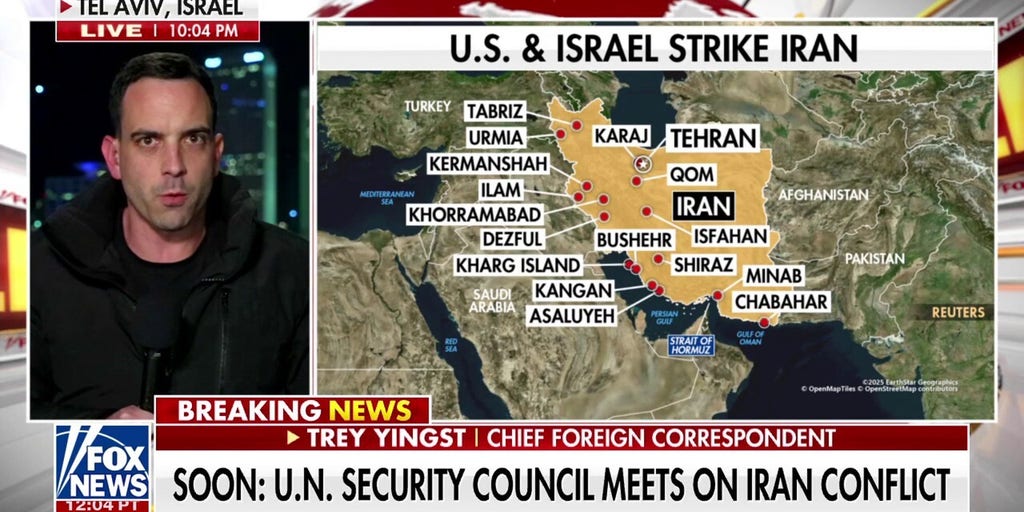
The geopolitical landscape of the Middle East faces an unprecedented tremor following unconfirmed reports asserting the death of Iran's Supreme Leader, Ayatollah Ali Khamenei. According to claims circulating from Fox News, citing statements attributed to Israeli officials, the revered spiritual and political head of the Islamic Republic was reportedly killed in an Israeli airstrike. This development, if substantiated, would mark a monumental shift in regional power dynamics and potentially trigger widespread instability across an already volatile area. The initial reports, emerging as "breaking news" from the American media outlet, have sent shockwaves through international diplomatic and security circles, prompting urgent calls for verification from independent sources. The gravity of such an event, involving the demise of a figure who has steered Iran for over three decades, cannot be overstated, immediately raising questions about succession, Iran's immediate response, and the broader implications for global security. The alleged incident comes amidst heightened tensions between Israel and Iran, making any such claim particularly incendiary and demanding rigorous scrutiny.
Ayatollah Ali Khamenei, who assumed the mantle of Supreme Leader in 1989 after the passing of Ayatollah Ruhollah Khomeini, has been the paramount authority in Iran for more than 35 years. His leadership has been characterized by a staunch anti-Western stance, particularly against the United States and Israel, and a steadfast commitment to Iran's nuclear program and regional influence. As the ultimate decision-maker on all major state policies, including foreign policy, military strategy, and nuclear ambitions, his presence has been a constant in the Islamic Republic's trajectory. The relationship between Iran and Israel has long been defined by deep-seated animosity, often described as a shadow war involving cyberattacks, assassinations, and proxy conflicts across the Middle East. Iran supports various regional groups, including Hezbollah in Lebanon and Hamas in Gaza, which Israel considers terrorist organizations. This intricate web of alliances and rivalries has frequently brought the two nations to the brink of direct confrontation. The reported airstrike, if confirmed, would represent an unprecedented escalation, moving beyond the established boundaries of their covert conflict and potentially igniting a full-scale regional war with far-reaching global consequences, impacting energy markets, international trade routes, and diplomatic relations worldwide.
The initial and primary source for this explosive claim is Fox News, which, according to reports, attributed the information to Israeli officials. However, at the time of this report, independent confirmation from other major news agencies, Iranian state media, or international bodies remains conspicuously absent. The specific details surrounding the alleged airstrike – including its precise location, timing, and the nature of the attack – have not been publicly disclosed or corroborated. Such a significant development would typically be followed by immediate, widespread reporting from multiple international outlets, often accompanied by official statements from involved governments or intelligence agencies. The lack of such corroboration underscores the critical need for caution and verification before accepting the veracity of the claim. While Fox News channels, including its main news channel, business channel, and radio network, were broadcasting their regular programming schedules during the period this "breaking news" was reportedly aired, the specific content detailing the alleged event has not been widely disseminated or independently verified by GlobalTruthWire. The absence of immediate Iranian reaction, either confirming or denying the reports, further contributes to the uncertainty surrounding the situation, leaving the international community in a state of anxious anticipation for concrete evidence or official statements.
Should the reports of Ayatollah Khamenei's death prove accurate, the implications for Iran and the broader Middle East would be profound and immediate. Analysts suggest that the most pressing issue for Iran would be the process of succession. The Assembly of Experts, a body of 88 clerics, is constitutionally responsible for selecting the next Supreme Leader. While potential successors like President Ebrahim Raisi or Khamenei's son, Mojtaba Khamenei, have been frequently discussed, the sudden nature of such an event could trigger internal power struggles and factional infighting within the Iranian establishment. Regionally, the immediate aftermath could see a dramatic escalation of hostilities. Iran's proxy forces might be activated in retaliation, potentially targeting Israeli assets or interests, or those of its allies. This could lead to a direct military confrontation between Iran and Israel, possibly drawing in other regional and international powers. The category "Operation Epic Fury," under which this story is classified, could hint at a broader military context or a specific codename for the alleged Israeli action, suggesting a pre-planned and significant operation rather than an isolated incident. Such a scenario would undoubtedly destabilize global energy markets, trigger a surge in oil prices, and present an immense challenge to international diplomacy, particularly for nations attempting to de-escalate tensions and prevent a wider conflict.
In conclusion, the unconfirmed reports from Fox News, citing Israeli officials regarding the alleged death of Iran's Supreme Leader Ayatollah Ali Khamenei in an Israeli airstrike, represent a development of immense potential consequence. While the gravity of such a claim demands immediate attention, the lack of independent verification from multiple credible sources necessitates extreme caution. The international community, diplomatic bodies, and financial markets are now keenly watching for any official statements from Tehran or Jerusalem, or corroborating evidence that could either confirm or refute these initial reports. The coming hours and days will be crucial in determining the veracity of these claims and, subsequently, the trajectory of Middle Eastern geopolitics. Until then, the situation remains highly fluid and speculative, underscoring the volatile nature of regional tensions and the critical importance of accurate, verified information in times of crisis. The world awaits clarity on a report that, if true, would redefine the strategic landscape of one of the planet's most sensitive regions.