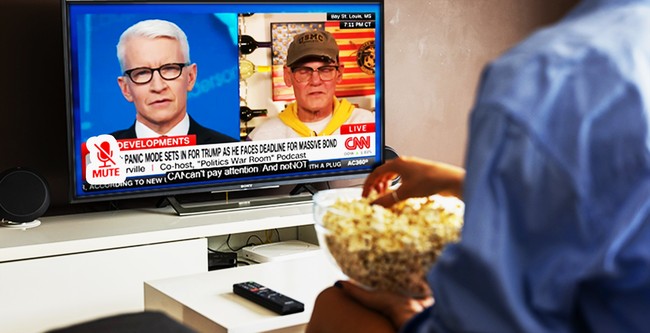
Veteran Democratic strategist James Carville recently delivered a highly personal and vitriolic attack against former President Donald Trump, a move that appears to contradict his own previously stated political philosophy. Days before Trump's anticipated return to the White House, Carville had penned an opinion piece in The New York Times on January 2, 2025, emphasizing that electoral success hinges primarily on economic performance, famously stating, "It was, it is, and it always will be the economy, stupid." However, reports indicate that just prior to President Trump's State of the Union address, Carville's focus dramatically shifted from policy to personal invective. This unexpected pivot from a seasoned political operative raises questions about the strategic direction of Democratic messaging, especially given the context of a new presidential term and the importance Carville himself placed on economic issues.
Carville's long-standing political acumen is well-documented, notably his instrumental role as a chief strategist for then-Arkansas Governor Bill Clinton's successful 1992 presidential campaign. His "economy, stupid" mantra became a touchstone in American political discourse, advocating for a disciplined focus on kitchen-table issues to win over voters. This historical context makes his recent outburst particularly striking. His New York Times piece, published in early 2025, reiterated this core belief, urging Democrats to make economic realities their "political north star" and avoid distractions. The significance of this advice, coming just as Donald Trump was re-entering the Oval Office, underscored a perceived need for the opposition to maintain a clear, policy-driven message. The subsequent departure from this counsel, therefore, represents a notable shift from a strategist known for his pragmatic and often ruthless political calculations.
The nature of Carville's recent remarks was strikingly personal and devoid of policy discussion. According to reports, he offered a "personal message" to Trump, employing highly derogatory language and focusing on the former president's physical appearance and perceived unpopularity. Carville's comments included direct insults regarding Trump's physique, hair, and even his scent, asserting that the public dislikes him and that there are no "silent people out there" supporting him, save for a crude analogy about flatulence. He concluded his tirade by wishing Trump good health but expressing a desire for him to be "cognizant" of the "misery" and "public humiliation" he was allegedly experiencing. This intensely personal attack stands in stark contrast to the reported economic conditions under the nascent Trump 2.0 administration, which, by many accounts, appears to be performing favorably. This juxtaposition has led some observers to suggest, using an analogy from a crime scene, that the motivation behind Carville's comments "looks personal."
The implications of Carville's highly personalized attack on Donald Trump are multifaceted, potentially affecting both the Democratic Party's messaging and the broader political discourse. From an analytical perspective, such an outburst from a prominent strategist could be interpreted in several ways. It might signal a deep-seated frustration within Democratic circles, where policy arguments are perceived as insufficient against Trump's populist appeal. Alternatively, it could be seen as a strategic misstep, diverting attention from substantive policy debates and playing into a narrative of personal animosity rather than ideological opposition. Experts might question whether abandoning the "economy, stupid" principle for ad hominem attacks is a viable path forward, especially when, by various measures, the economy under Trump's second term is reportedly robust. This shift risks alienating voters who might be more receptive to economic arguments than to character assassinations, potentially undermining the very strategic framework Carville himself championed for decades.
In summary, James Carville's recent, highly personal verbal assault on Donald Trump marks a significant departure from his own long-held political philosophy, which prioritizes economic issues above all else. This stark contrast between his strategic advice to focus on the economy and his subsequent, intensely personal critique of Trump raises important questions about the direction and effectiveness of Democratic communication. As the Trump 2.0 administration continues, with reports indicating a strong economic performance, the efficacy of personal attacks versus policy-focused opposition will likely be a key area of observation. The political landscape will undoubtedly continue to evolve, and how figures like Carville choose to engage will shape the narrative for both parties in the coming months and years.