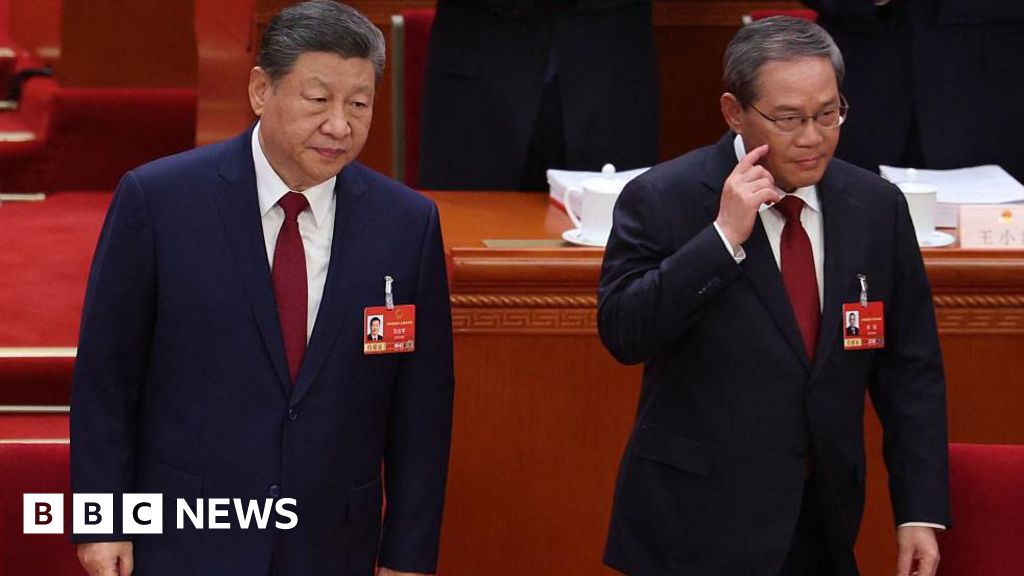
Beijing has announced its most conservative annual economic growth projection in over three decades, targeting an expansion range of 4.5% to 5% for the coming year. This marks the lowest official goal set by the world's second-largest economy since 1991, according to reports emerging from the nation's capital. The significant recalibration reflects a period of considerable domestic and international headwinds that China is currently navigating, prompting a strategic reassessment of its economic priorities. This adjustment follows a previous reduction in 2023, when the target was set at "around 5%," indicating a continued trend of moderating expectations in the face of evolving global dynamics. Notably, a formal growth target was entirely omitted in 2020 amidst the acute uncertainties brought about by the global pandemic, underscoring the gravity of past economic disruptions. The details of this crucial economic benchmark were unveiled during China's premier political event, known as the "two sessions," a gathering that commenced on Wednesday and typically extends for at least a week, bringing together the country's top leadership for intensive policy discussions and strategic planning.
The "two sessions" gathering, recognized as China's most significant annual political assembly, serves as the platform for the nation's leaders to convene for a series of high-level meetings. During this pivotal event, key policy directives are often unveiled, shaping the trajectory of the country for the year ahead and beyond. The announcement of a growth target not seen since the early 1990s underscores a profound shift in Beijing's economic philosophy, moving away from the high-speed, export-driven expansion that characterized much of its recent history. This new target, embedded within the broader framework of the 15th Five Year Plan, signals a deliberate effort by Chinese authorities to reshape the fundamental structure of its vast economy. The plan aims to foster more sustainable and internally resilient growth, acknowledging that the previous model faces increasing limitations. The decision to lower the target, rather than pursuing aggressive growth at all costs, suggests a strategic pivot towards addressing deep-seated structural issues and enhancing the quality of economic development. This approach is intended to provide greater flexibility in managing complex challenges while steering the economy towards a more balanced and innovation-led future.
Officials in Beijing have outlined a comprehensive set of challenges necessitating this revised economic outlook. Among the most pressing domestic issues cited are persistently weak household consumption, a demographic shift marked by a shrinking population, and an ongoing, deep-seated crisis within the property sector that continues to weigh heavily on investor and consumer confidence. On the international front, the nation is contending with escalating global trade tensions, which complicate its export-oriented industries, and an energy crunch, exacerbated by the broader geopolitical implications of conflicts such as the Iran war, according to official statements. These multifaceted pressures collectively contribute to the rationale behind the more conservative growth projection. Further details regarding China's Gross Domestic Product (GDP) target and its overarching objectives under the latest Five Year Plan were meticulously presented in a 46-page report. This extensive document, authored by Premier Li Qiang, was reportedly reviewed by the BBC, offering an in-depth look at the government's strategic priorities. Addressing delegates, Premier Li emphasized that the new Five Year Plan would strategically allocate substantial investments towards fostering innovation, developing high-tech industries, and significantly bolstering scientific research capabilities. Furthermore, he highlighted concerted efforts aimed at invigorating and boosting household consumption across the nation.
Premier Li Qiang's remarks to the delegates provide crucial insight into Beijing's evolving economic strategy and its underlying concerns. His emphasis on boosting household consumption and investing in high-tech sectors clearly indicates a recognition that the nation's historical reliance on exports for growth has become increasingly unsustainable. This strategic pivot aims to cultivate a more robust domestic demand base, thereby reducing external vulnerabilities and fostering greater internal economic resilience. The focus on innovation, scientific research, and advanced manufacturing also underscores China's ambition to move up the global value chain, transforming its industrial landscape from a "world's factory" into a hub for cutting-edge technology and high-value production. This shift is not merely about achieving a numerical growth target but about fundamentally upgrading the country's economic structure. Experts suggest that by setting a more realistic and achievable growth target, Chinese authorities are signaling a commitment to tackling structural imbalances, such as excessive debt, environmental degradation, and income inequality, which have accumulated during periods of rapid expansion. This approach, while potentially leading to slower headline growth rates, is viewed by some analysts as a necessary step towards building a more stable, equitable, and technologically advanced economy capable of navigating future global uncertainties.
In summary, China's decision to set its lowest economic growth target since 1991, ranging from 4.5% to 5%, represents a pivotal moment in its economic trajectory. This strategic adjustment, unveiled during the critical "two sessions" political gathering, is a direct response to a confluence of significant domestic challenges—including weak consumption, demographic shifts, and a persistent property crisis—and complex international pressures, such as trade tensions and energy security concerns. The government's new Five Year Plan, as articulated by Premier Li Qiang, clearly prioritizes a shift towards innovation, high-tech development, and, crucially, the stimulation of domestic household consumption. Looking ahead, observers will closely monitor the implementation of these ambitious plans, particularly how Beijing navigates the delicate balance between fostering innovation and managing existing economic headwinds. The success of this reorientation will not only determine China's future economic stability but also have profound implications for global trade, supply chains, and technological advancement in the coming years.