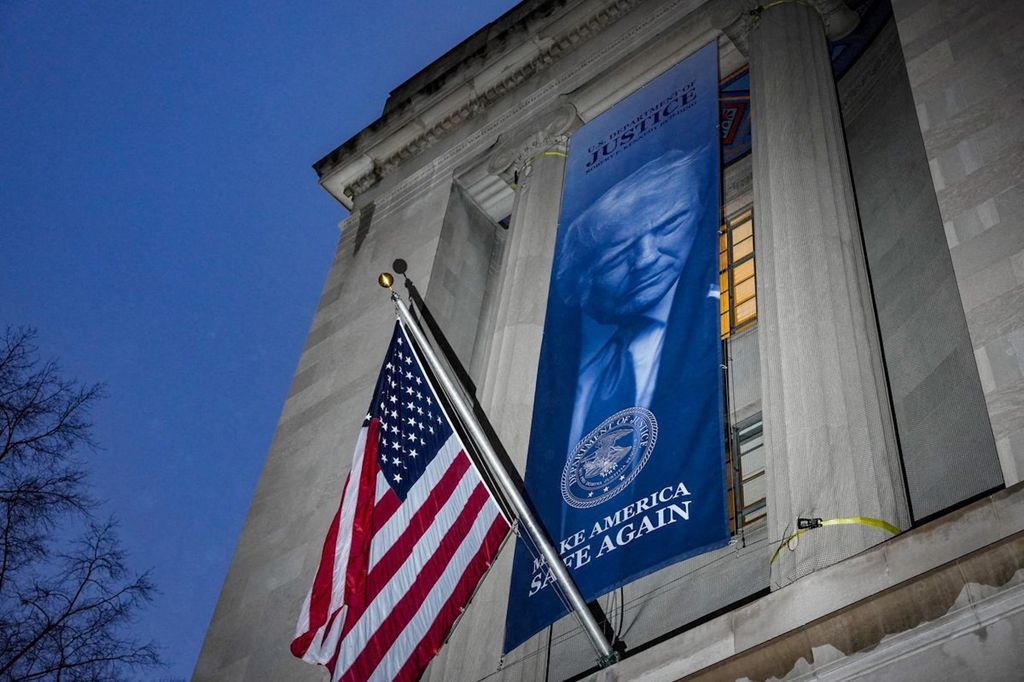
The United States Department of Justice (DOJ) is currently embroiled in a significant controversy, facing intense scrutiny and public backlash over its handling of documents related to the late convicted sex offender, Jeffrey Epstein. Reports from late February 2026 indicate that the department has drawn considerable criticism, particularly for its decision to withhold certain files that reportedly contain allegations against former President Donald Trump. This development has ignited a fresh wave of concern regarding governmental transparency and accountability, prompting questions about whether the department's actions stem from administrative missteps or a more deliberate strategy in what is widely considered a highly sensitive and politically charged case. The revelation emerged after a period marked by the DOJ's repeated failures to meet deadlines and fulfill commitments regarding the public release of these extensive documents, further fueling public skepticism and calls for greater clarity.
This recent controversy builds upon a history of perceived mismanagement by the Justice Department concerning the Epstein files, a saga that has unfolded over approximately a year. According to various reports, the DOJ has been characterized by a pattern of overpromising, under-delivering, and inconsistent stances, including instances of backpedaling and flip-flopping on its commitments. The department was legally mandated to make public the vast majority of documents in its possession pertaining to Epstein, a requirement intended to shed light on the extensive network surrounding the disgraced financier. Despite this legal obligation, the DOJ reportedly missed crucial deadlines for the comprehensive release of these materials. While officials acknowledge the immense volume of documents—potentially millions—the consistent delays and the recent withholding of specific files have exacerbated concerns about the department's operational efficiency and its commitment to full disclosure in a case of profound public interest.
The most recent point of contention arose when it became apparent that among the multitude of documents, those specifically mentioning allegations against former President Trump had been notably absent from the public release. This selective withholding, as sources indicate, has been particularly striking given the high-profile nature of the individuals involved and the intense public demand for transparency surrounding Epstein's activities. The timing of this revelation, emerging in the week leading up to late February 2026, has intensified the political fallout. Esteemed journalists and political analysts, including a panel featured on Washington Week comprising Andrew Desiderio, a senior Congressional reporter for Punchbowl News; Sarah Fitzpatrick, a staff writer at The Atlantic; Stephen Hayes, editor of The Dispatch; and Tarini Parti, a national politics reporter for The Wall Street Journal, have convened to dissect the complexities and implications of the government's handling of these critical documents, underscoring the gravity of the situation.
Experts and observers are now grappling with the fundamental question of whether the Justice Department's actions represent a series of genuine administrative blunders or a more calculated approach to managing politically sensitive information. The repeated delays and the specific decision to withhold documents naming a former president have led some to suggest that the DOJ might be navigating a 'politically radioactive' landscape with extreme caution, potentially at the expense of public trust. Analysts propose that such actions, regardless of intent, can erode confidence in governmental institutions and fuel speculation about potential cover-ups or undue influence. The implications extend beyond this specific case, potentially setting precedents for how future high-profile investigations involving politically connected figures are handled, raising critical questions about the balance between national security, privacy, and the public's right to know in a democratic society.
As the controversy surrounding the Justice Department's handling of the Jeffrey Epstein files continues to unfold, the pressure for greater transparency and accountability is mounting. The department's past record of delays and the recent decision to withhold documents reportedly containing allegations against former President Trump have placed it firmly in the public spotlight. Moving forward, the focus will undoubtedly remain on the DOJ's next steps, including any potential explanations for the delayed and incomplete releases, and whether further documents will eventually be made public. The ongoing debate underscores the critical importance of governmental integrity and the public's expectation that justice be administered without prejudice or political influence, ensuring that all individuals, regardless of their status, are subject to the same standards of scrutiny.