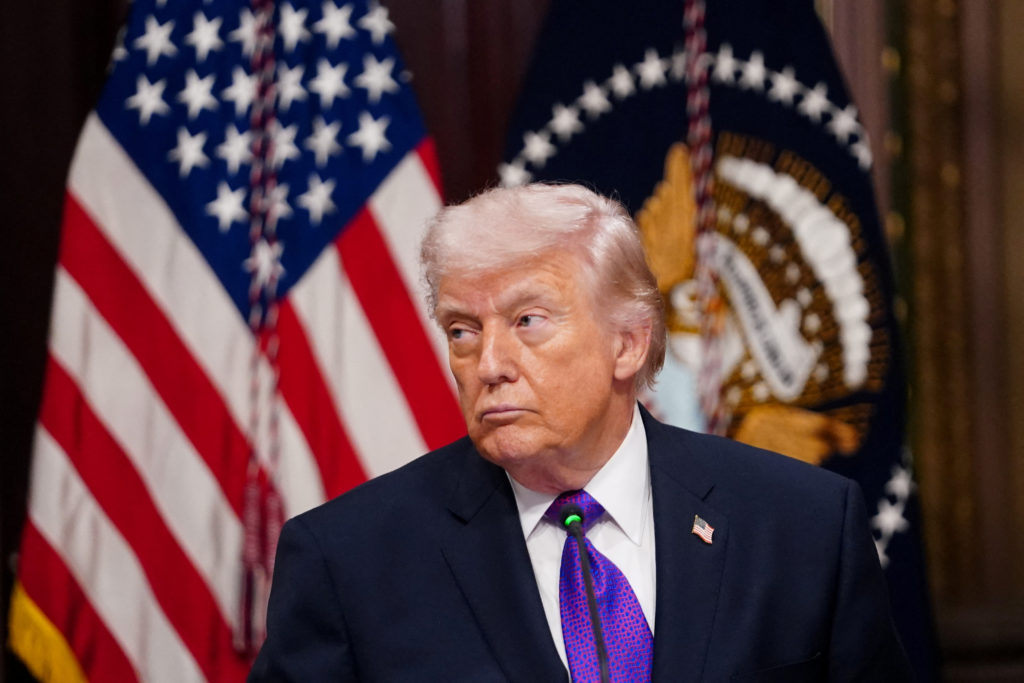
Reports indicate that former President Donald Trump asserted extensive, even boundless, authority over the United States' armed forces during his tenure. This position, according to various analyses, mirrors a pattern observed among numerous previous occupants of the Oval Office, highlighting a persistent tension in the American constitutional framework regarding military action. The last time the U.S. Congress formally declared war was during the Second World War, a historical benchmark that underscores the evolving landscape of how the nation commits its military to conflicts abroad. This shift has placed increasing emphasis on executive interpretations of war powers, often leading to debates about the appropriate balance between presidential prerogative as Commander-in-Chief and congressional oversight. The claims of broad executive power raise fundamental questions about accountability and the checks and balances designed to govern the use of military force, shaping both domestic political discourse and international perceptions of U.S. foreign policy. This ongoing dynamic has been a defining feature of American governance for decades, influencing numerous military engagements without explicit legislative declarations.
The foundational principles of American governance delineate distinct roles for the executive and legislative branches concerning military action. The Constitution designates the President as the Commander-in-Chief of the armed forces, tasking them with directing military operations once initiated. Conversely, it explicitly grants Congress the sole power to declare war, raise and support armies, and provide and maintain a navy. This division of authority was intended to prevent unilateral executive action in matters of war and peace. However, since the conclusion of the Second World War, the nature of international conflict has evolved, often involving limited engagements, counter-terrorism operations, and rapid deployments that have not fit the traditional mold of a declared war. This transformation has coincided with a trend where presidents have increasingly asserted their inherent authority to deploy forces and engage in hostilities without a formal congressional declaration, interpreting their Commander-in-Chief powers expansively. This historical trajectory has gradually shifted the practical locus of war-making decisions, fostering an environment where executive claims of extensive military authority have become a recurring feature of presidential administrations.
The assertion of 'broad, even unlimited power' over U.S. forces, as reportedly claimed by President Trump and others, implies a presidential capacity to initiate and sustain military actions largely independent of explicit congressional authorization. Such claims suggest an executive belief in the inherent authority to deploy troops, conduct strikes, and engage in various forms of military intervention based on perceived national security interests, without necessarily seeking or waiting for a formal declaration of war or specific legislative approval for each operation. This interpretation often extends to decisions regarding troop levels, strategic objectives, and the duration of military engagements. Proponents of such expansive executive power often argue that modern global threats demand swift, decisive action that cannot be constrained by potentially lengthy legislative processes. They might also cite the need for operational secrecy and flexibility in rapidly evolving international scenarios. However, critics contend that such claims risk undermining the constitutional framework, concentrating immense power in the executive branch and potentially bypassing the democratic process of debate and consent that congressional war declarations are meant to embody. The practical implications of these claims are profound, shaping the scope and nature of U.S. military involvement globally.
The ongoing trend of presidents asserting broad war powers has significant implications for the balance of power within the U.S. government and for the nation's democratic principles. When the executive branch operates under an expansive interpretation of its military authority, it can diminish the role of Congress as a co-equal branch in decisions of war and peace. This shift can lead to concerns about accountability, as military actions undertaken without explicit legislative backing may face less public scrutiny and debate. Experts often point out that a robust system of checks and balances is crucial for preventing potential overreach and ensuring that the commitment of national resources and human lives to conflict reflects the collective will of the people, as represented by their elected legislators. Furthermore, the perception of unilateral executive action can impact international relations, potentially raising questions among allies and adversaries alike about the stability and democratic legitimacy of U.S. foreign policy decisions. The long-term consequences of this evolving dynamic could include a permanent redefinition of executive authority, with potential ramifications for both domestic governance and America's standing on the global stage, necessitating continuous vigilance regarding the constitutional division of powers.
In summary, the assertion of broad, even unlimited, presidential power over U.S. forces, exemplified by President Donald Trump and echoing the stances of many predecessors, represents a critical facet of American governance since the last formal declaration of war in World War II. This historical trajectory highlights an enduring tension between the President's role as Commander-in-Chief and Congress's constitutional prerogative to declare war. The debate over executive war powers is not merely an academic exercise; it has tangible consequences for the deployment of military personnel, the allocation of national resources, and the very fabric of democratic accountability. As the global landscape continues to present complex security challenges, the interplay between executive action and legislative oversight will remain a central point of contention, shaping the future direction of U.S. foreign policy and the internal balance of power. Observers will continue to monitor how future administrations navigate these constitutional boundaries, and how Congress seeks to reassert its role in decisions of war and peace.