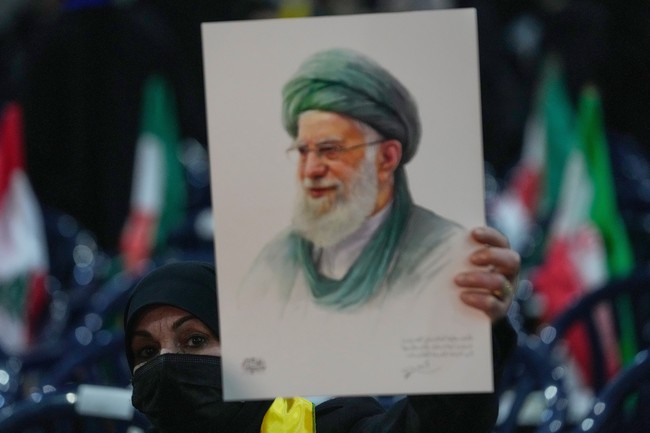
A mosque situated in Manassas, Virginia, a suburb of the nation's capital, recently hosted a memorial service dedicated to the late Ayatollah Ali Khamenei, sparking considerable discussion. During the Sunday evening event, the religious institution referred to the deceased Iranian Supreme Leader as 'our leader' and conveyed 'glad tidings on the martyrdom of His Eminence,' according to initial reports. Details of the commemoration were initially shared via a post on the Manassas Mosque's Instagram page, which has since been removed. However, similar information, including an image of the Ayatollah, remained accessible on the mosque's Telegram channel. The service, which was described as honoring the life of 'Shaheed Ayatollah Ali Khamenei' – using the Arabic term for martyr – underscores a complex interplay of religious devotion and geopolitical sentiment within a local community near Washington D.C.
The decision by a mosque in the Washington D.C. metropolitan area to publicly honor a figure often characterized as a strongman and a leader of a state frequently at odds with US foreign policy carries significant implications. Ayatollah Ali Khamenei served as Iran's Supreme Leader, holding ultimate authority over the country's political and religious affairs for decades. His passing marks a pivotal moment in Iranian history, and the memorial service in Manassas highlights a segment of the diaspora community's profound reverence for him. Reports indicated that the mosque's loyalty pledge suggested a view of Khamenei as 'martyred' by the United States, positioning him as a figure who sacrificed for a cause. This perspective, articulated within a US suburb, has drawn scrutiny, particularly from conservative media outlets, leading to the swift deletion of the initial Instagram announcement, though the message persisted on other digital platforms.
Further details regarding the memorial service reveal specific aspects of the evening's program. An update posted on the mosque's Telegram channel informed the community about an alteration to their regular Ramadan schedule, indicating that the event would commence with the recitation of the nightly Juz at 5:00 PM, followed by Dua Iftitah, Salat, and Iftar. Notably, the Iftar meal, initially planned as a potluck, was ultimately sponsored for the evening. The program also featured special programming dedicated to honoring Ayatollah Ali Khamenei's life, and the community was invited to contribute donations towards the event. The service welcomed Br. Salahudeen Abdul Kareem as a special guest. Another Telegram post, accompanying the same image of the Ayatollah, included the Arabic phrase 'Inna Lillah Wa Inna Illayhi Rajioon,' a common expression of sorrow and acceptance of divine will, translating to 'Indeed, to Allah we belong and to Him we shall return.' Beyond the memorial, the Manassas Mosque was also identified as a sponsor for an anti-war protest scheduled for Monday evening outside the White House, with organizers expressing concerns about the potential for regional conflict.
The public display of allegiance to a foreign leader, particularly one with a complex and often adversarial relationship with the United States, by a religious institution within a major US metropolitan area, raises important questions about identity, loyalty, and geopolitical influence. Analysts suggest that such events can reflect the diverse political and ideological landscapes within diaspora communities, where strong ties to ancestral homelands and their leadership often persist. The mosque's strategic communication, involving the deletion of content from one platform while maintaining it on another, could be interpreted as an attempt to manage public perception while still reaching its intended audience. This incident may prompt broader discussions about the boundaries of religious expression and political advocacy in the US, especially when it pertains to figures perceived as hostile by the host nation. It also highlights the ongoing tensions and differing perspectives on international conflicts and leadership within various immigrant communities.
The memorial service for Ayatollah Ali Khamenei at the Manassas Mosque, characterized by its reverent language and designation of him as 'our leader' and a 'martyr,' has brought a local religious institution into the spotlight. Occurring in a suburb of Washington D.C., the event underscores the complex dynamics of international relations intersecting with local community life. While the initial social media post faced swift removal, the persistence of the message on other platforms and the detailed programming of the service confirm the mosque's intent to honor the late Iranian Supreme Leader. As the situation continues to unfold, observers will be watching for further reactions from the community, media, and potentially governmental bodies, as well as any subsequent activities by the mosque, including its involvement in broader political demonstrations like the anti-war protest. This event serves as a potent reminder of the varied perspectives and allegiances that exist within the diverse fabric of American society.