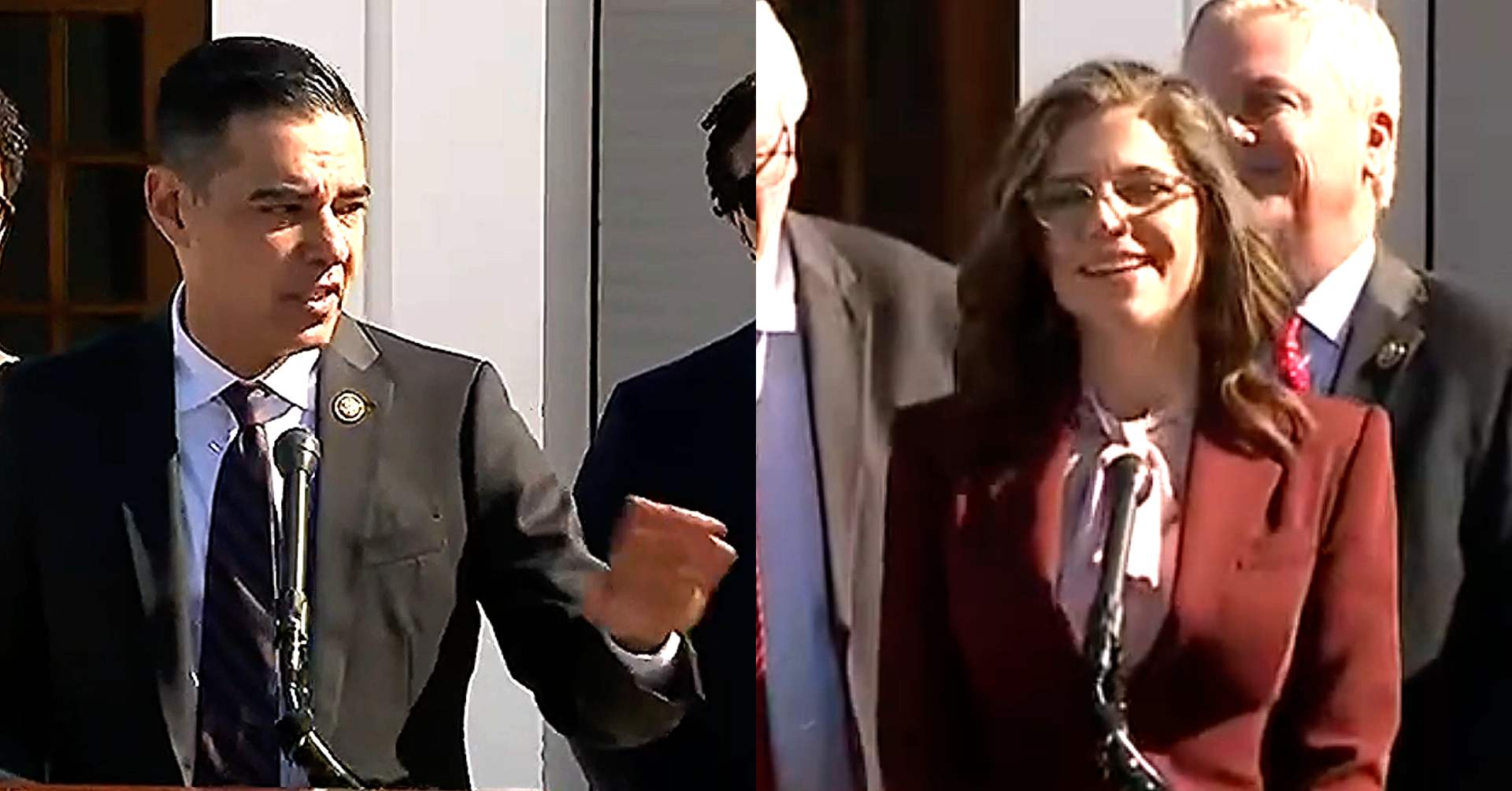
A significant political disagreement has emerged following former Secretary of State Hillary Clinton's recent appearance for private testimony before the House Oversight Committee. Representative Robert Garcia, a Democrat representing California and serving as the Ranking Member on the committee, has forcefully challenged the narrative presented by Republican Representative Nancy Mace of South Carolina concerning Clinton's conduct during the closed-door proceedings. According to initial reports, Rep. Mace characterized Clinton as displaying an "unhinged" and "screaming" disposition throughout her questioning by committee members. However, Rep. Garcia has strongly refuted this portrayal, asserting that Mace's description is inaccurate and demanding the immediate release of the unedited video recording of the testimony to provide a transparent and objective account of the events. This call for transparency underscores the growing tension surrounding high-profile congressional testimonies, particularly when conflicting accounts arise from sessions not open to public scrutiny, leaving the public to grapple with partisan interpretations of private proceedings.
The context surrounding this dispute involves a private session of the House Oversight Committee, a powerful congressional body tasked with investigating the operations of the federal government. Such closed-door testimonies are a common mechanism for committees to gather information without immediate public or media influence, allowing for more candid discussions. However, they also create an environment where differing accounts can easily emerge, especially when dealing with politically charged figures like Hillary Clinton, whose public appearances often draw intense scrutiny and partisan reactions. The significance of this particular testimony, though not fully detailed in the immediate aftermath, lies in its potential to inform ongoing oversight efforts or investigations. Historically, testimonies from former high-ranking officials before congressional committees are often highly anticipated events, with both sides of the political spectrum keen to frame the narrative in a manner that supports their respective agendas, making the integrity of reported conduct a critical point of contention.
The specific claims made by Representative Mace, describing former Secretary Clinton as "unhinged" and "screaming," paint a vivid picture of a contentious and possibly unprofessional demeanor during the private questioning. Such strong descriptors, according to reports, suggest a significant departure from the composed conduct typically expected in formal congressional settings. Conversely, Representative Garcia's vehement refutation directly challenges the veracity of Mace's account, implying that her characterization is either exaggerated or entirely false. His demand for the release of the "actual video unedited" serves as a direct challenge to Mace's narrative, suggesting that the raw footage would vindicate his perspective and expose any misrepresentations. This direct appeal for unedited visual evidence highlights a desire to move beyond subjective interpretations and provide an objective record, allowing the public and other lawmakers to independently assess Clinton's conduct during the high-stakes testimony, thereby ensuring accountability in the reporting of such sensitive proceedings.
The emergence of such starkly contrasting narratives from a closed-door session raises significant questions about transparency and the potential for partisan spin in congressional oversight. When members of the same committee offer diametrically opposed descriptions of a witness's conduct, it can erode public trust in the integrity of the proceedings and the information conveyed. Experts in political communication often note that in the absence of verifiable evidence, the public is left to choose between competing partisan accounts, which can further entrench existing political divisions rather than clarify facts. The call for the release of unedited video footage, therefore, represents a demand for greater accountability and a mechanism to bypass potentially biased interpretations. Going forward, the handling of this request will be crucial: if the video is released, it could either confirm one account or reveal a more nuanced reality, potentially impacting the credibility of the lawmakers involved. If it is withheld, it could fuel further speculation and reinforce perceptions of a lack of transparency within congressional operations, especially concerning high-profile political figures.
In summary, the political arena is currently witnessing a heated dispute over former Secretary of State Hillary Clinton's recent private testimony before the House Oversight Committee. The core of the contention lies in the conflicting accounts provided by Republican Representative Nancy Mace, who described Clinton's demeanor as "unhinged" and "screaming," and Democratic Representative Robert Garcia, who vehemently denies these claims and has called for the immediate release of the unedited video footage of the session. This disagreement underscores the inherent challenges of transparency in closed-door congressional proceedings and the potential for partisan narratives to shape public perception. The resolution of this dispute, particularly whether the requested video evidence will be made public, remains a critical point to watch, as it will not only clarify the truth of Clinton's conduct but also set a precedent for accountability and transparency in future high-profile congressional testimonies.