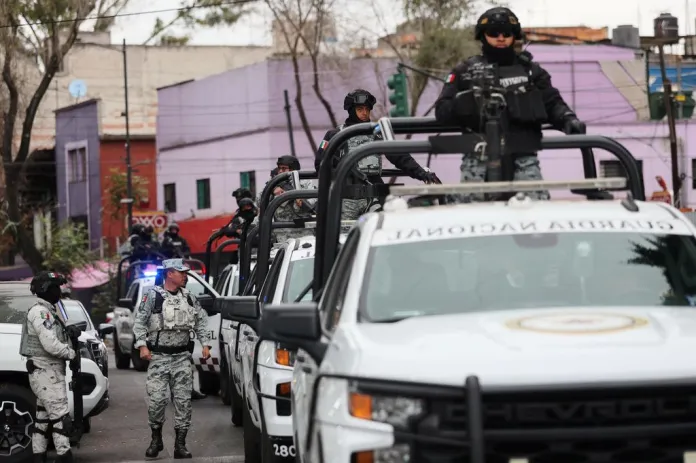
A partial government shutdown, reportedly initiated by Senate Democrats, has now extended into its second week, prompting significant apprehension regarding national security at a particularly sensitive time. The legislative deadlock commenced in mid-February, when Democratic senators reportedly moved to obstruct a temporary funding measure intended for the Department of Homeland Security (DHS). According to various reports, the primary justification cited by Democrats for blocking this crucial bill revolved around their insistence on comprehensive reforms within the DHS. This demand for systemic changes reportedly followed recent, high-profile incidents in Minnesota, where law enforcement officers were involved in the fatal shootings of two citizens. The ongoing impasse has left a vital federal agency operating without full appropriations, drawing widespread concern from observers who highlight the potential vulnerabilities this creates for national defense and public safety infrastructure. The decision to leverage essential agency funding for policy demands has sparked a contentious debate across the political spectrum, with critics pointing to the immediate risks posed by an underfunded security apparatus.
The Department of Homeland Security encompasses a broad spectrum of critical functions vital to the nation's safety and stability. Its responsibilities range from border protection and immigration enforcement to counter-terrorism efforts, cybersecurity, and safeguarding critical infrastructure. Reports indicate that a lapse in funding for such an agency can have far-reaching implications, potentially affecting the readiness of frontline personnel, delaying intelligence operations, and undermining ongoing security initiatives. The current situation, stemming from the Democrats' reported obstruction of a temporary funding bill, underscores a recurring challenge in legislative processes where policy disagreements intersect with essential government operations. Historically, government shutdowns, even partial ones, have been associated with disruptions to federal services and a potential erosion of public confidence. In this instance, the focus on DHS amplifies concerns due to its direct role in protecting the homeland against a multitude of threats, from cyberattacks to physical incursions, as highlighted by various security analysts.
The Democrats' stated rationale for their actions centers on the need for what they describe as 'comprehensive reforms' within the Department of Homeland Security. This demand, according to reports, is directly linked to recent tragic events in Minnesota, where law enforcement officers were involved in incidents resulting in the deaths of two citizens. While the specific details of the proposed reforms have not been extensively elaborated in available reports, the context suggests a focus on issues related to police accountability, use-of-force policies, and potentially broader oversight mechanisms within agencies that fall under the DHS umbrella or collaborate with local law enforcement. Critics of the shutdown argue that withholding funding for an entire department, even temporarily, is an extreme measure to achieve policy goals, especially when those goals stem from localized incidents rather than systemic failures directly attributable to the federal agency's funding structure. The temporary nature of the blocked funding measure further complicates the situation, as it was designed to provide short-term stability while a more permanent solution could be negotiated.
Political observers and security experts have begun to weigh in on the broader implications of this legislative standoff. Many suggest that using a critical agency's funding as leverage for policy reforms, particularly those stemming from local incidents, could establish a concerning precedent for future legislative battles. Analysts warn that such tactics risk politicizing essential security functions, potentially leaving the nation vulnerable during periods of political disagreement. The perspective often emphasizes the paramount importance of national security and border integrity, viewing any disruption to DHS operations as a direct threat to these foundational principles. Critics argue that while calls for reform may be valid, the method chosen by Senate Democrats — blocking a temporary funding bill — directly compromises the operational capacity of an agency tasked with protecting citizens from diverse threats. This approach, according to some commentators, prioritizes a specific legislative agenda over the immediate and undeniable need for continuous, robust national security operations.
As the partial government shutdown, reportedly initiated by Senate Democrats, enters its second week, the core conflict remains unresolved: demands for comprehensive DHS reforms, spurred by recent Minnesota incidents, versus the immediate operational needs of a vital national security agency. The impasse over a temporary funding measure continues to raise significant concerns about the nation's ability to effectively counter threats and maintain public safety. Observers are closely watching for any signs of compromise or escalation, as the prolonged absence of full funding for DHS could lead to increasingly severe consequences for border security, counter-terrorism efforts, and overall homeland defense. The coming days will likely determine whether a resolution can be found that addresses both the calls for reform and the urgent imperative to restore full operational capacity to the Department of Homeland Security.