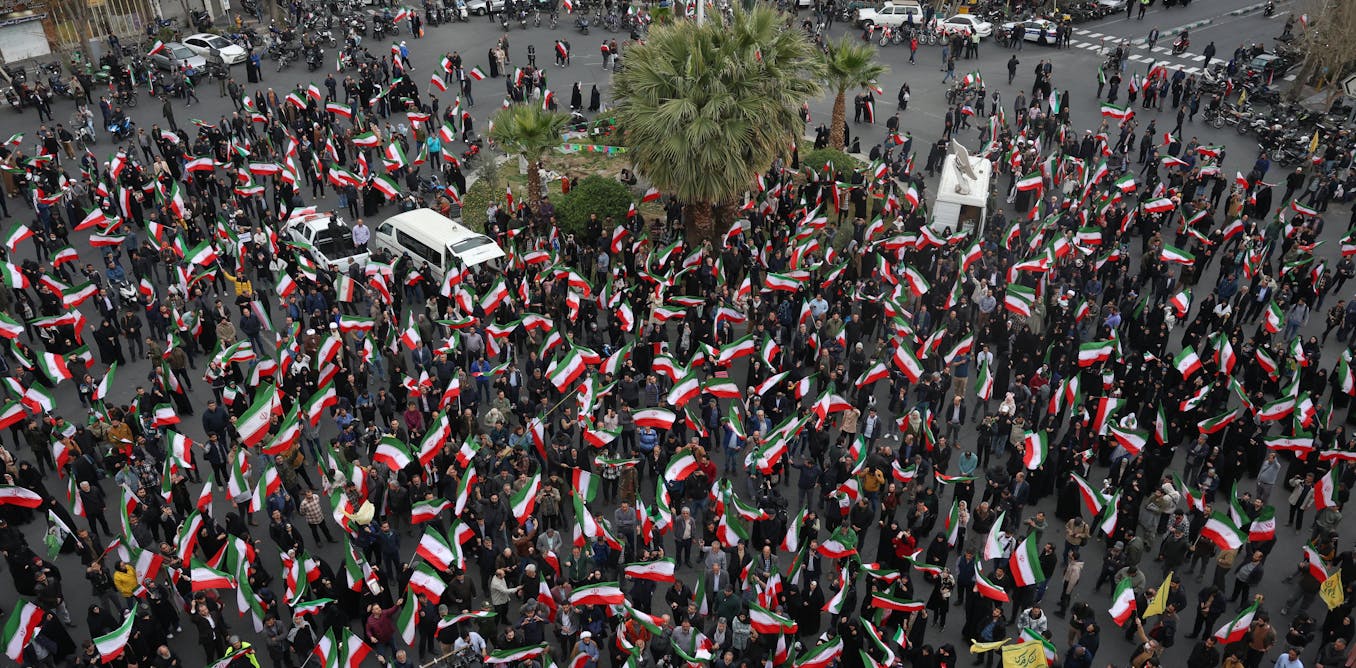
American and Israeli military forces initiated a large-scale assault on Iran on February 28, 2026, following an unprecedented accumulation of U.S. naval vessels and aircraft in the Middle East region over several decades. President Donald Trump characterized these coordinated actions as "major combat operations" and publicly advocated for a change in the governing structure within Tehran. Amidst the unfolding events, Iranian media outlets conveyed reports indicating that Supreme Leader Ayatollah Ali Khamenei was among those killed during the extensive strikes. This significant escalation marks a pivotal moment in regional dynamics, prompting immediate global attention and raising questions about the strategic objectives and potential repercussions of such a forceful intervention. The reported death of Iran's highest authority figure, if confirmed, would undoubtedly reshape the political landscape of the Islamic Republic and the broader Middle East, presenting both immediate challenges and long-term uncertainties for all parties involved.
The military operation on February 28, 2026, was preceded by weeks of a substantial U.S. military buildup across the Middle East, described as the largest in decades. This deployment involved a significant number of warships and aircraft, signaling an imminent and large-scale intervention. According to Donald Heflin, a veteran diplomat and current educator at Tufts University’s Fletcher School, the sheer magnitude of the strikes and the concentration of American military assets in the area strongly suggest that the Trump administration's primary objective is regime change in Iran. This strategic goal aligns with President Trump's public statements, where he explicitly called upon the Iranian populace to actively participate in the overthrow of their current government. The scale of the military engagement underscores a deliberate and forceful attempt to alter the political status quo in Iran, representing a dramatic shift in U.S. policy towards the nation.
Reports from across Iran indicate widespread attacks, targeting critical infrastructure and strategic locations. Officials familiar with military strategy suggest that the initial phase of the assault focused on what is termed 'command and control' centers, which are considered the nerve centers for managing Iran's military operations. This approach is a time-honored strategy aimed at disrupting an adversary's ability to coordinate its defenses and retaliatory actions. Among the specific targets, media reports confirmed that the residence of Supreme Leader Ayatollah Ali Khamenei was struck during the initial waves of the offensive. Donald Heflin further indicated that these initial strikes are likely to be followed by additional military actions, potentially extending over several more days, as the U.S. and Israeli forces aim to achieve their strategic objectives and further degrade Iran's military capabilities and leadership infrastructure.
Despite the massive military pressure and President Trump's explicit calls for the Iranian people to dismantle their government, veteran diplomat Donald Heflin cautioned that achieving regime change in Iran would be a difficult undertaking. Heflin, speaking to Alfonso Serrano, a U.S. politics editor at The Conversation, emphasized the inherent complexities of such an endeavor. History demonstrates that externally driven calls for internal political upheaval, even when accompanied by significant military force, often face considerable resistance and unpredictable outcomes. The deeply entrenched nature of Iran's political and religious establishment, coupled with a nationalistic sentiment, could pose substantial barriers to any swift or easy transition of power, regardless of the severity of the current military actions or the reported demise of the Supreme Leader. The long-term stability and political direction of Iran remain highly uncertain, with the potential for prolonged internal strife or a consolidation of power by other factions within the existing system.
In the aftermath of the unprecedented U.S. and Israeli military assault on Iran, the immediate future remains fraught with uncertainty. The reported death of Supreme Leader Ayatollah Ali Khamenei, if confirmed, would undoubtedly create a significant power vacuum and potentially trigger a complex succession process within Iran's ruling structure. While President Trump's administration has clearly articulated a goal of regime change, expert analysis suggests that this objective will be challenging to achieve, despite the overwhelming military force deployed. Observers will now keenly watch for the Iranian government's official response, any signs of internal power struggles, and the potential for further military engagements in the coming days. The long-term implications for regional stability and international relations are profound, marking a critical juncture in the geopolitical landscape of the Middle East.