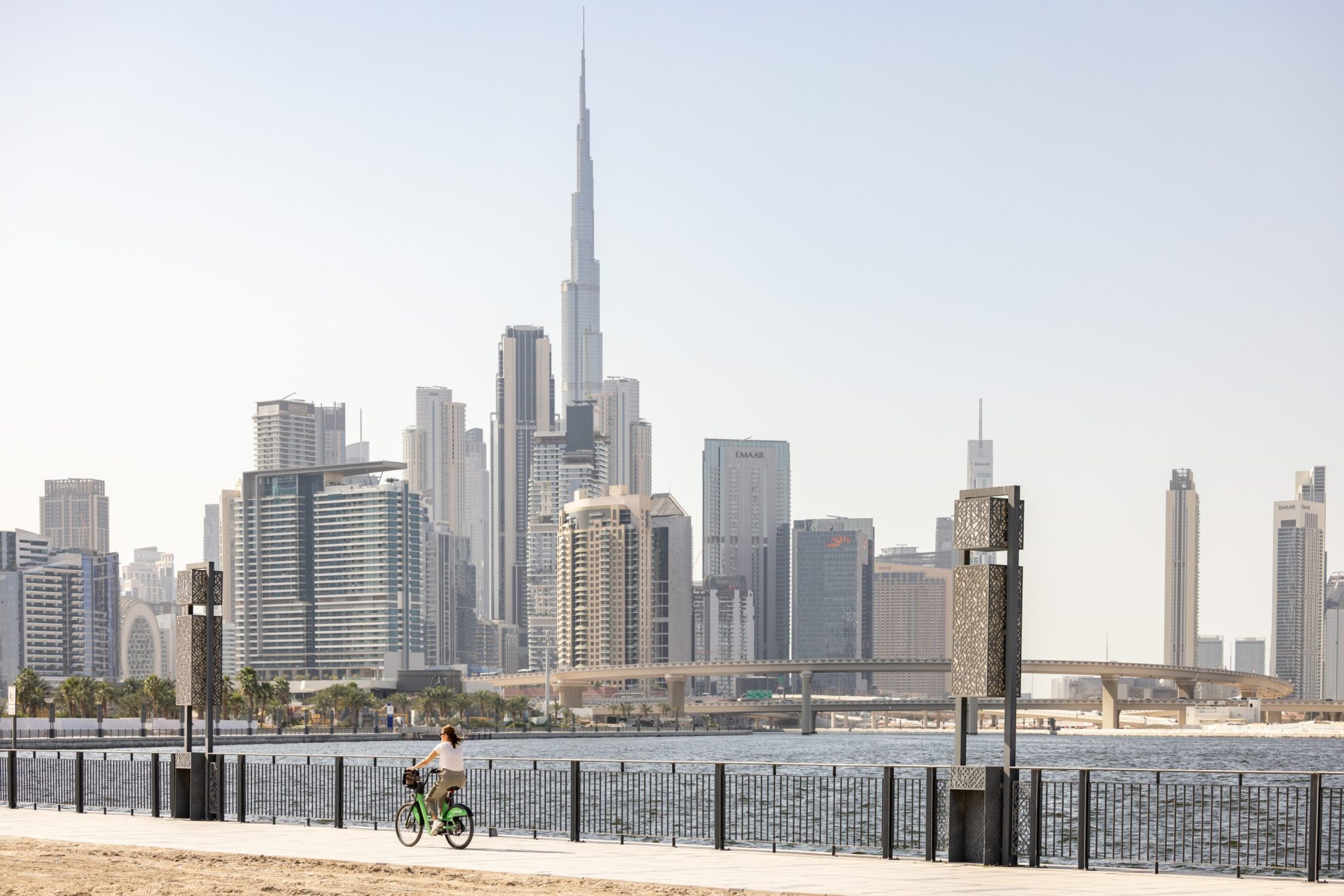
An unprecedented wave of Iranian airstrikes targeted several Gulf nations last Saturday, dramatically altering the perception of security in the region, particularly for Dubai. Defense systems were reportedly activated over the city-state's iconic skyscrapers, intercepting incoming missiles and drones. Eyewitness accounts and social media footage depicted random explosions and plumes of dark smoke ascending from some of Dubai's most renowned districts, a scene previously unimaginable in the emirate. Local authorities confirmed that four individuals sustained injuries in a fire on Palm Jumeirah, the famous man-made island known for its luxurious hotels and attractions. Reports indicated that a high-end hotel on the island was struck by fragments of a missile, either after it was intercepted or veered off its intended path. This series of coordinated attacks, which also targeted American military installations in the region, has profoundly challenged Dubai's carefully cultivated image as an unshakeable haven amidst a volatile geopolitical landscape, prompting widespread concern among residents and international observers alike.
For decades, Dubai has meticulously fostered a reputation for unparalleled safety and stability, distinguishing itself as a secure oasis in a challenging Middle Eastern environment. This image has been a cornerstone of its success, attracting vast foreign investment, a thriving tourism industry, and a diverse expatriate population. The city-state's perceived invulnerability was so deeply ingrained that, according to anecdotal reports, many residents felt comfortable leaving their vehicles and homes unlocked. The events of Saturday, however, represent a stark departure from this long-held reality. The sight of interceptor missiles streaking across the skies and unidentified objects falling over the emirate, widely documented in numerous social media videos, was an unthinkable spectacle that shattered the illusion of impenetrable security. This incident not only poses an immediate threat but also raises profound questions about the future stability and economic viability of a region heavily reliant on its perception of safety for continued growth and prosperity.
The impact of the strikes extended beyond Dubai's immediate vicinity, affecting several other Gulf states. In Bahrain, reports indicated that missiles struck a service center at a US military base, alongside residential buildings, underscoring the broad scope of the Iranian offensive. Kuwait also experienced direct hits, with a drone impacting its international airport, resulting in injuries to some staff members within a passenger terminal. Furthermore, the American base situated in Kuwait was also targeted, causing minor injuries to three members of the Kuwaiti military. Qatar, another key regional player, successfully intercepted multiple waves of airstrikes and, like many other nations in the vicinity, temporarily suspended its flight operations. The United Arab Emirates, in response to the escalating situation, partially closed its airspace and halted flights in Dubai as its defense systems actively intercepted incoming Iranian rockets. Debris from these interceptions reportedly fell in both Dubai and Abu Dhabi, with the state-run news agency confirming one fatality in an Abu Dhabi area following missile interceptions.
The unprecedented nature of these Iranian airstrikes carries significant implications for regional stability and Dubai's economic future. Experts suggest that the direct targeting of civilian areas and critical infrastructure, even if unintended due to intercepted debris, could deter foreign investment and tourism, which are vital pillars of Dubai's economy. The incident also highlights the vulnerability of even the most technologically advanced defense systems against a determined and widespread aerial assault, potentially prompting a re-evaluation of security protocols across the Gulf. The swift closure of a restaurant in the Dubai International Financial Center, the Middle East's primary financial hub, and the subsequent panic-buying in some supermarkets, which prompted Emirati authorities to issue public reassurances about robust strategic reserves of essential commodities, underscore the immediate psychological and economic shockwaves. This event could fundamentally reshape geopolitical dynamics, forcing a recalibration of alliances and defense strategies in a region already fraught with tension.
In the aftermath of Saturday's events, the immediate focus remains on assessing the full extent of the damage and ensuring public safety. Emirati authorities moved swiftly to reassure residents, stating that strategic reserves of essential commodities are 'robust, comprehensive and diversified,' and urged the public to refrain from stockpiling. However, the psychological impact of seeing defense systems engage hostile projectiles over major urban centers is likely to linger, challenging the long-held sense of security. The incident marks a critical juncture for Dubai and the broader Gulf region, signaling a potential escalation in regional conflicts and demanding a renewed emphasis on diplomatic solutions alongside enhanced defense capabilities. The coming weeks will be crucial in observing how regional powers and international actors respond to this significant breach of security, and what long-term consequences it will have for the stability and economic outlook of the Middle East.