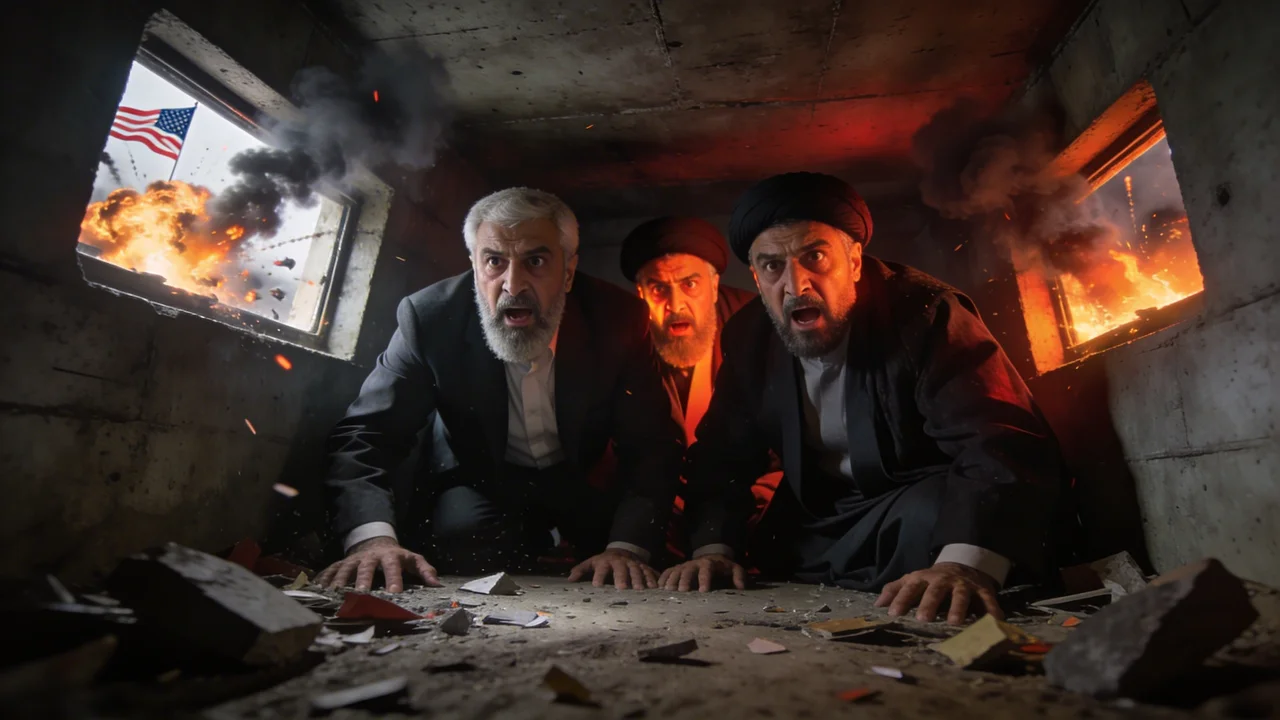
The United States and Israel have reportedly initiated a significant military campaign, dubbed 'Operation Epic Fury' by U.S. officials, targeting the Iranian regime. Launched on February 28th, the extensive operation has reportedly resulted in the deaths of several high-ranking Iranian figures, including the nation's Supreme Leader, Ayatollah Ali Khamenei. Reports further indicate that General Mohammad Pakpour, commander of Iran’s Islamic Revolutionary Guard Corps, and Iranian Defense Minister Aziz Nasirzadeh also perished in the coordinated strikes. Beyond targeting key leadership, the joint effort has focused on dismantling critical elements of Iran's military and security infrastructure, including nuclear enrichment facilities, ballistic missile systems, missile launchers, and naval installations. This offensive marks a substantial escalation in regional tensions, with officials indicating a firm resolve to address perceived threats emanating from Tehran. The scope and immediate impact of these actions suggest a decisive shift in strategy by the involved nations, aiming to fundamentally alter the geopolitical landscape of the Middle East.
This comprehensive military action follows a period of heightened friction, with sources suggesting that the Iranian leadership may have misjudged the resolve of the United States and its allies. According to statements, both President Trump and Israeli Prime Minister Benjamin Netanyahu are committed to a definitive approach concerning the Iranian regime. The operation unfolds against a backdrop of long-standing accusations against the Iranian government, including claims that its proxy forces are responsible for the deaths of thousands of American citizens. Furthermore, reports highlight the regime's alleged brutal suppression of its own populace, with more than thirty thousand citizens reportedly killed in cold blood. This history of alleged aggression and internal repression provides the context for the current offensive, which officials suggest is intended to bring an end to what they describe as a fanatical Islamist theocracy. The stated objective is to neutralize the perceived existential threats posed by the regime, signaling a departure from previous diplomatic or containment strategies.
The operational details of 'Operation Epic Fury' reveal a broad and strategic targeting approach. Beyond the reported elimination of top leadership, the joint forces systematically struck vital components of Iran's military capabilities. This included the destruction of numerous ballistic missiles and their associated launch platforms, significantly degrading the regime's long-range strike potential. Naval facilities, crucial for projecting Iranian influence in maritime corridors, were also targeted and reportedly neutralized. Furthermore, the operation extended to the regime’s broader military and security infrastructure, aiming to cripple its ability to conduct operations or maintain internal control. In remarks delivered at the White House on March 2nd, prior to a Medal of Honor ceremony, President Trump stated that the United States was 'already substantially ahead of our time projections' for the operation. While he acknowledged that the campaign could potentially last 'four to five weeks,' he emphasized the commitment to achieving its objectives, stating, 'Whatever the time is, it’s OK. Whatever it takes.'
The strategic implications of 'Operation Epic Fury' are profound, particularly concerning the reported demise of Iran's Supreme Leader and other senior military figures. Such a decapitation strike against the regime's command structure could lead to significant instability within Iran, potentially altering its political trajectory and regional posture. Analysts suggest that the targeting of nuclear enrichment sites, alongside conventional military assets, underscores a dual objective: to dismantle both Iran's potential for weapons development and its capacity for conventional warfare. President Trump, in a social media post on February 28th, articulated the operation's purpose as 'to defend the American people by eliminating imminent threats from the Iranian regime, a vicious group of very hard, terrible people.' He also acknowledged the inherent dangers of such an undertaking, stating that while his administration had 'taken every possible step to minimize the risk to U.S. personnel in the region,' the 'Iranian regime seeks to kill,' and 'the lives of courageous American heroes may be lost and we may have casualties. That often happens in war.' This acknowledgement highlights the high stakes and potential human cost involved in this aggressive military intervention.
In summary, 'Operation Epic Fury' represents a dramatic and decisive military intervention by the United States and Israel against the Iranian regime. Launched on February 28th, the operation has reportedly resulted in the deaths of key Iranian leaders, including Supreme Leader Ayatollah Ali Khamenei, and the destruction of critical military and nuclear infrastructure. President Trump's statements indicate that the operation is progressing ahead of schedule, though he cautioned it could extend for several weeks and acknowledged the potential for U.S. casualties. The stated rationale for the offensive centers on neutralizing imminent threats and dismantling a regime accused of widespread human rights abuses and regional destabilization. As the situation unfolds, the international community will closely monitor the immediate aftermath within Iran, the potential for further escalation, and the long-term implications for stability in the Middle East, marking a pivotal moment in the ongoing geopolitical struggle.