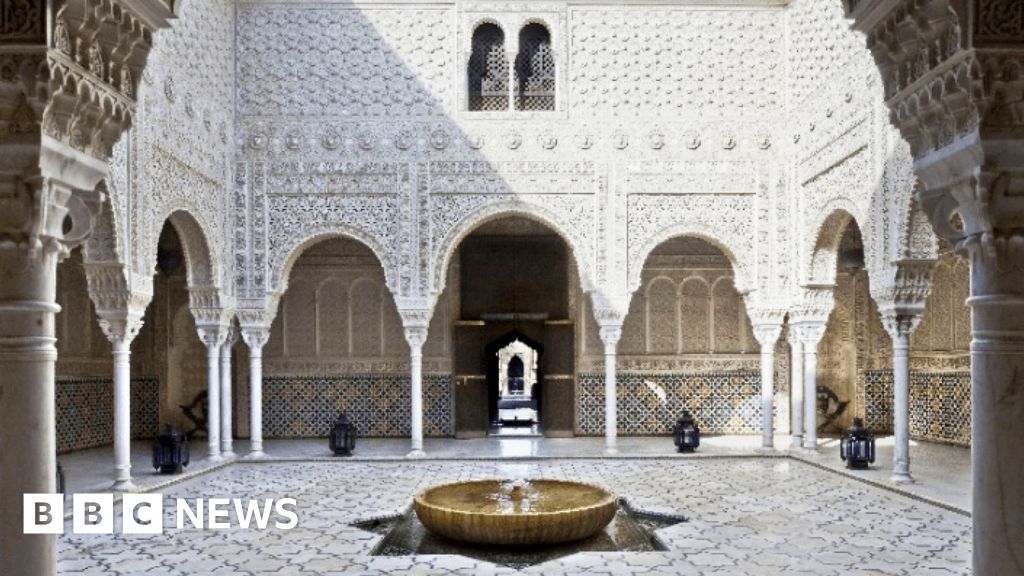
Freshly disclosed documents from the US Department of Justice last month have brought to light a significant financial maneuver by Jeffrey Epstein, indicating he attempted to acquire a multi-million dollar palace in Morocco merely a day before his apprehension in 2019. The financier, who faced severe sex trafficking charges, had reportedly been pursuing the purchase of the opulent Bin Ennakhil property, situated in Marrakech's luxurious Palmeraie district, for several years. On July 5, 2019, just hours before his arrest, Epstein reportedly authorized a $14.95 million wire transfer as part of an agreement to buy the offshore entity that held ownership of the palace for a total of €18 million. This transaction, according to the recently released files, represented Epstein's final major financial activity immediately preceding his capture by US authorities upon his return to New York, marking a critical moment in the timeline of his legal troubles.
Epstein's long-standing interest in the Bin Ennakhil estate dates back to at least 2011, with reports indicating a protracted negotiation process. The acquisition was reportedly hampered by ongoing disagreements with the seller concerning both the final price and the specific terms of the purchase arrangement, causing the deal to linger for years. The property itself is described as an architectural marvel, a grand palace meticulously constructed by an estimated 1,300 skilled craftsmen, featuring intricate carvings and elaborate mosaics that underscore its luxurious nature. Following Epstein's arrest on sex trafficking charges, which occurred as he re-entered the United States, the planned transaction was swiftly halted. His accountant, Richard Kahn, reportedly cancelled the substantial wire transfer just three days after Epstein was taken into custody, leading to the ultimate collapse of the palace acquisition.
The timing of Epstein's attempted palace purchase has fueled considerable speculation, particularly within local Moroccan media circles, regarding his potential motivations. Given that Morocco does not maintain an extradition treaty with the United States, some commentators have posited that Epstein might have intended to use the property as a sanctuary, a place to retreat and evade potential arrest should new charges be brought against him. However, a former associate of Epstein, who chose to remain anonymous, offered a different perspective, suggesting that the financier appeared to have been entirely unaware of his impending arrest when he initiated the wire transfer. This individual did, however, concede that the idea of Epstein seeking a lavish refuge where he could maintain his opulent lifestyle "would make sense." Crucially, the documents released by the US Department of Justice contain no explicit references to Epstein discussing Morocco as a potential haven from American legal authorities. Epstein's connections to the North African nation are not new, reportedly extending back to the early 2000s, with Virginia Giuffre, one of his most prominent accusers, detailing in her memoir an instance where she was flown to Tangier by Epstein and Ghislaine Maxwell to review interior designs for various properties.
The revelation of Epstein's eleventh-hour attempt to secure such a significant property just prior to his arrest introduces a complex layer to the understanding of his final days as a free man. The stark contrast between the meticulous planning involved in an €18 million real estate acquisition and the suddenness of his capture raises questions about his awareness of the impending legal storm. While the lack of an extradition treaty with Morocco lends credence to the theory of a potential escape plan, the absence of any direct mention of such intentions in the released documents, coupled with the associate's testimony, suggests a scenario where Epstein might have genuinely been oblivious to the immediate threat. This dichotomy underscores the enduring mystery surrounding his mindset. Furthermore, the sheer scale of the proposed €18 million purchase vividly illustrates the vast financial resources at Epstein's disposal, enabling him to pursue properties of immense grandeur and architectural significance, reflecting a lifestyle defined by extreme wealth and a desire for secluded, opulent environments.
In summary, the recently unsealed documents provide a compelling glimpse into Jeffrey Epstein's final major financial undertaking: a last-ditch effort to acquire a lavish Moroccan palace. This ambitious purchase, initiated merely a day before his 2019 arrest, was ultimately thwarted by his capture and the subsequent cancellation of the substantial wire transfer. While local speculation points to a potential escape strategy given Morocco's lack of an extradition treaty with the US, the official documents do not explicitly support this theory, and an associate suggested Epstein was unaware of his imminent arrest. The episode highlights the financier's immense wealth and his penchant for grand, secluded properties. As further details of his complex financial network and activities continue to emerge, observers will undoubtedly remain focused on how these revelations contribute to the broader understanding of Epstein's motivations and the full scope of his illicit operations.