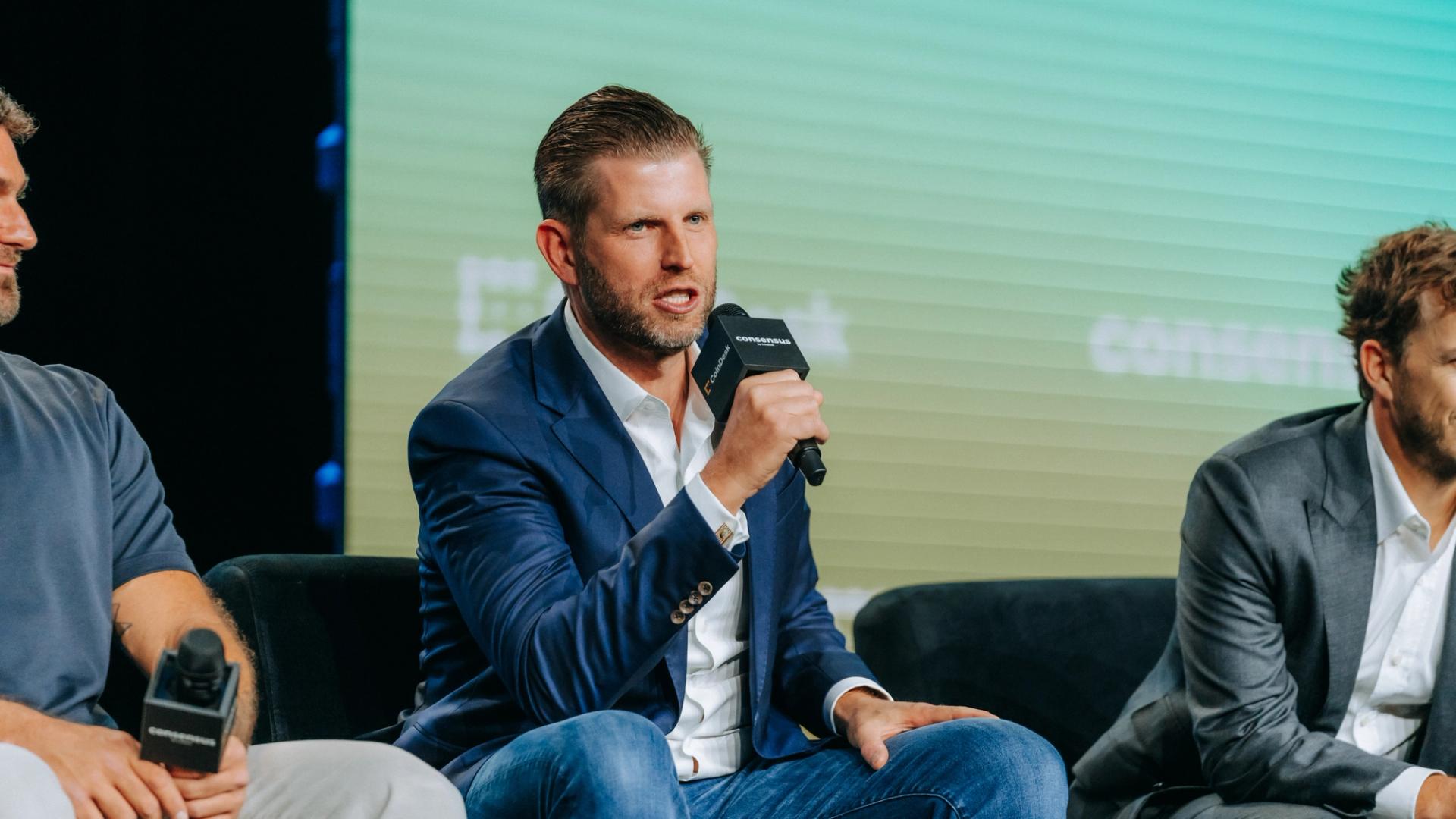
Eric Trump, a co-founder of the digital asset firm World Liberty Financial and son of former U.S. President Donald Trump, has launched a scathing critique against the traditional banking sector, accusing major financial institutions of acting in an 'anti-American' manner. His strong remarks, shared on the social media platform X (formerly Twitter) earlier this week, specifically target banks' alleged lobbying efforts to obstruct the inclusion of stablecoin yield mechanisms within forthcoming crypto market structure legislation. According to reports, Trump asserted that these powerful financial entities, including prominent names like JPMorgan Chase, Bank of America, and Wells Fargo, are actively working to prevent American consumers from accessing potentially higher returns on their savings, while simultaneously blocking any rewards or benefits for customers. This public condemnation underscores a growing tension between the established financial system and the burgeoning cryptocurrency space, particularly concerning the regulatory framework for stablecoins and the potential for decentralized finance to offer alternative investment opportunities.
The controversy centers on ongoing negotiations surrounding stablecoin yield, a critical component of proposed legislation such as the Clarity Act. Stablecoins are cryptocurrencies designed to maintain a stable value, typically pegged to a fiat currency like the U.S. dollar, and are often seen as a bridge between traditional finance and the volatile crypto market. The ability for platforms to offer yield on these assets presents a new avenue for consumer savings and investment, which Eric Trump and his company, World Liberty Financial, advocate for. World Liberty, which issues its own stablecoin known as USD1, is also actively pursuing a charter through the Office of the Comptroller of the Currency (OCC), indicating a vested interest in the regulatory landscape. This isn't the first time Eric Trump has voiced grievances against banks; he has previously shared at various conferences over the past year that his family encountered difficulties, reportedly being 'debanked' by financial institutions, adding a personal dimension to his current criticisms.
In his detailed social media post, Eric Trump articulated his belief that banks offer only a marginal interest rate to their depositors, a stark contrast to the significantly higher interest they receive from the Federal Reserve, with the difference allegedly retained as profit. He highlighted that crypto and stablecoin platforms are poised to provide considerably more attractive yields, potentially in the range of 4-5% or even higher rewards. Attributing this disparity to a deliberate strategy, Trump claimed that organizations like the American Bankers Association (ABA) and other lobbying groups are investing substantial sums to ban or restrict these competitive yields through legislative efforts like the Clarity Act. He characterized their arguments, which invoke 'fairness' and 'stability,' as mere pretexts to safeguard their existing low-rate monopoly and prevent a potential exodus of deposits. This, he concluded, represents an 'anti-retail, anti-consumer, and straight-up anti-American' stance. Notably, his father, former President Donald Trump, echoed similar sentiments on Tuesday, urging Congress to advance the Clarity Act and criticizing banks for their perceived intransigence in stablecoin yield negotiations.
The public and forceful intervention by Eric Trump, supported by his father, injects a significant political dimension into the already complex debate over cryptocurrency regulation. This direct challenge from figures closely associated with a presidential family, who also have direct business interests in the crypto space through World Liberty Financial, could intensify scrutiny on both the banking sector's lobbying practices and the legislative process for digital assets. Experts suggest that such high-profile accusations of 'anti-American' behavior could sway public opinion, potentially increasing pressure on lawmakers to consider consumer access to higher yields offered by stablecoin platforms. The broader implications extend to the ongoing power struggle between legacy financial institutions and the rapidly evolving decentralized finance ecosystem, raising questions about market competition, innovation, and the future of financial services in the United States. The outcome of this legislative battle will likely set precedents for how digital assets are integrated into the national economy and regulated moving forward.
In summary, Eric Trump's recent criticisms underscore a deepening rift between proponents of decentralized finance, including his own business ventures, and the established banking industry. His accusations of anti-consumer practices and monopolistic behavior highlight the core tension surrounding stablecoin yield in pending crypto legislation. With both Eric Trump and his father, Donald Trump, publicly advocating for the advancement of bills like the Clarity Act and challenging traditional banks, the debate is poised to remain a prominent feature of the financial and political landscape. While the immediate impact of these statements on legislative negotiations remains uncertain, observers will be closely watching the progress of the Clarity Act and similar bills, as well as the ongoing efforts of companies like World Liberty Financial to secure regulatory charters, to gauge the future trajectory of stablecoin integration and consumer financial options.