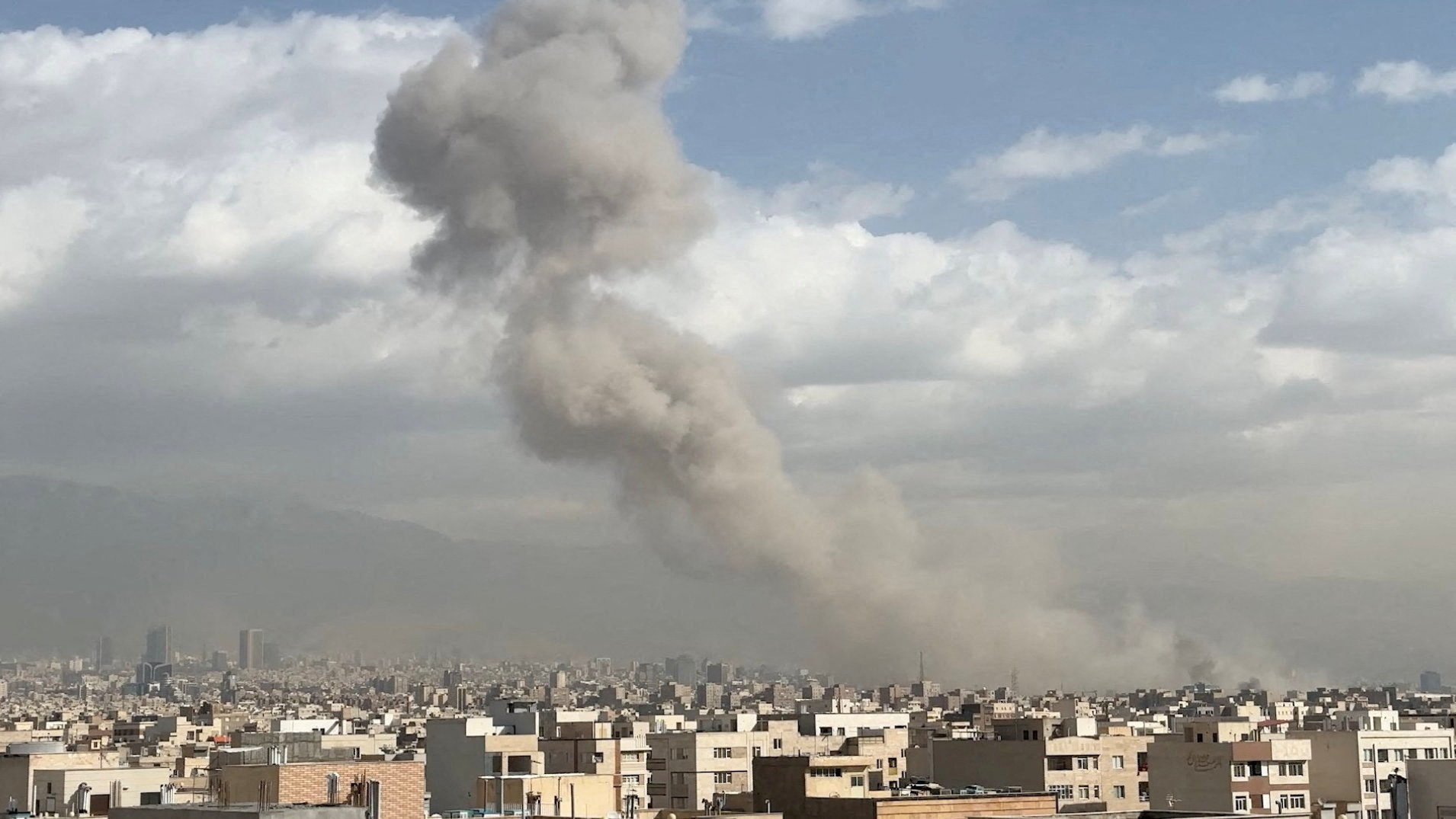
A major military offensive, codenamed "Operation Epic Fury," was unleashed by combined United States and Israeli forces against Iran on a recent Saturday morning, according to official reports. US President Donald Trump publicly characterized this extensive campaign as "massive and ongoing," articulating a clear objective to encourage the Iranian people to depose their current regime once the fighting subsides. In a rapid and direct response to these coordinated strikes, Iranian forces reportedly launched retaliatory attacks targeting both Israeli territory and American military installations situated across the region. This swift escalation has immediately captured the attention of global observers and defense analysts, who are now intensely scrutinizing the unfolding conflict and its potential trajectory. The joint nature of the initial strike signifies a coordinated strategic effort, marking a critical juncture in the long-standing, volatile relationship between these nations. Experts are currently assessing the immediate ramifications of this substantial military engagement, which has quickly transformed a simmering geopolitical rivalry into overt hostilities, raising profound questions about regional stability and international security.
The launch of Operation Epic Fury represents a dramatic intensification of geopolitical tensions that have long simmered in the Middle East, according to various analyses. This joint US-Israeli military action marks a significant departure from previous, more covert or limited engagements, signaling a direct and overt challenge to the Islamic Republic. Analysts like Nate Swanson suggest that by initiating such a massive joint attack, President Trump is undertaking a substantial gamble, aiming to inflict sufficient damage upon Iran's core security and political infrastructure to precipitate the collapse of the existing regime. This strategic objective, while clearly articulated, is viewed by some as an ambitious and high-risk endeavor, given the inherent complexities of engineering regime change through military means. The decision to involve both US and Israeli forces in a coordinated offensive underscores the perceived gravity of the threat from Iran and the depth of the strategic alignment between Washington and Jerusalem on this issue. This operation is set against a backdrop of decades of mistrust, proxy conflicts, and diplomatic stalemates, elevating the confrontation to an unprecedented level of direct military engagement. The stated goal of regime overthrow, rather than merely deterrence or degradation of capabilities, fundamentally reshapes the stakes of the conflict.
In the immediate aftermath of the initial strikes, Iran's swift retaliation against both US bases and Israeli targets signals a clear intent not to de-escalate, according to Jennifer Gavito, an expert observing the situation. This response indicates that Tehran is prepared to engage directly, challenging the notion that the offensive would immediately cripple its capacity or will to fight. Jonathan Panikoff highlights that the Iranian regime is currently experiencing unprecedented levels of strain, a condition exacerbated by the current military campaign. However, Panikoff cautions against the potential emergence of an "IRGCistan," a scenario where the Islamic Revolutionary Guard Corps could consolidate power in the event of a regime collapse, potentially leading to a more militarized and unpredictable state. Furthermore, Alex Plitsas suggests that Iran might be deliberately holding some of its missile capabilities in reserve, implying that the full extent of its retaliatory potential may not yet have been deployed. This possibility adds another layer of uncertainty to the ongoing conflict, as it suggests Iran could still escalate further. Matthew Kroenig characterizes the entire campaign as a "high-risk, high-reward" undertaking, reflecting the significant potential for both strategic gains and severe unintended consequences for all parties involved.
The broader implications of Operation Epic Fury extend far beyond the immediate battlefield, touching upon international law, domestic politics, and regional stability. Celeste Kmiotek points out that this campaign carries serious implications for international legal frameworks, raising questions about the legality and justification of such a large-scale, overt military intervention aimed at regime change. Domestically, Daniel Shapiro suggests that President Trump's order leaves significant unanswered questions for the American populace, likely concerning the long-term commitment, costs, and potential human toll of such an extensive operation. Thomas S. Warrick further warns that this conflict will inevitably have a "home front" in the United States, implying potential domestic impacts ranging from economic repercussions to public sentiment. From a strategic perspective, Danny Citrinowicz describes the campaign as having an "abstract objective" and lacking a "clear endgame," which could complicate efforts to define success or plan for post-conflict scenarios. Rob Macaire expresses concern that the pathway to a stable Iran has become considerably narrower as a result of these actions, potentially leading to prolonged instability. Experts like Kelly Shannon emphasize that achieving genuine regime change requires more than just military strikes, suggesting that bombs alone are insufficient to fundamentally alter a nation's political structure. Andrew Peek indicates that the campaign's future success will heavily rely on diplomacy, logistics, and the ability to mobilize opposition forces within Iran, underscoring the multifaceted challenges ahead. Hagar Hajjar Chemali also projects that the operation will only accelerate the Iranian regime’s ongoing economic collapse, adding another dimension to the pressures facing Tehran.
In summary, Operation Epic Fury represents a dramatic and high-stakes escalation in the long-standing tensions between the United States, Israel, and Iran. The joint offensive, explicitly aimed at fostering regime change in Tehran, has been met with immediate Iranian retaliation, signaling a protracted and unpredictable conflict. Experts underscore the significant risks involved, from the potential for unintended consequences and a lack of clear strategic objectives to the complex challenges of achieving genuine political transformation through military means. The campaign's implications are far-reaching, affecting international legal norms, domestic considerations in the US, and the broader stability of the Middle East. As the situation continues to unfold, observers will be closely watching diplomatic efforts, the sustainability of the military operation, and the responses of internal Iranian opposition forces, all of which will be critical in determining the ultimate trajectory and outcome of this unprecedented confrontation. Joe Costa highlights that sustaining such an extensive operation could impact US readiness for other global priorities, while Colin Brooks stresses the critical interest the US holds in the subsequent developments of this conflict.