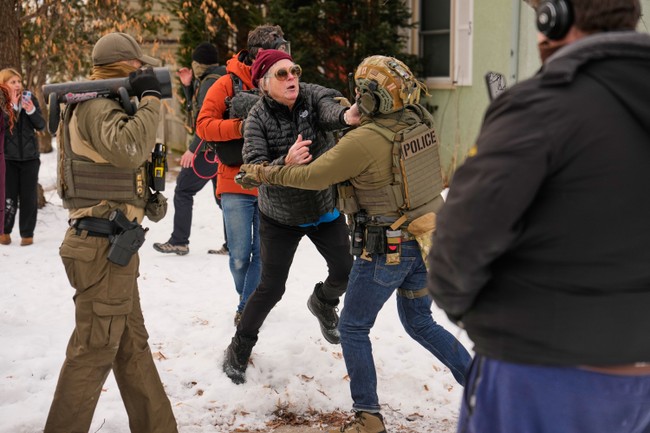
A federal jury in Los Angeles has delivered guilty verdicts against two women accused of stalking an Immigration and Customs Enforcement (ICE) officer, a significant legal development confirmed by Assistant U.S. Attorney Bill Essayli for the Central Region of California. The defendants, identified as Cynthia Raygoza, 38, from Riverside, California, and Ashleigh Brown, 38, from Aurora, Colorado, were found culpable for their actions, which involved pursuing the federal agent subsequent to official enforcement operations. This legal outcome, announced by federal prosecutors, marks a pivotal moment in cases involving the alleged harassment and surveillance of law enforcement personnel, particularly those engaged in sensitive immigration operations. The prosecution successfully argued that the defendants' conduct constituted criminal stalking under federal statutes, leading to their culpability being established by the jury in a federal court setting. This verdict sends a clear and unequivocal message regarding the protection of federal agents carrying out their sworn duties and underscores the serious legal consequences for those who engage in such activities, moving beyond legitimate protest into unlawful harassment.
Officials involved in the prosecution of this case have highlighted that this incident is indicative of a broader, troubling pattern where individuals reportedly align themselves with what authorities describe as an informal collective known as 'ICE Watch.' This network, according to law enforcement sources and prosecutorial statements, is characterized by its systematic monitoring and sometimes confronting of federal immigration agents during or after their operations. The emphasis placed by the prosecution on this alleged connection suggests a systemic concern that extends beyond individual acts, pointing to organized efforts to track and potentially interfere with federal law enforcement activities. The significance of this case, therefore, extends beyond the immediate actions of the two defendants, touching upon the broader challenges faced by federal agencies in maintaining operational security and protecting their personnel from targeted surveillance or harassment by activist groups. This context frames the jury's decision as a robust response not just to a specific act of stalking, but to a perceived escalation in tactics aimed at federal officers, raising questions about the boundaries of activism and the rule of law.
The federal court proceedings in Los Angeles meticulously laid out the evidence against Ms. Raygoza and Ms. Brown, illustrating how their conduct transitioned from observation to unlawful pursuit. According to testimony and evidence presented during the trial, the defendants actively followed the identified ICE officer after the completion of official enforcement duties, raising serious concerns about the officer's safety, privacy, and the integrity of federal operations. The jury's determination of guilt underscores the gravity with which the justice system views the targeting of federal agents, emphasizing that such actions move beyond legitimate protest into the realm of criminal behavior. The prosecution, led by Assistant U.S. Attorney Bill Essayli, meticulously presented the case, convincing the twelve-member jury that the defendants' intent and actions met the legal definition of stalking under federal statutes. This conviction serves as a stark reminder that while public scrutiny of government actions is a cornerstone of democracy, direct harassment and surveillance of individual officers, particularly in a manner that creates fear or intimidation, are not permissible under the law and carry severe penalties.
This verdict carries substantial implications for both activist groups involved in monitoring law enforcement and for the federal agencies whose personnel are often the subject of such scrutiny. Legal experts suggest that the successful prosecution in this case could set a significant precedent, potentially deterring others who might consider similar tactics of following or harassing federal agents. For agencies like ICE, this outcome reinforces their ability to protect their officers from targeted actions, ensuring they can perform their duties without undue fear for their personal safety or that of their families. Conversely, civil liberties advocates may view this as a chilling effect on legitimate oversight and protest, raising questions about the delicate balance between protecting federal employees and allowing public accountability for government actions. The broader discussion around immigration enforcement, already a contentious and deeply polarizing issue, is likely to be further complicated by this ruling, as it highlights the increasingly confrontational dynamics between federal agents and those who staunchly oppose their operations, potentially escalating tensions rather than resolving them.
In conclusion, the federal jury's decision to convict Cynthia Raygoza and Ashleigh Brown for stalking an ICE officer in Los Angeles represents a pivotal moment in the ongoing discourse surrounding federal law enforcement and activist engagement. As confirmed by Assistant U.S. Attorney Bill Essayli, this verdict underscores the legal boundaries that govern interactions with federal agents, particularly when those interactions cross into harassment or surveillance. The outcome sends a clear message regarding the protection of federal personnel and the consequences for actions deemed to threaten their safety and operational integrity. As the legal process moves towards sentencing for both defendants, the implications of this ruling will likely be closely watched by both law enforcement communities and advocacy groups, shaping future strategies and interactions in the highly scrutinized arena of immigration enforcement and public activism.