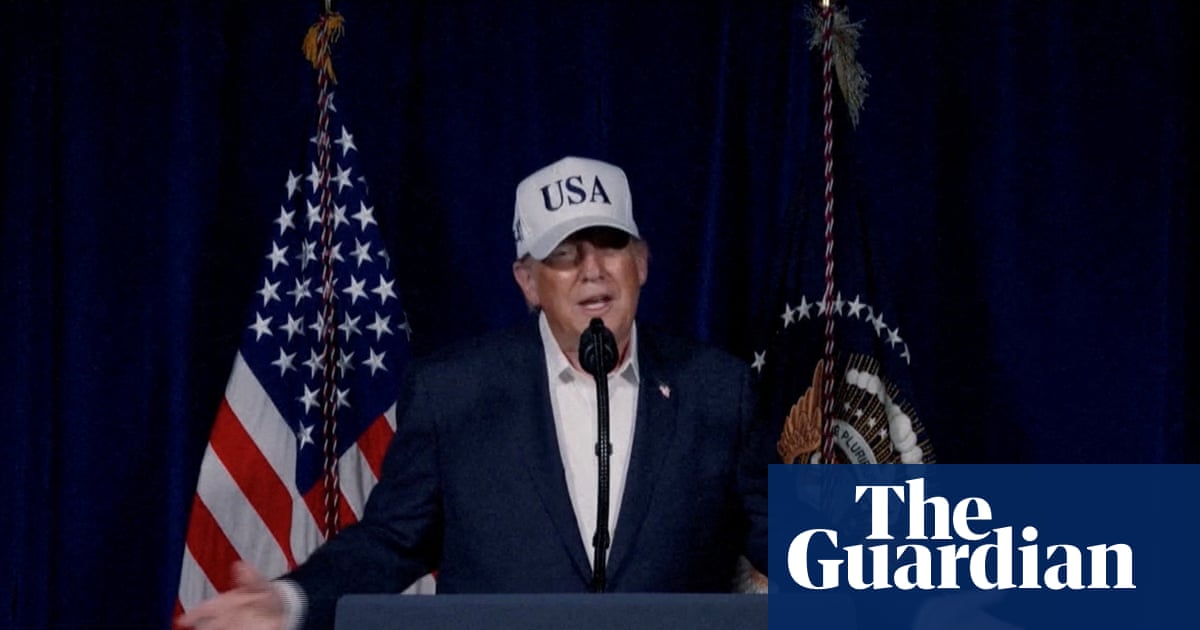
In a recent video address, President Donald Trump conveyed a somber warning that additional American military personnel would likely perish before the current conflict involving Iran concludes. The President's remarks followed the tragic deaths of three US service members, an event he vowed to avenge, while simultaneously accusing the Iranian government of engaging in hostilities against global civilization itself. Expressing profound sorrow, President Trump articulated the nation's grief for the "true American patriots" who had made the ultimate sacrifice, affirming the continuation of the mission for which they gave their lives. He also called for prayers for the full recovery of five other individuals who sustained serious injuries. This stark warning about potential future casualties, delivered with the statement "That’s the way it is, likely to be more," underscores the escalating tensions in the region, which have also triggered significant disruptions to international air travel, creating the most severe aviation crisis since the onset of the Covid-19 pandemic.
The President's address and the grim forecast of further casualties emerge against a backdrop of joint military actions involving the United States and Israel targeting Iran, which reports indicate have intensified regional instability. This developing situation places immense pressure on the White House to articulate a comprehensive strategy for engagement with Iran. Critics and political analysts are increasingly vocal in their demands for greater transparency regarding the administration's long-term objectives, particularly given President Trump's past commitments to avoid protracted foreign entanglements. The current trajectory, according to these observers, risks drawing the United States into an enduring conflict, a scenario the President has repeatedly pledged to prevent. The three American fatalities and five serious injuries serve as a stark reminder of the human cost of these escalating tensions, fueling calls for a clear path forward to mitigate further loss of life and prevent a broader regional conflagration.
The military escalation has had immediate and far-reaching consequences for global infrastructure, particularly air travel. Hundreds of flights were canceled today, exacerbating what is being described as the most significant disruption to international aviation since the global paralysis caused by the Covid-19 pandemic. Major aviation hubs in the Middle East, including Dubai International Airport – recognized as the world's busiest for international passenger traffic – have been forced to close for a third consecutive day, stranding hundreds of thousands of travelers. According to data from the flight tracking platform FlightAware, a staggering 3,156 flights were canceled on Sunday, following approximately 2,800 cancellations on Saturday. By early Monday, an additional 1,239 flights had already been grounded. Prominent regional carriers such as Emirates, based in Dubai; Etihad Airways, operating out of Abu Dhabi; and Qatar Airways, headquartered in Doha, have collectively accounted for hundreds of these significant service interruptions.
The lack of a clearly defined strategy from the Trump administration regarding the ongoing situation with Iran has become a central point of contention among political opponents and expert analysts. These critics argue that the absence of a comprehensive plan creates a perilous vacuum, increasing the likelihood of the United States becoming inadvertently entangled in a prolonged and costly conflict. This concern is particularly resonant given President Trump's consistent rhetoric during his campaigns and presidency, where he frequently emphasized a desire to extricate the U.S. from what he termed "endless wars." The current warnings of more potential American casualties, coupled with the severe disruption to global logistics, underscore the urgent need for the administration to articulate its vision, its objectives, and its exit strategy to both the American public and international allies, thereby alleviating fears of an uncontrolled escalation in the volatile Middle Eastern region.
In summary, President Trump's recent address has underscored the gravity of the ongoing conflict with Iran, warning of further American military fatalities while facing mounting pressure to clarify his administration's strategic direction. The immediate repercussions of this escalating tension are evident in the unprecedented disruption to global air travel, particularly across key Middle Eastern hubs, marking the most severe aviation crisis since the pandemic. As the situation continues to unfold under the banner of 'Operation Epic Fury,' the international community and domestic stakeholders alike will be closely watching for any definitive statements or actions from the White House that might outline a clear path forward, aiming to prevent further loss of life and stabilize the increasingly volatile geopolitical landscape.