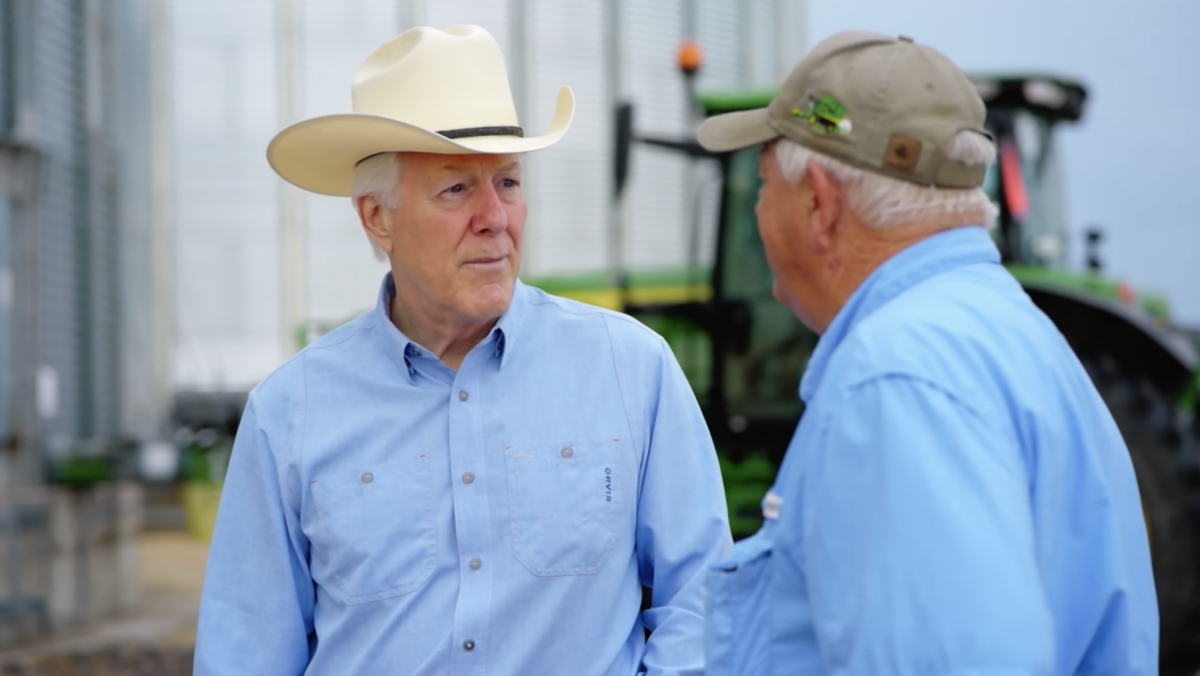
Former President Donald Trump is reportedly deliberating whether to issue an endorsement for incumbent Senator John Cornyn, a decision complicated by Cornyn's previous public skepticism regarding Trump's viability as a 2024 presidential candidate. This consideration comes as Senator Cornyn faces a challenging Republican primary runoff election in Texas, having failed to secure an outright majority of votes in the initial primary contest. Sources indicate that Trump, widely recognized for prioritizing loyalty among his political allies, is weighing the implications of backing a senator who once questioned his future electoral prospects. The upcoming May 26 runoff pits Cornyn against Attorney General Ken Paxton, with the victor advancing to face Democrat nominee James Talarico in the November general election for a crucial U.S. Senate seat. The potential endorsement from the former president is highly sought after, not only by Cornyn himself, but also by key establishment figures within the Republican Party, who view it as a significant advantage in the competitive race.
Senator Cornyn's current political predicament stems from his performance in the recent Texas primary, where, despite investing substantial financial resources—reportedly tens of millions of dollars—he was unable to achieve the necessary majority to avoid a runoff. This outcome has set the stage for a high-stakes contest against Attorney General Ken Paxton later this month. The significance of a presidential endorsement in such a tight race cannot be overstated, particularly from a figure like Donald Trump, whose influence within the Republican base remains formidable. Trump's reputation for demanding unwavering loyalty from those within his political orbit adds a unique layer of complexity to his current deliberation. Cornyn's past remarks, specifically his questioning of Trump's ability to win the 2024 presidential election, directly challenge this core tenet of Trump's political calculus, creating a notable tension as the former president considers his next move in the Texas Senate race.
The friction between Senator Cornyn and former President Trump traces back to comments made by Cornyn in 2023, when he openly expressed doubts about Trump's future electoral success. According to reports, Cornyn stated at the time, "I think President Trump’s time has passed him by," further questioning whether Trump was "a candidate who can actually win" the 2024 presidential election. Despite these past reservations, the value of a Trump endorsement for Cornyn's campaign is evident, particularly given his failure to clinch the primary outright. Senate Majority Leader John Thune, a prominent establishment voice, publicly advocated for Trump's intervention, telling Punchbowl News that Cornyn "had a great night" in the primary and suggesting that the former president's blessing would be immensely beneficial, potentially "sav[ing] everybody a lot of money." Thune reiterated these sentiments later that day during an appearance on Fox News, underscoring the Republican leadership's desire for party unity and a strong showing in the Texas runoff.
The strategic implications of a potential Trump endorsement for Senator Cornyn are multifaceted, extending beyond the immediate Texas runoff. An endorsement would signal Trump's willingness to overlook past criticisms in favor of party unity and pragmatic political outcomes, potentially setting a precedent for how the former president engages with Republicans who have previously challenged him. Conversely, withholding an endorsement could be interpreted as a punitive measure, reinforcing Trump's emphasis on loyalty and potentially weakening Cornyn's position against Ken Paxton, who may appeal more directly to Trump's base. Political analysts suggest that this situation highlights the enduring power of Trump's influence within the Republican Party, where even seasoned incumbents like Cornyn find themselves seeking his approval. The outcome of this decision, and subsequently the May 26 runoff, will offer insights into the evolving dynamics of the GOP and the balance between traditional party structures and the populist movement spearheaded by Trump.
In summary, the political landscape in Texas is currently dominated by the high-stakes Republican primary runoff for a U.S. Senate seat, featuring incumbent John Cornyn and Attorney General Ken Paxton. Central to this contest is the looming question of whether former President Donald Trump will endorse Cornyn, despite the senator's prior public doubts about Trump's electability in 2024. This dilemma underscores the ongoing tension between party loyalty and independent political assessment within the Republican ranks. The May 26 runoff will not only determine who faces Democrat James Talarico in November but also serve as a barometer for Trump's continued sway over the GOP. All eyes will be on Trump's final decision and the subsequent results from Texas, which will undoubtedly shape the broader narrative of the upcoming general election cycle.