The recent military offensive against Iran, initiated by President Donald Trump in collaboration with Israel, has thrust the leading contenders for the 2028 Democratic presidential nomination into a precarious political situation. According to an aggregation of polls compiled by RealClearPolitics, the individuals currently considered frontrunners for the Democratic ticket include former Vice President Kamala Harris, who was also the 2024 nominee; California Governor Gavin Newsom; former Transportation Secretary Pete Buttigieg; Representative Alexandria Ocasio-Cortez; and Pennsylvania Governor Josh Shapiro. Each of these prominent figures found themselves compelled to articulate a public position on the unfolding conflict within its initial 24 hours, navigating a complex landscape of potential political gains and significant risks. Their challenge lies in formulating a critique of the Trump administration's actions that resonates with their base while also positioning them favorably for a national election, all without the benefit of knowing the ultimate outcome of the military engagement.
President Trump's decision to launch a coordinated attack on Iran, reportedly with the explicit aim of dismantling the existing regime, specifically targeting its leadership, immediately created a critical juncture for the Democratic field. This aggressive foreign policy maneuver, dubbed 'Operation Epic Fury,' demanded an immediate response from those aspiring to lead the Democratic Party. The contenders were faced with a multifaceted strategic puzzle: how to effectively oppose the sitting president's actions without alienating potential voters or appearing unpatriotic. Their deliberations centered on several potential lines of attack, including questioning the president's judgment and motives, assessing the conflict's alignment with U.S. national interests, and scrutinizing the constitutional basis for military action without explicit congressional authorization. The urgency of their response was underscored by the rapid pace of events, forcing quick decisions with long-term political ramifications.
The internal debate among Democratic hopefuls reportedly revolved around several distinct approaches to criticizing President Trump's Iranian strategy. One option considered was to frame the military intervention as another instance of a reckless and untrustworthy presidency, highlighting alleged past misrepresentations or impulsive decision-making. Another strategic avenue involved questioning whether the conflict genuinely served the broader national security interests of the United States, potentially arguing that it could destabilize the region further or draw the nation into a protracted engagement. A third significant point of contention was the constitutional authority for such an attack; sources indicate discussions centered on whether President Trump bypassed the legislative branch by failing to secure congressional approval for military action. Complicating these choices was the additional consideration of whether to acknowledge Iran's problematic role on the international stage, balancing criticism of Trump with a recognition of the Iranian regime's controversial actions, thereby avoiding the perception of defending an adversary.
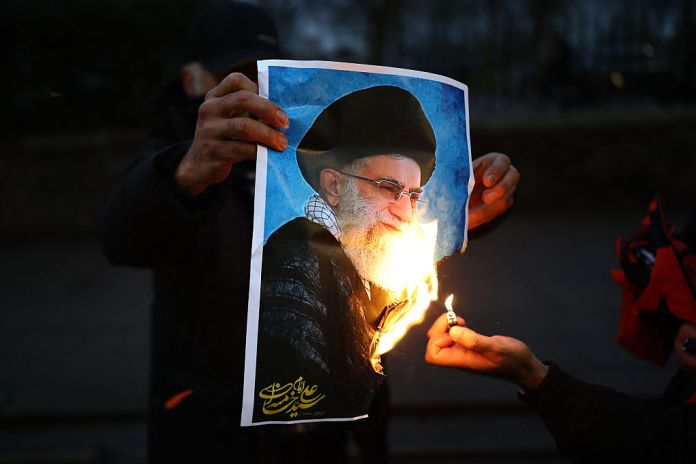
The fundamental challenge for these Democratic hopefuls, as political analysts observe, stems from the inherent unpredictability of military conflicts. Their chosen public stance represents a significant gamble, as the long-term success or failure of the Iranian operation remains unknown. Political observers suggest two starkly contrasting scenarios with profound implications for the 2028 election cycle. Should the initial military achievements, which reportedly included the elimination of Supreme Leader Ayatollah Ali Khamenei, ultimately fail to usher in a stable successor government, leading instead to widespread chaos and continued regional instability, the Democratic contenders' criticisms would likely be validated. Such an outcome could inflict severe political damage upon President Trump and his Republican allies, drawing parallels to the political fallout experienced by George W. Bush following the Iraq War, thereby benefiting the Democratic Party. Conversely, if the military intervention successfully culminates in the establishment of a peaceful and stable government in Iran, the Democratic opposition would likely be undermined, with political adversaries potentially characterizing their initial skepticism as misguided or politically motivated.
In conclusion, the unfolding military engagement in Iran presents a high-stakes political tightrope walk for the leading Democratic contenders eyeing the 2028 presidential nomination. Their immediate responses, crafted under immense pressure and without the clarity of hindsight, could significantly shape their political trajectories. The ultimate success or failure of President Trump's 'Operation Epic Fury' will serve as a critical litmus test, either validating their early criticisms or exposing them to charges of political opportunism. As the situation evolves, the strategic choices made by figures like Kamala Harris, Gavin Newsom, and others in the initial hours of the conflict will be scrutinized, potentially determining their viability as future presidential candidates and influencing the broader political narrative leading into the next election cycle.