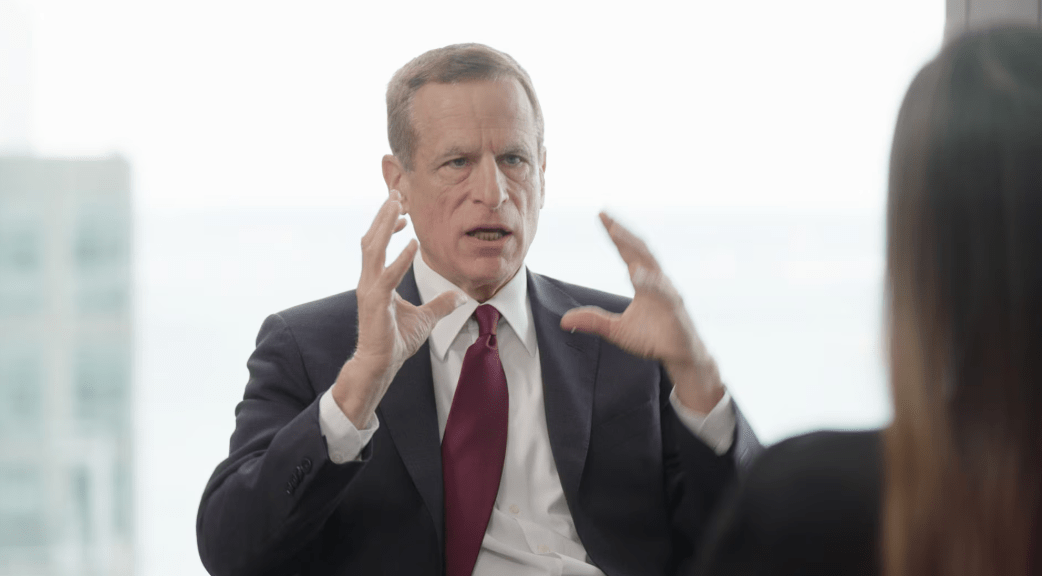
Rob Kaplan, the Vice Chairman of Goldman Sachs, has brought to light a significant and frequently unacknowledged challenge confronting professionals as they ascend to the highest echelons of corporate leadership. During a recent masterclass discussion alongside Meena Flynn, Goldman's chair of Global Private Wealth Management, Kaplan articulated that while junior employees typically operate under close scrutiny from their superiors, this dynamic undergoes a dramatic shift for senior executives. He indicated that as individuals climb the organizational hierarchy and attain more prominent positions, the direct oversight from their own bosses often diminishes substantially, with their primary observers becoming their subordinates. This fundamental change in accountability structures, according to Kaplan, creates a perilous environment where highly successful individuals, after years of achievement, can unexpectedly encounter significant career obstacles or even failure. He noted that his extensive professional experience has exposed him to a multitude of instances where accomplished individuals, despite a strong track record, ultimately 'hit a wall' due to these evolving supervisory circumstances.
The phenomenon Kaplan describes highlights a critical transition point in an executive's career trajectory, often overlooked in the relentless pursuit of advancement. In the early stages of a professional journey, individuals are typically subject to continuous guidance, performance reviews, and direct mentorship from more experienced leaders. This constant feedback loop is instrumental in skill development, course correction, and ensuring alignment with organizational objectives. However, as professionals are promoted to senior management roles, the nature of their supervision fundamentally alters. Kaplan explained that the traditional upward reporting lines, which once provided a robust system of checks and balances, become less pronounced. Instead, the primary 'watchers' become those who report to the senior executive, a dynamic that, while fostering autonomy, can inadvertently lead to a lack of critical, unbiased feedback and an unchecked accumulation of potential issues. This shift can leave even the most accomplished leaders vulnerable to unforeseen pitfalls, contributing to the 'avalanche' of individuals Kaplan has observed struggling despite prior success, drawing from his diverse career including multiple tenures at Goldman Sachs, teaching at Harvard Business School, and serving as president of the Dallas Federal Reserve.
Kaplan's decades of experience across diverse high-stakes environments have allowed him to pinpoint a specific 'toxic combination' that frequently contributes to the downfall of senior management. This combination, as he outlined, comprises four interconnected elements: isolation, the development of blind spots, an inability to continuously learn and adapt, and a gradual erosion of crucial professional relationships. Senior executives, often operating at the apex of their departments or divisions, can find themselves increasingly isolated from candid feedback and diverse perspectives, fostering an environment where personal blind spots go unaddressed. This isolation can also hinder their capacity for ongoing learning and adaptation, which is vital in rapidly evolving corporate landscapes. Furthermore, the demanding nature of senior roles can sometimes lead to a neglect of the very relationships that could provide support, challenge assumptions, and offer alternative viewpoints. Upon his return to Goldman Sachs in 2024, CEO David Solomon specifically lauded Kaplan for bringing 'a wealth of knowledge, deep relationships and significant global leadership expertise' to his vice chairman role. Kaplan's current responsibilities at the firm directly address these identified challenges, encompassing engagement with clients and teams across Global Banking & Markets and Asset & Wealth Management, with a particular emphasis on mentoring, leadership development, and shaping the firm’s culture. His insights are further detailed in his three books on leadership: *What You Really Need to Lead*, *What You’re Really Meant To Do*, and *What to Ask the Person in the Mirror*.
Kaplan's observations carry significant implications for how organizations cultivate and sustain effective leadership at their highest levels. The traditional corporate ladder, while rewarding ambition, may inadvertently create structural vulnerabilities that undermine long-term executive success. The absence of robust, upward-facing feedback mechanisms for senior leaders can lead to a dangerous echo chamber, where critical self-reflection and external challenge are lacking. This can result in strategic missteps, cultural stagnation, and ultimately, a substantial cost to the organization in terms of lost talent and diminished performance. Experts suggest that to mitigate these risks, companies must proactively design systems that ensure senior executives receive regular, candid feedback, foster environments that encourage continuous learning, and actively promote the development of diverse internal and external relationship networks. Kaplan's focus on mentoring and leadership development within Goldman Sachs exemplifies a proactive approach to embedding these crucial support structures, aiming to instill a 'holistic view' that helps leaders identify and address their own blind spots before they become detrimental to their careers or the organization.
In essence, Rob Kaplan's insights serve as a potent reminder that the journey to the top of the corporate world is not merely about achieving promotions, but about adapting to a fundamentally different set of challenges. The very qualities that drive success in junior and mid-level roles—diligence, ambition, and performance under supervision—may not be sufficient to sustain success in senior leadership without a conscious shift towards self-awareness, proactive learning, and strategic relationship building. His analysis underscores the critical need for organizations to recognize and address the unique vulnerabilities faced by their most senior executives. By fostering cultures that prioritize ongoing development, candid feedback, and robust support networks, companies can help their leaders navigate the 'hidden trap' of diminished supervision, ensuring sustained success for both the individual and the enterprise. The ongoing focus on these areas, as championed by Kaplan, will be crucial for cultivating resilient and effective leadership in an increasingly complex global business landscape.