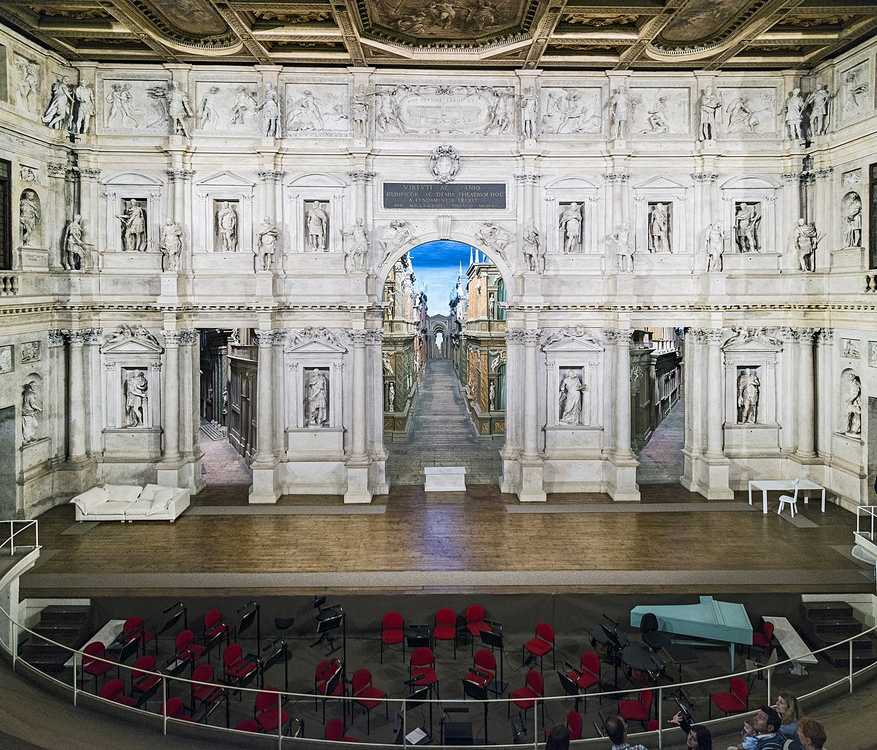
Exactly 441 years ago, on this significant date, the city of Vicenza in northern Italy witnessed a pivotal moment in European cultural and architectural history with the grand inauguration of the Teatro Olimpico. This remarkable structure, widely celebrated by historical and architectural scholars as the continent's pioneering modern covered theatre, officially opened its doors to the public with a compelling performance of Sophocles' ancient Greek tragedy, "Oedipus Rex." The ambitious design for this groundbreaking venue was initially conceived by the illustrious Andrea Palladio, whose vision for a permanent, enclosed theatrical space was brought to magnificent fruition by his successor, Vincenzo Scamozzi, following Palladio's death. This event not only provided a dedicated, climate-controlled environment for artistic expression, a stark departure from the predominantly open-air or temporary stages of the era, but also profoundly influenced the trajectory of theatre design across Europe. Its debut underscored a Renaissance-era commitment to classical revival and innovation, fundamentally reshaping how dramatic arts were presented and experienced by audiences, according to numerous historical accounts.
The creation of the Teatro Olimpico emerged from a fervent period of artistic and intellectual rebirth known as the Renaissance, particularly in Italy, a time that saw a profound resurgence of interest in classical antiquity. This renewed focus influenced various facets of society, from philosophy and science to architecture and the performing arts. Prior to the Olimpico's construction, theatrical performances typically occurred in ephemeral structures, open courtyards, or public squares, rendering them vulnerable to weather conditions and limiting the sophistication of stagecraft. The revolutionary concept of a dedicated, permanent, and, crucially, covered theatre represented a monumental leap forward. Andrea Palladio, a towering figure in Renaissance architecture, envisioned a space that would evoke the majesty of ancient Roman amphitheatres while seamlessly integrating contemporary design principles. His untimely passing meant that Vincenzo Scamozzi assumed the formidable responsibility of completing the project, meticulously adhering to Palladio's foundational plans while adding his own ingenious contributions, most notably the iconic perspective stage set. This collaborative endeavor yielded a structure that served not merely as a venue for plays but also as a powerful emblem of Vicenza's cultural refinement and its patrons' unwavering dedication to the arts, establishing design principles that would resonate for centuries.
The architectural brilliance of the Teatro Olimpico is profoundly evident in its meticulous attention to detail and its groundbreaking application of forced perspective. Upon entering the auditorium, spectators are immediately captivated by the illusion of immense depth created by Scamozzi's permanent stage set, which masterfully depicts a series of streets receding into the distance. This trompe l'oeil effect, a revolutionary theatrical innovation for its time, was ingeniously designed to heighten the dramatic experience and immerse the audience within the play's narrative world. The theatre's semi-elliptical auditorium, drawing inspiration from ancient Roman designs, ensures exceptional acoustics and unobstructed sightlines for nearly all of its approximately 400 seats, a remarkable feat of engineering for the era. Constructed primarily from wood, stucco, and plaster, the interior is richly adorned with intricate sculptures and frescoes, reflecting the opulence and refined artistic sensibilities characteristic of the late Renaissance period. The deliberate selection of Sophocles' "Oedipus Rex" for its inaugural performance was a symbolic gesture, underscoring the theatre's profound dedication to classical drama and its pivotal role in the revival of ancient Greek and Roman theatrical traditions. This unwavering commitment to both classical form and innovative function firmly established the Teatro Olimpico's status as an unparalleled cultural asset, effectively serving as a living museum of Renaissance theatrical practice.
The enduring legacy of the Teatro Olimpico extends far beyond its initial function as a mere performance venue; it stands as a critical benchmark in the annals of architectural and theatrical design history. Its prestigious designation as a UNESCO World Heritage Site unequivocally underscores its universal value and its irreplaceable contribution to human culture, particularly given its status as one of only three surviving Renaissance theatres globally. Experts in architectural history frequently cite its innovative covered design and its pioneering permanent perspective stage as pivotal developments that profoundly influenced subsequent theatre construction across Europe, from the more robust structures like the Globe Theatre to the elaborate court theatres that characterized the Baroque era. The Olimpico definitively demonstrated the immense potential for controlled environments to significantly enhance dramatic presentation, facilitating more sophisticated lighting, sound, and scenic effects previously unattainable. Its remarkable preservation offers invaluable insights into Renaissance aesthetic principles, the engineering prowess of the period, and the profound societal role of the arts during that transformative era. Furthermore, its continued existence serves as a powerful reminder of the paramount importance of cultural heritage preservation, allowing contemporary audiences to forge a direct connection with the artistic aspirations and monumental achievements of a bygone era, according to cultural heritage organizations.
In summary, the inauguration of the Teatro Olimpico 441 years ago was a truly momentous occasion that profoundly shaped the future trajectory of European theatre and architecture. As the continent's first modern covered theatre, meticulously designed by Andrea Palladio and brought to completion by Vincenzo Scamozzi, it introduced revolutionary concepts in venue design, stagecraft, and the overall audience experience. Its enduring status as a UNESCO World Heritage Site and its distinction as one of the rare surviving Renaissance theatres unequivocally highlight its unparalleled historical and cultural significance. The Olimpico remains a vibrant, tangible symbol of Renaissance innovation, a powerful testament to the era's deep dedication to classical revival and artistic excellence. Its continued existence invites us to deeply appreciate the foundational role it played in the evolution of performance spaces and serves as a powerful reminder of the lasting impact that visionary design can have on human culture. Future generations will undoubtedly continue to study, admire, and draw inspiration from this architectural gem, ensuring its profound legacy endures for centuries to come.