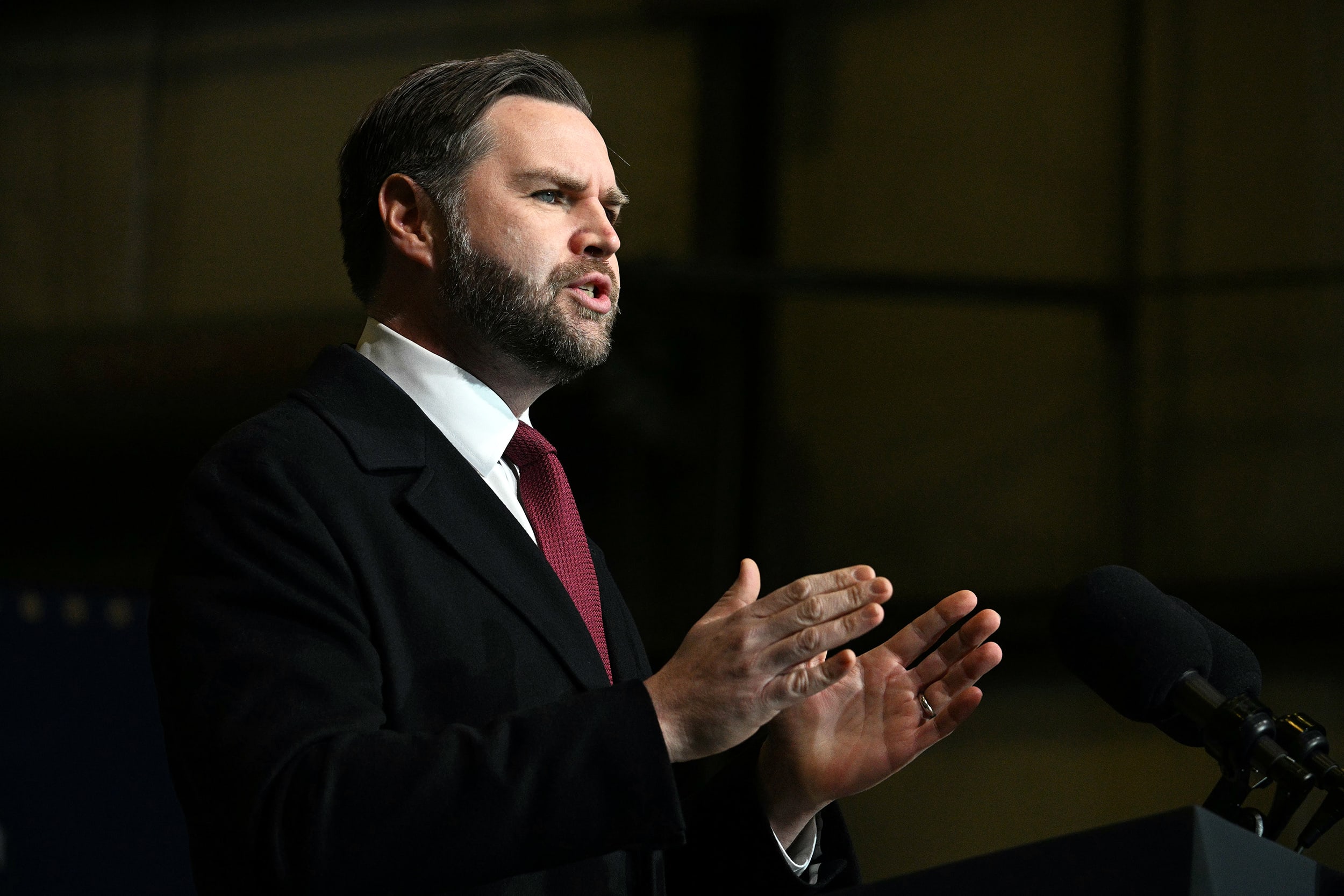
Vice President JD Vance, a prominent figure in the current administration, has long cultivated a political identity rooted in skepticism towards American foreign intervention, particularly regarding military engagements in the Middle East. According to an overview provided by MS NOW over the weekend, his public persona has been largely defined by his rejection of what he has characterized as decades of unsuccessful U.S. military involvement in the region. However, this established stance now faces considerable scrutiny following the Trump administration's decision to initiate military action in Iran, approximately eighteen months after the 2024 election. This development directly contradicts President Trump's own pre-election assurances to voters, made just a week before Election Day 2024, that engaging in conflict with Iran was not in America's interest, deeming it a significant drain on resources and financially detrimental to the nation. When the conflict commenced, launched by President Trump from his Florida estate, Vice President Vance was notably absent from the President's side and remained "conspicuously quiet," as reported by Politico, prompting widespread questions about his alignment with the administration's actions given his well-documented past positions.
The Vice President's commitment to an anti-interventionist foreign policy has been a foundational element of his public career and political rise. In a 2023 opinion piece published in The Wall Street Journal, Vance specifically lauded then-candidate Trump as a Republican leader who had avoided initiating new conflicts and would not irresponsibly deploy American forces abroad. This perspective resonated strongly with a segment of the electorate weary of prolonged overseas military commitments. President Trump further reinforced this sentiment during his 2024 campaign, explicitly stating that a war with Iran would represent a substantial misallocation of national assets and impose immense costs on the country. These pronouncements were central to the administration's foreign policy narrative, promising a distinct departure from what they often criticized as the interventionist tendencies of previous governments. The sudden shift to military engagement in Iran, therefore, marks a profound departure from these articulated principles and campaign pledges, creating a visible tension with the stated philosophy of key administration figures like Vance.
The decision to commence military operations in Iran was reportedly made and executed by President Trump from his private club in Florida. While the President initiated this significant foreign policy action, Vice President Vance was not present at the location, nor did he issue any immediate public statements regarding the unfolding conflict. This silence was particularly striking given his prominent role within the administration and his past outspokenness on matters of foreign intervention. Politico's characterization of his demeanor as "conspicuously quiet" underscores the unusual nature of his non-response in such a critical moment. Observers have suggested that Vance's apparent reticence could stem from the challenge of reconciling his deeply held and publicly articulated opposition to foreign wars with the administration's recent actions. The situation presents a direct test of his political identity, forcing him to either defend a policy he seemingly opposed or articulate a new justification for the military engagement that aligns with his stated principles.
The Trump administration's decision to engage militarily in Iran, despite previous assurances against such action, raises significant questions about the consistency of its foreign policy doctrine and the influence of its anti-interventionist voices. For Vice President Vance, this development presents a considerable political dilemma, potentially undermining the very foundation of his public identity as a skeptic of overseas military commitments. Analysts suggest that his prolonged silence could indicate an internal struggle to formulate a cohesive defense for an operation that appears to contradict his long-standing beliefs. The situation might also reflect a broader dynamic within the administration, where the President's ultimate authority on foreign policy decisions can override the stated positions of even his closest advisors. Going forward, Vance will likely face increasing pressure to address the apparent contradiction, either by offering a revised perspective on interventionism or by providing a specific rationale for the Iran conflict that aligns with his past criticisms. His response, or continued lack thereof, will be closely watched as a gauge of his political flexibility and the administration's commitment to its stated foreign policy principles.
In summary, the initiation of military action in Iran by the Trump administration has placed Vice President JD Vance in a challenging position, directly confronting his established political identity as a vocal opponent of American foreign interventionism. His reported silence at the outset of the conflict, coupled with President Trump's prior assurances against war with Iran, highlights a significant divergence between past rhetoric and current policy. The coming days and weeks will be crucial in observing how Vance chooses to navigate this apparent contradiction. Whether he will articulate a new justification for the military engagement, maintain his silence, or attempt to reconcile the actions with his long-held principles remains to be seen. This situation not only tests the Vice President's political consistency but also offers a window into the evolving foreign policy direction of the Trump administration, particularly concerning its approach to military engagement in the Middle East.