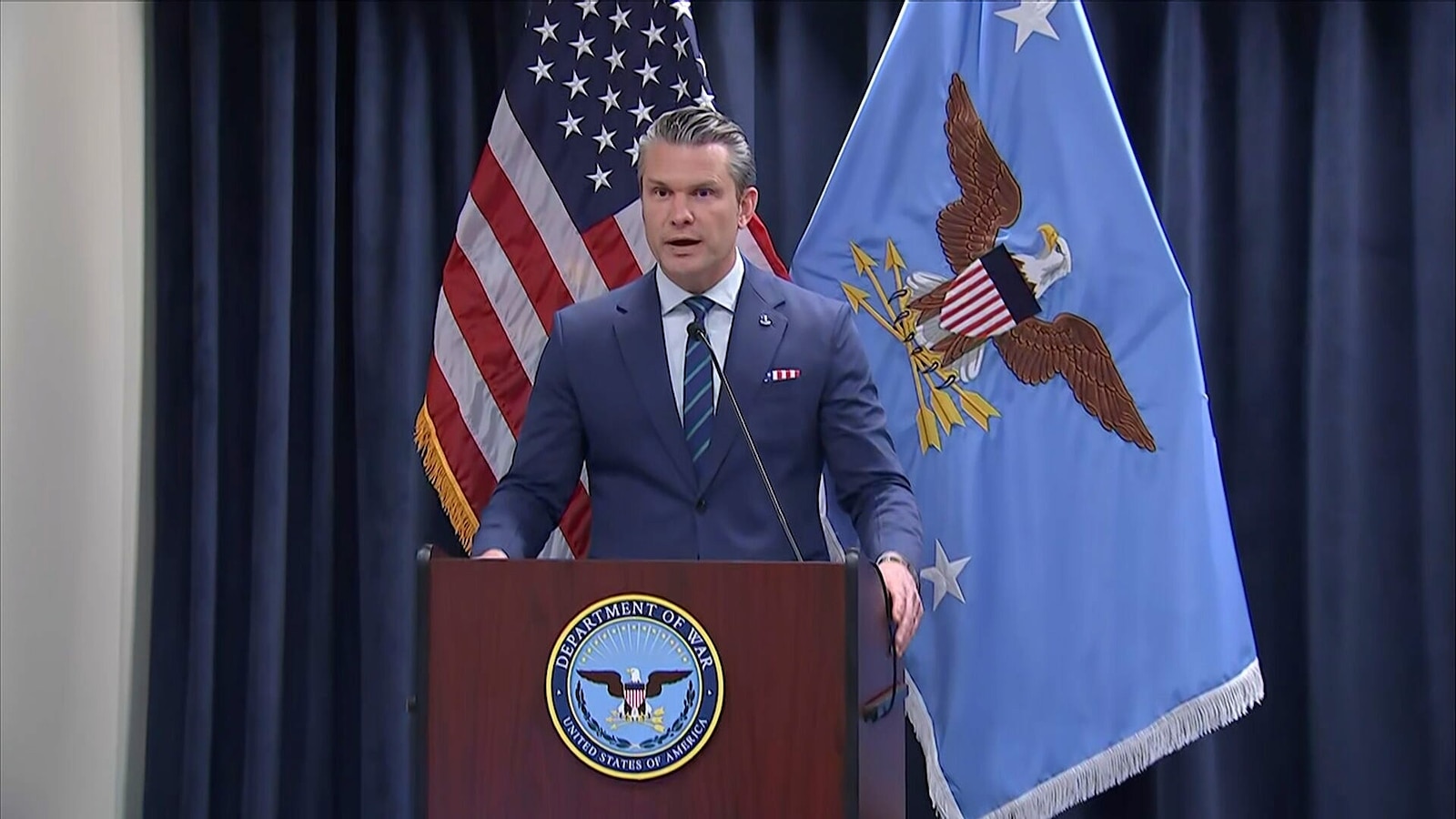
Amidst a sixth consecutive day of American military operations against targets within Iran, Defense Secretary Pete Hegseth moved to alleviate concerns regarding the United States' capacity to sustain its arsenal. Speaking on Thursday, Hegseth firmly stated that the nation possesses an ample supply of missiles and other armaments, asserting that these stockpiles are sufficient to maintain the current campaign for an indefinite period. This reassurance comes as U.S. forces continue strikes under the operational designation 'Operation Epic Fury,' without a publicly articulated endpoint or clear criteria for what would constitute a victory. Concurrently, Admiral Brad Cooper, the senior U.S. commander for Middle East forces, reported a substantial reduction in Iranian aggression, noting that missile attacks have decreased by 90% since the initial day of the conflict, with drone assaults also falling by 83%. The ongoing U.S. military response was initiated following a recent Iranian drone strike in Kuwait, which resulted in the deaths of six American service members.
The current wave of U.S. military action, now extending into its sixth day, was directly prompted by a deadly Iranian drone attack that claimed the lives of six American troops in Kuwait on the preceding Sunday. This incident escalated tensions, leading to a sustained American response targeting various sites across Iran. Defense Secretary Hegseth articulated a strategic perspective on the conflict, suggesting that Iran's leadership might be miscalculating by hoping for a depletion of U.S. resources. According to Hegseth, such an expectation represents a significant error in judgment on Iran's part, underscoring the U.S. commitment to the ongoing operation. The broader context of 'Operation Epic Fury' highlights a period of heightened military engagement, where the strategic importance of maintaining a robust and readily available munitions supply is paramount. The long-term implications of such sustained operations often involve complex logistical and financial considerations, making Hegseth's assurances about resource availability a key element of the administration's public messaging.
Providing specific operational details, Admiral Brad Cooper informed reporters that American aircraft have successfully engaged nearly 200 targets deep within Iranian territory over the past three days, with strikes extending to areas around the capital city of Tehran. A notable operation on Thursday involved B-2 stealth bombers deploying dozens of 2,000-pound penetrating munitions. These specialized weapons were specifically engineered to neutralize deeply buried ballistic missile launchers, targeting the kind of hardened underground facilities that Iran has reportedly spent years constructing to safeguard its advanced rocket systems. While the Pentagon has refrained from disclosing the financial expenditure of the war against Iran, independent assessments suggest that the costs are substantial. Recognizing the inherent expense and time-consuming nature of replacing each missile fired, the Pentagon has made significant investments in recent years to accelerate munitions development. This proactive approach is further bolstered by a 2025 reconciliation bill from Congress, which allocated an additional $25 billion towards munition procurement. Furthermore, in January, Lockheed Martin announced an agreement with the Pentagon aimed at expediting missile development, signaling a concerted effort to enhance the nation's defensive and offensive capabilities.
Secretary Hegseth's public declaration regarding the United States' ample munitions supply serves multiple strategic purposes, primarily aimed at reassuring allies, deterring adversaries, and bolstering domestic confidence in the military's capacity. His assertion that the U.S. can sustain the campaign "as long as we need to" directly counters any perceived vulnerabilities related to resource depletion, a concern that can arise during prolonged military engagements. The reported significant decline in Iranian missile and drone attacks, as indicated by CENTCOM, could be interpreted as a direct consequence of the sustained American strikes, suggesting a potential degradation of Iran's offensive capabilities or a shift in its tactical approach. However, the long-term financial implications remain a critical consideration. Despite recent investments, such as the $25 billion congressional allocation and the Lockheed Martin deal, the inherent cost and lengthy replacement cycles for advanced munitions present an ongoing challenge. This dynamic underscores the strategic importance of efficient procurement and rapid development in modern warfare, as nations seek to balance immediate operational needs with long-term readiness and fiscal responsibility. The U.S. strategy appears to be one of sustained pressure, backed by a robust industrial and financial commitment.
In summary, Defense Secretary Pete Hegseth has unequivocally stated that the United States possesses sufficient munitions to continue its ongoing military campaign against Iran for an extended duration, directly addressing concerns about the nation's arsenal. This assurance coincides with reports from Admiral Brad Cooper indicating a substantial 90% reduction in Iranian missile attacks and an 83% decrease in drone assaults since the commencement of U.S. operations. American forces have conducted extensive strikes, targeting nearly 200 sites, including hardened underground facilities, in response to a recent deadly drone attack. While the financial cost of 'Operation Epic Fury' remains undisclosed by the Pentagon, significant investments in munitions development and procurement, including a $25 billion congressional surge and industry partnerships, underscore a strategic commitment to maintaining military readiness. Moving forward, observers will closely monitor the trajectory of the conflict, the public articulation of its objectives, and the continued financial and logistical sustainability of U.S. military operations in the region.