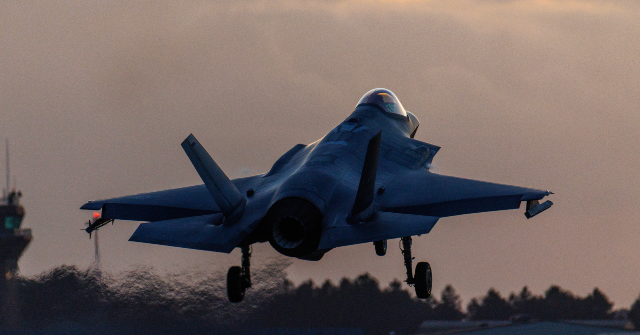
In a development described by military officials as a pivotal moment in modern air warfare, an Israeli F-35 'Adir' stealth fighter successfully engaged and destroyed a manned Russian-built Iranian Yak-130 fighter jet over the skies of Tehran early on Wednesday. This unprecedented aerial engagement, which reportedly took place amidst a broader set of Israeli and U.S. joint operations dubbed "Operation Epic Fury," marks the first instance in history where an F-35 'Adir' has shot down an adversary's manned aircraft. The Israel Defense Forces (IDF) confirmed the incident via an announcement on X, highlighting its historical significance. The confrontation also represents the first time in over four decades that the Israel Air Force (IAF) has been involved in air-to-air combat against a manned enemy aircraft, signaling a notable escalation in regional tensions and the operational capabilities of advanced stealth technology.
The engagement over the Iranian capital carries profound historical weight, not only for the F-35 program but also for the IAF. Prior to this incident, F-35 jets, which are manufactured by the U.S. defense giant Lockheed Martin, had reportedly only been utilized to neutralize unmanned aerial targets, such as drones, during various military operations against Iran. This latest event, therefore, redefines the operational scope and combat effectiveness demonstrated by the 'Adir,' a Hebrew designation meaning "Mighty One." The last recorded instance of IAF jets downing a manned enemy aircraft dates back to November 24, 1985, when an IAF F-15 successfully intercepted and destroyed two Syrian MiG-23 fighters over Lebanon, according to reports from the Times of Israel. The current confrontation unfolded shortly after Israel publicly acknowledged that "broad-scale" strikes were being conducted across Tehran and other Iranian urban centers as part of the ongoing joint operation with the United States, underscoring a period of heightened military activity in the region.
Further details emerging from the incident shed light on the circumstances surrounding the aerial engagement. According to statements attributed to a brigadier general, who serves as the commander of the Nevatim Airbase and identified only by his rank and first initial, the F-35 was actively involved in targeting specific regime sites within Iran when the Russian-made Yak-130 was identified as an imminent threat within the airspace. The commander indicated that the F-35 pilot swiftly "locked on and launched" a missile at the Iranian aircraft, praising the aviator's exceptional speed and precision in executing the maneuver, as reported by the Times of Israel. Despite the critical nature of the mission, the pilot involved was described as relatively junior within the air force, though possessing prior operational experience. Unverified footage, purportedly showing the Iranian jet crashing over the Lavasan Mountains situated north of Tehran, has circulated on X, with audible Farsi exclamations from onlookers, though the IDF has yet to officially authenticate the video content.
This unprecedented aerial victory by an F-35 'Adir' against a manned adversary is poised to trigger extensive analysis within military and geopolitical circles. Experts suggest that the incident not only validates the advanced stealth, sensor fusion, and combat capabilities of the F-35 platform but also sends a clear message regarding the technological superiority of U.S.-supplied weaponry in the hands of its allies. The downing of a Russian-made aircraft by a U.S.-built stealth fighter could have significant implications for the global arms market and the perceived effectiveness of different national air defense systems. Furthermore, this event is likely to intensify the already volatile dynamics in the Middle East, potentially influencing strategic calculations for both Israel and Iran, as well as their respective international partners. The successful interception underscores the evolving nature of modern air combat and the critical role of fifth-generation fighters in maintaining air superiority in contested regions.
The historic shootdown of an Iranian fighter jet by an Israeli F-35 marks a significant escalation in the ongoing regional tensions and a landmark achievement in military aviation. This event not only highlights the advanced operational readiness of the Israel Air Force but also demonstrates the F-35's combat prowess against manned aerial threats for the first time. As "Operation Epic Fury" continues, the international community will be closely watching for any official responses from Iran, further details regarding the broader scope of the joint Israeli-U.S. strikes, and the verification of the crash footage. The implications of this engagement are likely to resonate across defense strategies and geopolitical alignments for the foreseeable future, emphasizing the critical role of advanced military technology in shaping regional power balances.