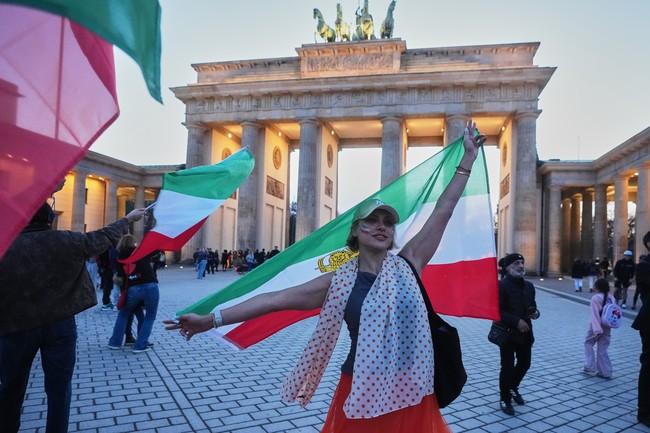
Following the dramatic conclusion of "Operation Epic Fury," which reportedly saw the elimination of Iran's Supreme Leader Ayatollah Ali Khamenei and his key leadership by combined U.S. military and Israeli forces, widespread celebrations have erupted across Iran and among the Iranian diaspora. Videos and images circulating on social media platforms since approximately March 1, 2026, depict Iranian women publicly expressing their joy, often by removing their hijabs, engaging in celebratory dances, and singing, marking what they perceive as liberation from nearly five decades of authoritarian rule. However, these expressions of newfound freedom have not been universally welcomed, attracting significant online scrutiny and criticism, notably from figures like Melissa Wong, who chairs the Montana Libertarian Party and identifies as "America First" on social media. Wong reportedly made highly controversial remarks regarding the appearance of the celebrating women, sparking a fierce backlash from those who view her comments as deeply insensitive to the struggles endured under the previous regime.
The celebrations observed across Iran and within the Iranian American community signify a profound shift after what reports describe as 47 years of oppressive governance under the former regime. For decades, women in Iran faced severe legal and social repercussions, including threats of physical violence, imprisonment, or even death, for failing to adhere to strict dress codes, particularly the mandatory full hijab. The recent military actions, dubbed "Operation Epic Fury," which officials state resulted in the removal of the Supreme Leader and his inner circle, are presented as the direct catalyst for this sudden outpouring of public jubilation. The symbolic act of women removing their hijabs in public, a direct defiance of former laws, underscores the depth of their perceived liberation. Furthermore, the inclusion of specific cultural expressions, such as the "Trump dance," among the celebratory acts by both Iranians in the country and the diaspora, highlights a complex interplay of political sentiment and cultural expression in the wake of such a monumental geopolitical event. This period marks a pivotal moment, transitioning from a long era of strict control to an uncertain but hopeful future for many.
The contentious remarks made by Melissa Wong, the Chair of the Montana Libertarian Party, have drawn particular attention amidst the broader online discourse. According to reports, Wong, whose social media profile identifies her with the "America First" movement, publicly asserted that the Iranian women seen celebrating in the viral videos resembled "hookers." This specific characterization has been widely condemned as an egregious insult, especially considering the immense suffering and systemic oppression women endured under the previous Iranian government. Critics on social media have swiftly rebuked Wong's comments, with some suggesting her judgment was severely impaired, describing her statements as "beyond the pale" given the context of the women's newfound freedom. Beyond Wong's specific comments, the broader social media landscape is reportedly rife with what some observers term "Monday-morning quarterbacking," where various factions, including those identified as "Feminazis" and "Trad Wives," are said to be unfairly targeting Iranian women and dictating how they should react to their liberation. Reports also indicate a strong reaction from liberal circles, with many expressing fury over the unfolding events and the nature of the celebrations. Concurrently, reports indicate a strong wave of support and participation in these celebrations from the Iranian American community, with many enthusiastically joining in the "Trump dance" as a symbol of solidarity and joy.
The intense online debate surrounding the celebrations in Iran highlights a significant cultural and political divide, with many commentators expressing dismay at the perceived audacity of external voices attempting to dictate how a recently liberated populace should express its joy. Analysts suggest that the criticism leveled against these women, particularly remarks like those attributed to Melissa Wong, demonstrates a profound lack of empathy for individuals who have endured decades of severe restrictions on their personal freedoms and bodily autonomy. The act of publicly removing hijabs, dancing, and singing is not merely a celebration but a powerful political statement, directly challenging the symbols of the former oppressive regime. The embrace of the "Trump dance" by some celebrants, both in Iran and the diaspora, further complicates the narrative, potentially signaling an alignment with the U.S. administration perceived as instrumental in the regime change. This phenomenon underscores the complex interplay between geopolitical events, cultural identity, and the globalized nature of social media, where local expressions of freedom are immediately subjected to international scrutiny and diverse, often conflicting, interpretations. The broader implications suggest a challenging path ahead for Iran as it navigates a new political landscape, while also revealing the persistent tension between individual liberty and external judgment in a hyper-connected world.
In summary, the widespread celebrations among Iranian women and the diaspora following "Operation Epic Fury" represent a potent symbol of liberation from nearly five decades of strict authoritarian rule. Their public acts of defiance, such as removing hijabs and engaging in celebratory dances, are deeply meaningful expressions of newfound freedom, directly contrasting with the severe repression they previously faced. However, these joyous demonstrations have also ignited a contentious debate on social media, drawing sharp criticism from various online factions, including controversial remarks from a Libertarian Party official. This incident underscores the complex challenges of navigating public sentiment in the wake of significant geopolitical shifts and the often-unfiltered nature of online discourse. Moving forward, observers will be closely watching how these expressions of freedom evolve, the ongoing dialogue between the Iranian people and the global community, and the long-term implications for Iran's future political and social landscape.