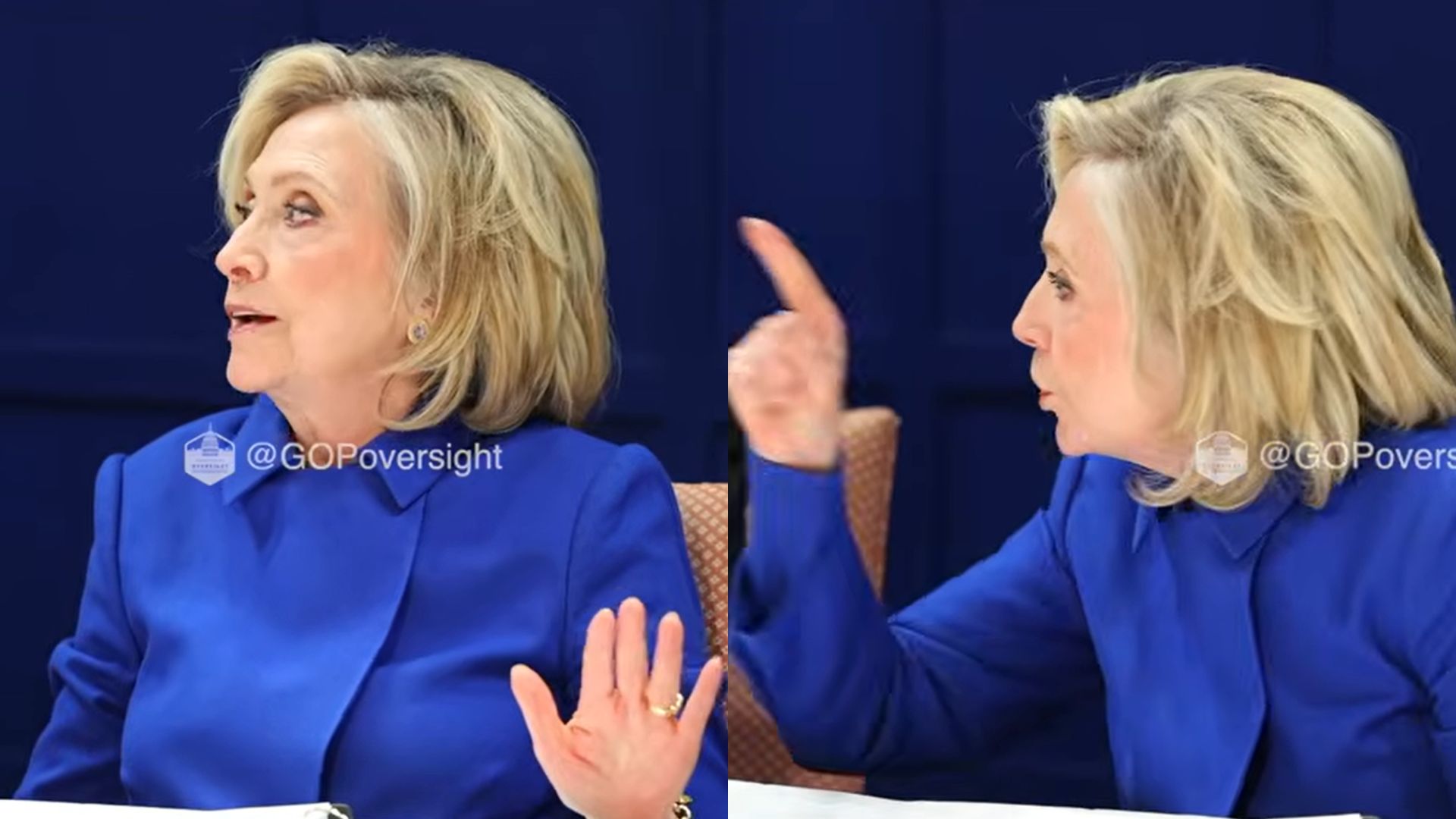
Former First Lady, Secretary of State, and Democratic presidential nominee Hillary Clinton abruptly concluded her testimony before the House Oversight Committee last Thursday, walking out of a private deposition after discovering that Representative Lauren Boebert (R-CO) had disseminated a photograph of her participating in the proceedings. The dramatic incident, captured in a video released Monday, occurred during Clinton's testimony regarding Jeffrey Epstein, a matter of significant public interest. Reports indicate that the private session was temporarily halted when it became apparent that a photo had been shared on social media, a clear violation of the established rules for the closed-door hearing. Clinton's departure was marked by a visibly strong reaction, with her exclaiming, "I AM DONE WITH THIS!" and expressing profound frustration over what she characterized as "typical behavior" from those involved in the leak. This unexpected turn of events has ignited further debate surrounding the decorum and confidentiality of congressional investigations, particularly when high-profile figures are involved, and underscores the ongoing political tensions between prominent figures from opposing parties.
The context of Clinton's testimony is crucial to understanding the gravity of the situation. She was appearing before the House Oversight Committee as part of an ongoing inquiry related to Jeffrey Epstein, a convicted sex offender whose connections to numerous influential individuals have been the subject of intense scrutiny for years. Such depositions are typically conducted in private to facilitate candid testimony, protect sensitive information, and ensure an orderly process free from external distractions or political grandstanding. Strict rules regarding the recording and dissemination of images or information from these sessions are routinely put in place and communicated to all participants, including members of Congress. The decision to hold a private hearing, rather than a public one, often reflects a committee's judgment that the nature of the information or the need for an uninhibited exchange outweighs the immediate public transparency of an open session. Therefore, the alleged breach of these protocols by a sitting member of Congress represents a significant challenge to the integrity and established procedures of congressional oversight, raising questions about accountability and respect for institutional norms in a highly polarized political environment.
The sequence of events leading to Clinton's departure unfolded with increasing tension, as detailed in the recently released video footage. During the deposition, a member of Clinton's legal team interrupted the proceedings to address a critical issue, stating that photographs of the Secretary testifying were being circulated from within the room. This representative explicitly questioned the permissibility of such actions, especially given that Clinton's camp had previously advocated for a public hearing. According to reports, Clinton's adviser, Nick Merrill, had earlier informed reporters that the hearing was temporarily paused to investigate the source of a photograph shared on social media, noting that such an action contravened the rules established at the outset. Upon learning the full extent of the breach, and specifically that Representative Boebert had reportedly sent the image to right-wing influencer Benny Johnson, Clinton's frustration escalated. She declared her refusal to continue, stating, "If you guys are doing that, I am done! You can hold me in contempt from now until the cows come home." A committee member subsequently acknowledged posting an image, prompting Clinton to exclaim, "Oh for heaven's sakes!" The congresswoman in question then reportedly attempted to protest, suggesting the image was from an earlier point in time, though the full context of her defense remains unclear from the available information.
This incident carries significant implications for the conduct of congressional oversight and the broader political landscape. Observers suggest that the alleged leak by a member of Congress during a private deposition could undermine the trust essential for effective legislative investigations. The confidentiality of such proceedings is often paramount to eliciting full and truthful testimony, and a breach of this nature could deter future witnesses from cooperating openly. Furthermore, the event highlights the escalating partisan tensions within Washington, where political tactics sometimes appear to overshadow established procedural norms. For Representative Boebert, a prominent conservative figure, the alleged leak could be interpreted as a deliberate move to generate controversy and rally her base, given Clinton's enduring status as a polarizing figure in American politics. Conversely, for Clinton and her allies, it reinforces concerns about what they perceive as politically motivated attacks and a disregard for institutional decorum. The episode raises critical questions about the enforcement of congressional rules, the potential for disciplinary action against members who violate them, and the long-term impact on the ability of committees to conduct sensitive inquiries without external interference or politically charged disruptions. It underscores a growing challenge in maintaining the integrity of legislative processes amidst a highly charged media and political environment.
In conclusion, Hillary Clinton's dramatic exit from a private congressional deposition, triggered by the alleged photo leak from Representative Lauren Boebert, represents a notable moment in recent political discourse. The incident not only disrupted a sensitive inquiry into Jeffrey Epstein but also brought to the forefront critical issues concerning the sanctity of congressional rules, the ethics of information dissemination, and the ongoing partisan divide. Clinton's forceful reaction underscores the perceived gravity of the breach, while the committee's handling of the matter will likely be scrutinized for its implications on future legislative conduct. As the dust settles, attention will turn to whether any formal repercussions will follow for the alleged violation of deposition protocols and how this event might influence the approach to private testimonies moving forward. The episode serves as a stark reminder of the challenges inherent in maintaining decorum and confidentiality in an era of heightened political polarization and instant digital communication, leaving many to watch for how congressional leadership addresses such breaches of trust and procedure.