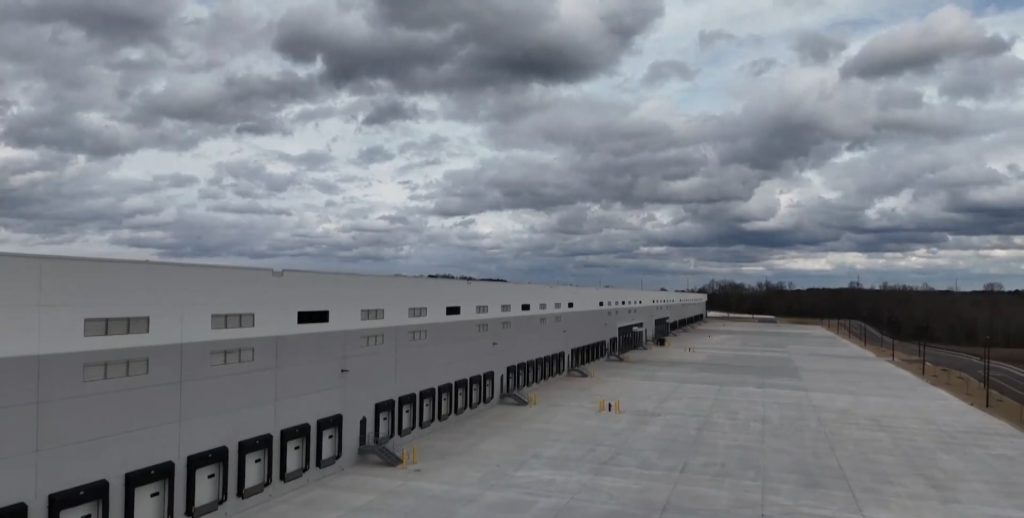
United States Immigration and Customs Enforcement (ICE) has reportedly initiated a substantial, nationwide undertaking, discreetly acquiring numerous industrial warehouses across the country over recent months. According to initial reports, this extensive acquisition strategy aims to establish a vast network of immigration detention and processing centers, designed to significantly boost the agency's capability to house tens of thousands of individuals. Sources suggest this ambitious endeavor could involve an investment potentially reaching billions of dollars, marking a considerable expansion of the nation's immigration enforcement infrastructure. The initiative has already begun to elicit local opposition and public discussion, with White House correspondent Liz Landers specifically noting how the emerging controversy is particularly evident within a small community in Maryland, serving as an early indicator of the broader public scrutiny this program is likely to attract as more details come to light.
This reported move by ICE to dramatically enhance its detention capabilities unfolds amidst ongoing national dialogues concerning immigration policy, border security measures, and the humanitarian treatment of migrants. For many years, the U.S. immigration system has navigated fluctuating demands for detention space, typically relying on a diverse array of federal facilities, privately managed centers operating under contract, and various temporary shelters. The new strategy, which involves repurposing industrial warehouses into dedicated processing and holding facilities, signifies a notable departure in both approach and overall scale. The intention to forge a comprehensive 'network' implies a meticulously coordinated, long-term blueprint for managing substantial populations of detainees across various geographical regions, potentially streamlining operational logistics while also centralizing agency control. Such a significant expansion, aiming to accommodate 'tens of thousands' of individuals, strongly suggests either a projected increase in enforcement actions or a strategic response to anticipated future migration patterns, necessitating a robust and geographically diverse infrastructure.
The quiet nature of these acquisitions, focusing specifically on industrial warehouses, underscores a deliberate strategy to rapidly expand infrastructure with minimal initial public fanfare. Reports indicate that the selection of these large, often nondescript industrial properties allows for quicker conversion and scalability compared to constructing new, purpose-built facilities. The projected capacity to hold 'tens of thousands' of individuals highlights the sheer scale of this initiative, positioning it as one of the most significant expansions of U.S. immigration detention capacity in recent history. The financial commitment, estimated by sources to potentially reach billions of dollars, reflects the profound investment ICE is making in this long-term strategy. The localized resistance, as observed in the Maryland community mentioned by Liz Landers, provides a tangible example of the community-level challenges and ethical debates that are likely to intensify as more of these facilities become operational and their presence becomes more widely known across the nation.
The broader implications of ICE's extensive warehouse conversion project are multifaceted and far-reaching, touching upon civil liberties, community relations, and the future trajectory of U.S. immigration policy. This significant expansion of detention capacity could enable more aggressive enforcement actions, potentially leading to increased detentions and deportations. Critics are likely to raise concerns about the conditions within these industrial-scale facilities, the potential for prolonged detention periods, and the impact on due process for migrants. Conversely, proponents might argue that increased capacity is essential for maintaining border security and managing large influxes of migrants efficiently. The centralization of control implied by a 'network' could lead to more standardized operations but also raises questions about oversight and accountability. Expert perspectives suggest that the establishment of such a robust infrastructure could fundamentally alter the landscape of immigration enforcement for years to come, influencing both policy decisions and the experiences of individuals navigating the immigration system.
In summary, ICE's reported nationwide initiative to acquire and convert industrial warehouses into large-scale migrant detention and processing centers represents a monumental shift in the nation's immigration enforcement strategy. With an investment potentially in the billions and a capacity target of tens of thousands of individuals, this undertaking signifies a profound commitment to expanding the physical infrastructure for migrant detention. While officials have not yet released comprehensive details, the emerging local opposition, as highlighted by White House correspondent Liz Landers, foreshadows a broader national debate on the ethical, logistical, and financial implications of this expansion. Moving forward, observers will be closely watching for further disclosures regarding specific facility locations, detailed cost analyses, and the inevitable legal and humanitarian challenges that are likely to accompany such a significant and controversial development in U.S. immigration policy.