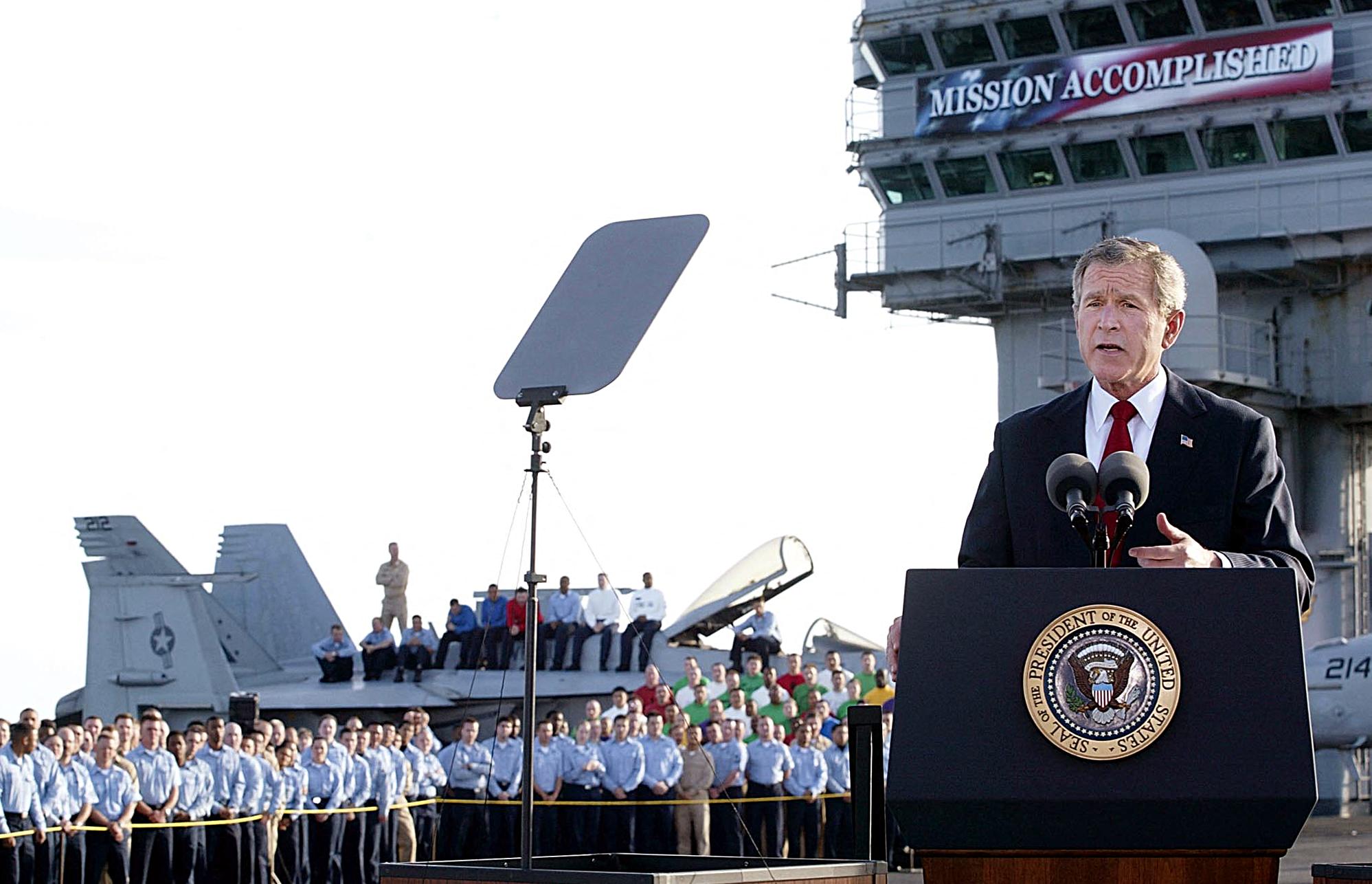
As oil topped $120 a barrel Monday, and Iran named a new supreme leader, Wall Street is still betting this war will be short—the same bet investors made about Iraq in 2003, when a conflict predicted to cost $60 billion ultimately consumed $3 trillion. Those trillions showed up as higher deficits, higher borrowing costs, and a decade of elevated geopolitical risk—a path markets never modeled in 2003. The parallels are not subtle. When the U.S. invaded Iraq in March 2003, Defense Secretary Donald Rumsfeld famously predicted the conflict would last “six days, six weeks—I doubt six months.” It las
As oil topped $120 a barrel Monday, and Iran named a new supreme leader, Wall Street is still betting this war will be short—the same bet investors made about Iraq in 2003, when a conflict predicted to cost $60 billion ultimately consumed $3 trillion. Those trillions showed up as higher deficits, higher borrowing costs, and a decade of elevated geopolitical risk—a path markets never modeled in 2003. The parallels are not subtle. When the U.S. invaded Iraq in March 2003, Defense Secretary Donald Rumsfeld famously predicted the conflict would last “six days, six weeks—I doubt six months.” It las