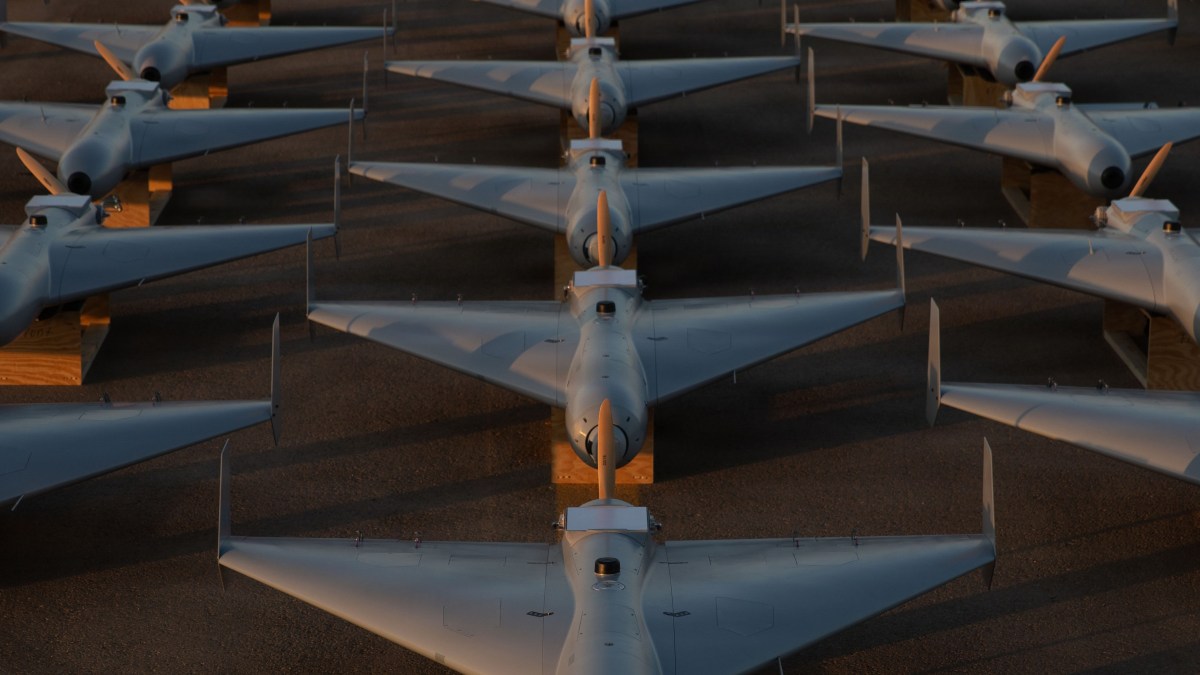
U.S. Central Command (CENTCOM) has officially confirmed the inaugural combat deployment of its cutting-edge, low-cost unmanned combat attack systems, known as LUCAS drones, during a series of extensive airstrikes targeting Iran this past weekend. This marks a pivotal moment in modern warfare, as these one-way attack drones were utilized for the first time in an active conflict scenario. The announcement, made by CENTCOM on Saturday afternoon, detailed that the LUCAS drones were an integral component of a broader arsenal of weaponry unleashed against Iranian targets as part of an operation designated 'Operation Epic Fury.' While specific operational details surrounding these ongoing strikes remain largely undisclosed, with both the White House and military authorities providing only limited public statements, CENTCOM did affirm the successful launch and engagement of the LUCAS drones within the initial phases of the offensive. This unprecedented deployment underscores an evolving strategic approach in regional military engagements, signaling a new chapter in the application of autonomous systems in combat operations.
The introduction of the LUCAS drones into combat carries substantial strategic implications, particularly given their design lineage. Reports indicate that these American-developed systems are specifically modeled after Iran's own Shahed-136 one-way attack drones, suggesting a direct technological countermeasure or adaptation. This mirroring of an adversary's successful drone technology highlights a growing trend in military innovation, where cost-effective, expendable unmanned systems are becoming increasingly central to operational planning. The broader context for these strikes involves ongoing American and Israeli military actions against various Iranian cities and strategic military installations. Concurrently, the region has witnessed retaliatory measures from Iran, with several Gulf nations experiencing impacts from Iranian munitions, and U.S. military bases in the area reportedly coming under attack. While the full extent of the damage inflicted upon Iran remains unclear, the Iranian Red Crescent previously reported a significant casualty count, indicating over 200 fatalities within Iran, though CENTCOM has stated that American personnel sustained no injuries and damage to U.S. facilities was minimal.
Further insights into the capabilities and strategic value of the LUCAS drones have emerged, despite the limited transparency surrounding their specific role in 'Operation Epic Fury.' According to Samuel Bendett, a distinguished fellow at the Center for a New American Security who specializes in drone and autonomous military systems, the LUCAS drones represent a significant advancement due to their economic efficiency, impressive operational range, and advanced loitering capabilities. Bendett noted that these drones are considerably more affordable than many comparable missile systems currently in the U.S. arsenal, while simultaneously offering an equivalent or superior range. Their ability to loiter over target areas provides a crucial advantage, allowing for precise engagement at optimal moments. While the exact methods of their deployment within the operation are still not fully elucidated, Bendett highlighted that both LUCAS drones and Shahed systems have been observed in action over the recent period, suggesting a dynamic and complex aerial engagement landscape. CENTCOM's statement further elaborated that the initial hours of 'Operation Epic Fury' involved a combination of precision munitions launched from air, land, and sea platforms, with Task Force Scorpion Strike specifically employing the low-cost one-way attack drones for the first time in a combat scenario.
The combat debut of the LUCAS drones signifies a notable shift in military doctrine and the potential future of armed conflict, according to expert analysis. The emphasis on 'low-cost' and 'one-way attack' capabilities suggests a strategic pivot towards more economically viable and potentially scalable offensive options, reducing the financial burden associated with traditional precision-guided munitions. This development could reshape the calculus of engagement, allowing for sustained pressure on adversaries without committing high-value assets or incurring prohibitive costs. Furthermore, the decision to base LUCAS on the Iranian Shahed-136 platform indicates a pragmatic approach to military innovation, acknowledging and adapting successful technologies, regardless of their origin. This strategic mirroring could also be interpreted as a message to adversaries, demonstrating an ability to counter and even replicate their own advanced, asymmetric capabilities. The loitering capacity, as highlighted by experts, offers unparalleled flexibility in dynamic battlefields, enabling operators to adapt to evolving intelligence and strike targets of opportunity with greater precision and reduced risk to human pilots or expensive aircraft, thereby minimizing operational exposure and resource expenditure.
The initial combat deployment of the LUCAS drones during 'Operation Epic Fury' against Iran marks a significant milestone in the ongoing evolution of military technology and strategy. While detailed information regarding the specific impact and tactical employment of these new unmanned systems remains scarce, their introduction signals a clear commitment by the U.S. military to integrate advanced, cost-effective autonomous capabilities into its operational framework. The strategic implications, from mirroring adversary technology to enhancing precision strike options with reduced financial and personnel risk, are profound and will undoubtedly influence future defense planning. As the situation in the region remains volatile, with both American and Iranian forces engaged in ongoing actions, observers will closely monitor further developments to understand the full scope and effectiveness of these new weapons. The continued integration of such systems points towards a future where drone warfare plays an increasingly central role in global conflicts, necessitating ongoing analysis of their ethical, strategic, and operational ramifications.