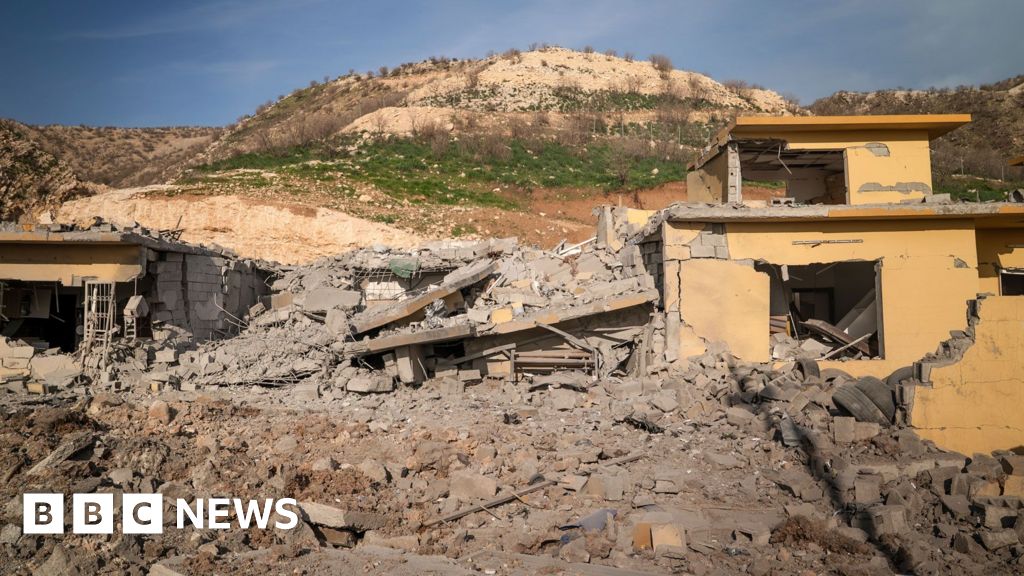
Iran's military has confirmed it launched targeted attacks against the headquarters of Iranian Kurdish opposition groups situated in northern Iraq, marking a significant escalation in Tehran's operations within the region. According to statements carried by Iran's state media, the military asserted that it struck "Kurdish groups opposed to the revolution in Iraqi Kurdistan" using three missiles. These recent assaults, which occurred over Tuesday and Wednesday, represent an intensification of strikes on Kurdish territories in both Iran and Iraq. Reports indicate that these actions resulted in at least one fatality and three injuries across separate incidents. The heightened aggression from Tehran comes amidst growing speculation that the United States, under President Donald Trump, may be encouraging these Kurdish factions to align against Iran, a context that also sees ongoing US and Israeli military actions in the broader region. The precise nature of these strikes, involving both ballistic missiles and drones, underscores a determined effort by Iran to neutralize perceived threats emanating from its western border.
The current wave of Iranian military action against Iranian Kurdish groups in northern Iraq is not an isolated event but rather a continuation of long-standing tensions and a recent surge in cross-border hostilities. Historically, Iranian Kurdish opposition parties have maintained bases in Iraq's autonomous Kurdistan Region, using them as staging grounds for their political and, at times, armed struggle against the Iranian government. Tehran views these groups as existential threats to its national security and revolutionary ideals. The intensification of these strikes is particularly notable given the broader geopolitical climate, with sources indicating a potential link to regional power dynamics. There is considerable speculation that the United States, under its current administration, might be seeking to leverage these Kurdish groups as part of a wider strategy to counter Iran, a narrative that has gained traction amid reports of sustained US and Israeli military operations elsewhere in the region. This complex interplay of internal and external pressures appears to be fueling Tehran's more aggressive posture towards the Kurdish opposition.
Specific details emerging from the targeted areas paint a stark picture of the recent attacks. On Wednesday, a ballistic missile strike, occurring around 11:00 local time (08:00 GMT), directly impacted one of the bases, causing substantial damage and casualties. Four Kurdish Peshmerga fighters sustained injuries in this particular incident, with one later succumbing to his wounds. Eyewitness accounts and confirmed reports describe a scene of devastation, with one building at the base completely crushed, debris, twisted metal, and a distinct crater left by the missile strewn across a wide area. Separately, on Tuesday, a base belonging to the Democratic Party of Iranian Kurdistan (KDPI) was subjected to a double drone strike. The aftermath of this attack was also observed, with one civilian reportedly injured. The BBC has independently confirmed these strikes and visited the sites to verify the extent of the damage and casualties. In a significant statement, a senior political leader of the KDPI conveyed to the BBC his conviction that Kurdish forces would soon be engaged in conflict within Iran itself, though he refrained from providing a specific timeframe for such an event.
The escalating Iranian military actions against Kurdish opposition groups in northern Iraq carry significant implications for regional stability and the intricate web of alliances and rivalries in the Middle East. Analysts suggest that Tehran's intensified strikes serve multiple strategic objectives: to project strength domestically, deter internal dissent, and send a clear message to external actors perceived as supporting these groups. The timing, amid speculation regarding US President Donald Trump's alleged encouragement of Kurdish factions to join a broader anti-Iran front, suggests that these strikes could also be a preemptive measure or a direct response to perceived threats. This aggressive stance risks further destabilizing an already volatile region, potentially drawing in other players and complicating efforts to de-escalate tensions. The explicit statement from a senior KDPI leader about impending conflict within Iran underscores the potential for these cross-border skirmishes to evolve into a more significant confrontation, with unpredictable consequences for the future of Iranian Kurdish aspirations and regional security dynamics.
In summary, Iran's recent missile and drone attacks on Iranian Kurdish opposition headquarters in northern Iraq represent a notable escalation in a long-running conflict, resulting in casualties and significant destruction. These strikes are framed by Tehran as necessary actions against groups it deems hostile to the revolution, but they also occur within a complex geopolitical environment marked by speculation about US involvement and ongoing regional tensions. The confirmed casualties and the physical damage observed at the strike sites highlight the immediate human cost of this intensified aggression. Looking ahead, the statements from Kurdish leaders, coupled with the broader regional context, suggest that the situation remains highly volatile. Observers will be closely monitoring whether these targeted strikes lead to further retaliation, a wider regional confrontation, or a shift in the strategic calculus of the various actors involved, particularly concerning the future role of Iranian Kurdish groups in the broader struggle for influence in the Middle East.