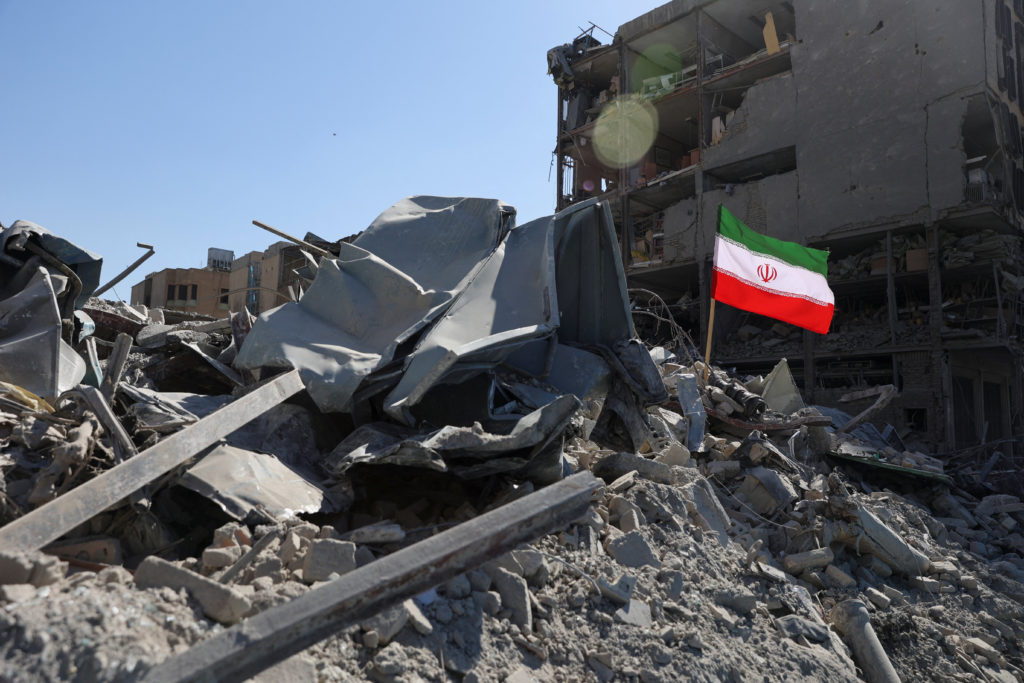
A significant escalation in the ongoing Middle East conflict occurred on Tuesday as Iranian forces reportedly launched drone strikes against the United States Embassy situated in Saudi Arabia, according to Associated Press reports from Dubai. This aggressive action coincided with Washington's decision to commence the withdrawal of numerous diplomatic and support personnel from the broader Middle Eastern region, indicating a heightened state of alert. The strike on the U.S. diplomatic facility marks a notable expansion of targets by Iran in a rapidly intensifying confrontation that has now entered its fourth day. This development unfolds amidst a series of retaliatory airstrikes by the United States and Israel against Iranian targets, which have battered the nation. President Donald Trump, commenting on the situation, characterized the escalating hostilities as potentially just the initial phase of a wider war. The conflict has already caused severe disruptions across vital global sectors, significantly impacting the supply chains for oil and natural gas, international maritime shipping routes, and commercial air travel, prompting widespread concern among international observers regarding its economic and geopolitical fallout.
The conflict's intensity has surged dramatically over recent days, with the latest drone attack on the U.S. Embassy in Saudi Arabia representing a critical turning point. This incident follows a series of escalating events, including Israel's deployment of new ground troops into Lebanon and reports of explosions reverberating through Iran's capital city, Tehran, on the fourth day of hostilities. The human cost of this spiraling conflict has been substantial, with hundreds of lives lost, the vast majority of casualties reported within Iran. The unpredictable and rapidly expanding nature of the war has prompted serious questions among international analysts regarding its potential duration and ultimate resolution. President Trump, in statements made to the New York Post on Monday, suggested the conflict could potentially last between four to five weeks, though he also indicated that the United States was prepared for a longer engagement if necessary. Furthermore, the President appeared to leave open the possibility of more extensive American military involvement, explicitly stating that he was not ruling out the deployment of ground forces.
The initial wave of U.S. and Israeli military actions that ignited this current phase of hostilities resulted in the death of Iran's Supreme Leader, Ayatollah Ali Khamenei, according to early reports. Following these strikes, President Trump had initially issued a public call for the Iranian populace to rise up and overthrow their existing government. However, the administration's stated objectives have since undergone a notable shift. Senior administration officials have subsequently clarified that regime change within Iran is not, in fact, the primary goal of the United States' involvement in the conflict. President Trump's initial public announcement detailing the reasons behind the U.S.-Israeli strikes outlined several long-standing grievances. These included significant concerns regarding Iran's controversial nuclear development program, its ballistic missile capabilities, and broader issues related to the nature and actions of its leadership. This evolving narrative surrounding U.S. objectives has added a layer of complexity to the international understanding of the conflict's strategic aims.
The 'spiraling nature' of the conflict, as described by various reports, has intensified global anxieties, particularly concerning when and how these hostilities might conclude. The lack of consistent and clear objectives from the U.S. administration, particularly the initial call for regime change followed by subsequent retractions from senior officials, contributes significantly to this uncertainty. This ambiguity makes it challenging for international observers to predict the conflict's trajectory or potential off-ramps. The expansion of Iranian targets to include a U.S. diplomatic mission in a third country, Saudi Arabia, signals a dangerous broadening of the geographical scope of the war, raising the specter of further regional destabilization. Should the U.S. consider more extensive military involvement, including the possibility of 'boots on the ground' as President Trump suggested, the implications for the entire Middle East and global power dynamics would be profound. Moreover, the severe disruptions already witnessed in the world's oil and gas markets, international shipping lanes, and air travel infrastructure underscore the far-reaching economic consequences, which are likely to worsen if the conflict persists or escalates further.
In summary, the Middle East is gripped by a rapidly escalating conflict, marked by Iran's drone strike on the U.S. Embassy in Saudi Arabia and the ongoing U.S.-Israeli military campaign against Iran. The human toll is mounting, with hundreds of casualties, predominantly in Iran. President Trump's statements have outlined a potential duration of weeks and left open the possibility of further U.S. military engagement, including ground troops, despite shifting administration objectives regarding regime change. The global economy is already experiencing significant disruptions to energy supplies, shipping, and air travel. As the conflict enters its fourth day with no clear end in sight and objectives remaining fluid, the international community watches closely for any signs of de-escalation or, conversely, further expansion of hostilities that could draw in more regional and global actors.