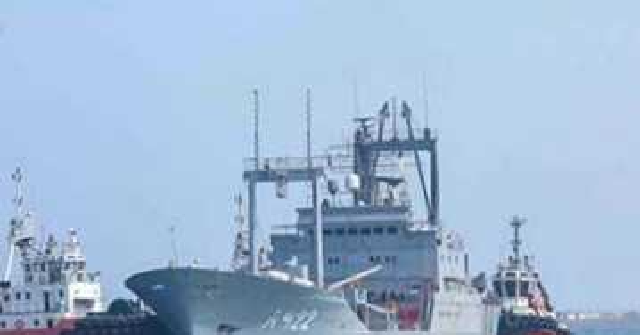
In a highly unusual development, an Iranian naval vessel has reportedly surrendered to the government of Sri Lanka, a neutral nation, for internment, an act not observed since the Second World War. Sources indicate the captain of the Islamic Republic of Iran Ship (IRIS) Bushehr, a fleet supply ship, made the decision to hand over his vessel within Sri Lankan territorial waters to safeguard the lives of his crew. This extraordinary event unfolded mere hours after another Iranian warship was reportedly destroyed by the United States Navy in a nearby engagement. Sri Lanka, historically known as Ceylon, has since assumed control of the 1970s-era vessel and, according to local media, has begun the process of disembarking the 208 officers and men who were on board, with plans to bring them ashore. The ship's internment by a non-belligerent party marks a significant moment in contemporary naval history, underscoring the escalating tensions in the region and the complex dynamics of international maritime law.
The internment of a belligerent warship by a neutral power is a rarely invoked provision of international law, primarily designed to prevent further participation in hostilities while ensuring the safety of the crew and the vessel. This particular incident gains historical weight as it is believed to be the first such occurrence since the conclusion of the Second World War, highlighting the unique circumstances surrounding the ongoing conflict. Sri Lanka's decision to accept the surrender and intern the IRIS Bushehr underscores its commitment to neutrality amidst heightened geopolitical tensions, particularly those involving Iran and the United States. The action provides a critical humanitarian corridor for the crew, preventing potential loss of life in a volatile maritime environment. The legal framework governing such actions dictates that a ship entering neutral waters is typically afforded a 24-hour period of sanctuary from attack, a window the Bushehr's captain appears to have utilized to seek internment rather than merely temporary refuge, given the immediate threat posed by the recent destruction of a sister ship.
Following its arrival in Sri Lankan waters, the IRIS Bushehr, identified as an oiler, is slated for transfer to the historic port of Trincomalee for the duration of the hostilities, according to official statements. Sri Lankan President Anura Kumara Dissanayake, as reported by The Times of India, articulated the rationale behind choosing Trincomalee over the nation's primary commercial hub, Colombo. The President cited concerns about potential disruption to maritime traffic that an inactive warship might cause, emphasizing the desire to keep the vessel away from the country's busiest port. President Dissanayake further affirmed Sri Lanka's impartial stance, stating, "we are not taking sides in this conflict, but while maintaining our neutrality we are taking action to save lives." While the actions taken by Sri Lankan authorities clearly indicate the vessel's surrender and internment, neither the Sri Lankan nor the Iranian governments have yet issued official confirmations regarding the captain's decision to surrender the ship, though the practical steps taken speak volumes about the situation's gravity.
The decision by the IRIS Bushehr's captain to seek internment, rather than simply temporary refuge, carries significant geopolitical and strategic implications. Experts suggest this move reflects a calculated choice to prioritize crew safety in the face of imminent danger, especially after the reported destruction of another Iranian warship. While international maritime law allows a belligerent vessel 24 hours in neutral waters without fear of attack, the captain's immediate move towards internment suggests a perceived threat beyond that temporary protection. This incident could set a precedent for future naval engagements in ongoing conflicts, offering a humanitarian pathway for crews caught in escalating hostilities. For Sri Lanka, accepting the internment reinforces its long-standing policy of non-alignment and humanitarian principles, potentially elevating its standing as a responsible neutral actor on the global stage. The event also highlights the increasing complexity of naval operations in contested waters, where traditional rules of engagement are being tested by modern warfare capabilities and the imperative to protect human life.
The internment of the IRIS Bushehr by Sri Lanka represents a truly rare and significant event in modern naval history, underscoring the profound human cost and strategic calculations inherent in contemporary conflicts. As 208 Iranian naval personnel are brought ashore, their fate, along with that of their vessel, will remain subject to the duration of the current hostilities and the intricacies of international diplomatic negotiations. The world will be watching for official confirmations from both Tehran and Colombo, as well as any further reactions from Washington, to understand the full ramifications of this unprecedented act. This incident serves as a stark reminder of the critical role neutral nations can play in mitigating conflict and upholding humanitarian values, even as regional tensions continue to simmer on the global stage.