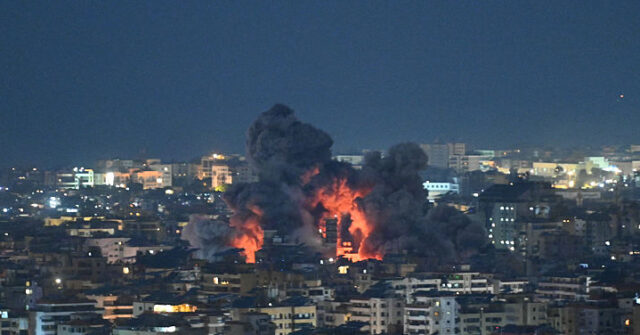
The Israeli government has initiated a significant military operation, dubbed "Operation Roaring Lion," involving ground forces advancing into southern Lebanon. This strategic move, authorized by top Israeli leadership, aims to establish control over additional territories to prevent the Iran-backed Hezbollah militant group from launching rocket attacks against Israeli border settlements. The decision to escalate military action comes in direct response to what Israeli officials describe as Hezbollah's choice to align itself with the "Iranian terror regime's campaign," directly threatening Israeli communities. Defence Minister Israel Katz, alongside Prime Minister Benjamin Netanyahu, confirmed the Israel Defence Forces (IDF) authorization to proceed with the invasion on Tuesday morning, following a series of cross-border rocket barrages that triggered air raid sirens across northern Israel, including the Galilee area, as reported by The Times of Israel. The operation underscores Israel's stated commitment to ensuring the security of its citizens residing near the Lebanese frontier.
This latest military engagement represents a significant escalation in the long-standing tensions between Israel and Hezbollah, marking a new phase in the ongoing regional conflict. "Operation Roaring Lion" has been framed by Jerusalem as its strategic equivalent to the American "Operation Epic Fury," signaling a robust and decisive military response. The immediate catalyst for the ground invasion was a renewed wave of Hezbollah rocket attacks originating from inside Lebanon, which struck the Galilee area on Tuesday morning. These attacks followed earlier warnings from Israeli officials, highlighting a perceived increase in aggression from the Lebanese militant group. The Israeli government's stated objective is to neutralize the threat posed by Hezbollah's ability to target Israeli border communities, which have frequently been subjected to rocket fire, necessitating a proactive military intervention to secure the northern frontier and protect civilian lives.
In a forceful statement released on Tuesday, Defence Minister Israel Katz affirmed that Hezbollah would incur "a heavy price" for its decision to fire rockets into Israeli territory. He reiterated the government's unwavering pledge to guarantee the safety of settlements in the Galilee region, emphasizing that this commitment would be fulfilled through military action. The authorization granted to the IDF specifically permits forces to "advance and take control of additional areas in Lebanon," a clear indication of Israel's intent to establish a more secure buffer zone or eliminate launch capabilities directly. This directive came shortly after a stern warning issued by Minister Katz on Monday evening, where he declared that Hassan Nasrallah, the Secretary-General of Hezbollah, had been "marked for elimination" due to his direct orders to initiate attacks against Israelis, underscoring the gravity of the current confrontation and the high stakes involved for both sides.
The commencement of a ground invasion into Lebanon carries significant implications for regional stability, potentially marking a substantial escalation of the conflict. By authorizing the IDF to "take control of additional areas," Israel appears to be pursuing a strategy aimed at creating a more robust security perimeter, effectively pushing Hezbollah's operational capabilities further away from its border communities. This move, according to officials, is a direct response to what Israel perceives as an intolerable threat to its sovereignty and the safety of its citizens. The explicit threat against Hezbollah's leadership, particularly Secretary-General Hassan Nasrallah, signals a shift in Israel's engagement strategy, indicating a willingness to target high-value assets to deter future aggression. Such an aggressive posture suggests that Israel is prepared for a prolonged engagement to achieve its stated security objectives, potentially reshaping the geopolitical landscape of the northern border region and inviting international scrutiny.
In summary, Israel has launched "Operation Roaring Lion," a ground invasion into southern Lebanon, with the explicit aim of preventing Hezbollah rocket attacks on its northern settlements. This decisive military action, authorized by Prime Minister Netanyahu and Defence Minister Katz, follows recent rocket barrages and is framed as a necessary measure to secure Israeli citizens. The operation signifies a significant escalation in the long-standing conflict with Hezbollah, with Israeli officials vowing severe repercussions for the militant group and explicitly targeting its leadership. The coming days will reveal the extent of the IDF's advance and Hezbollah's response, as the region braces for potential further intensification of hostilities. Global attention will undoubtedly focus on the unfolding events and their broader impact on Middle Eastern stability.