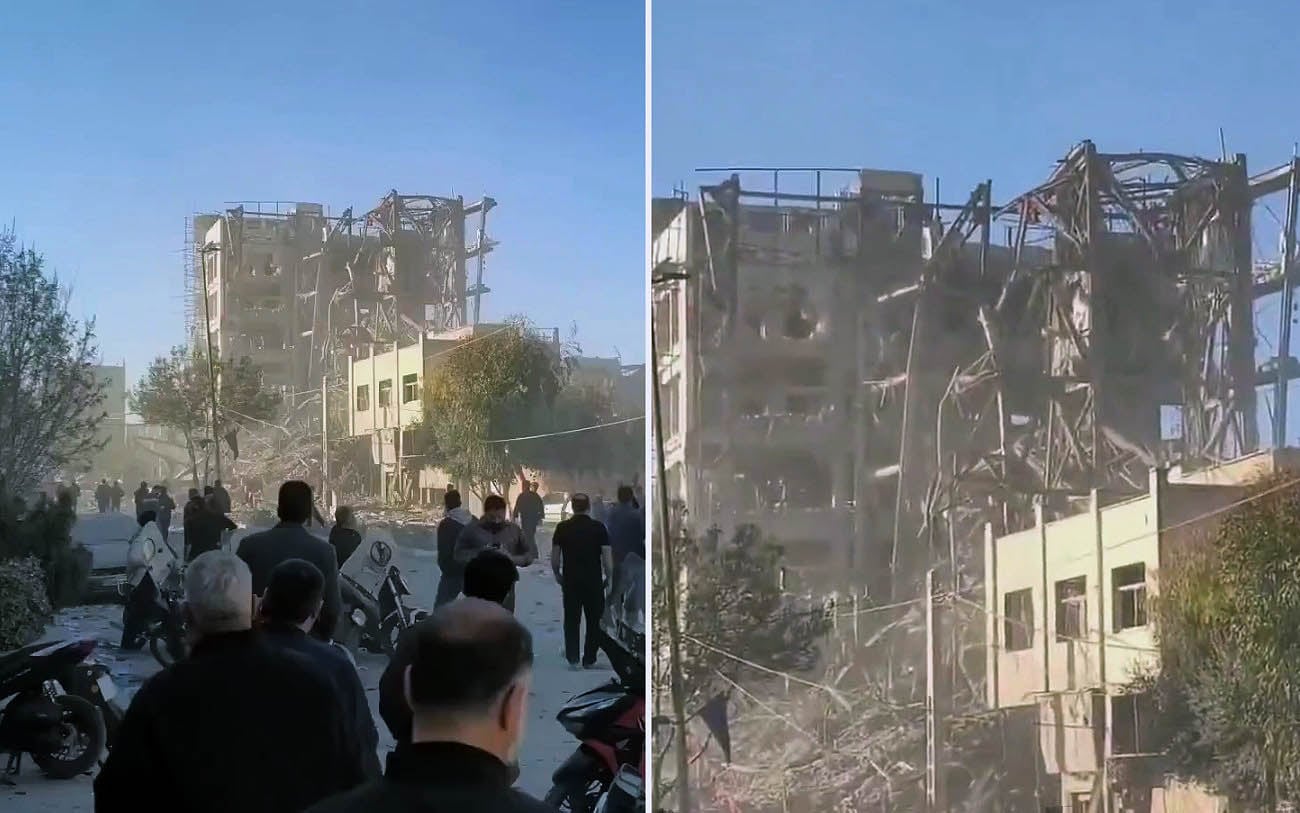
An Israeli airstrike reportedly targeted a significant building in Qom, Iran, on Tuesday, where senior Iranian clerics were believed to be convening to select the nation's next supreme leader. This dramatic development follows the reported death of former Supreme Leader Ali Khamenei on Saturday, an event attributed to Israel by various sources. According to statements from the Israel Defense Forces (IDF) spokesman, Brigadier General Effie Defrin, the Israeli Air Force conducted the strike on the facility. Iranian state media, specifically the Tasnim news agency, confirmed the attack, labeling the perpetrators as "American-Zionist criminals" and identifying the target as the Assembly of Experts building in Qom, a city located south of Tehran. The Assembly of Experts is the crucial body constitutionally mandated with the responsibility of appointing, overseeing, and potentially dismissing Iran's supreme leader, underscoring the profound political implications of this targeted action.
The Assembly of Experts plays an indispensable role in Iran's unique political and religious governance structure. Comprising 88 members, this influential council holds the ultimate authority in determining who will lead the Islamic Republic as its Supreme Leader, a position that wields ultimate power over all state affairs, military, and foreign policy. The reported strike gains immense significance when viewed in the context of the preceding event: the alleged killing of Supreme Leader Ali Khamenei by Israel just days prior. Khamenei's demise, if confirmed, would trigger a critical and potentially volatile period of succession for Iran, making the Assembly of Experts' deliberations paramount. The targeting of a building associated with this body, therefore, represents a direct and unprecedented intervention into the heart of Iran's leadership transition process, signaling a profound escalation in the long-standing, often covert, conflict between Israel and Iran.
Details emerging from the strike paint a complex picture, with conflicting reports regarding the extent of its impact and the presence of key figures. The targeted building, located in the Iranian city of Qom (with specific geolocation coordinates reported as 34.62534, 50.87639), was shown in local media footage to have sustained severe damage. However, an Iranian news agency, Mehr, claimed that the structure was "old" and not actively utilized for meetings, suggesting a potential downplaying of the strike's significance. Regarding attendance, an Israeli defense source indicated uncertainty about how many of the Assembly of Experts' 88 members were present at the time of the attack. Furthermore, Channel 12 news, citing unsourced reports, suggested that none of the 88 members were in the building, asserting that only clerks involved in counting votes for the supreme leader's appointment were present. IDF Spokesman Defrin stated that the outcomes of the strike were still under examination, and there was no confirmed information available regarding potential casualties.
This audacious strike, occurring amidst a critical leadership vacuum in Iran, carries significant strategic and political implications. The targeting of a building associated with the Assembly of Experts, regardless of the actual presence of its members, sends an unequivocal message about Israel's willingness to project power and potentially influence Iran's internal political processes. If, as some reports suggest, the clerics were not present, the strike could be interpreted as a symbolic warning or a demonstration of advanced intelligence and operational capabilities, rather than a direct attempt to eliminate key figures. Conversely, the Iranian characterization of the attackers as "American-Zionist criminals" underscores the deep-seated animosity and the potential for severe retaliation. This event could further destabilize an already volatile Middle East, complicating the succession process within Iran and potentially leading to a more overt and dangerous phase in the regional power struggle, with both sides carefully weighing their next moves.
In summary, the Israeli Air Force's strike on a building in Qom, reportedly where Iran's Assembly of Experts was gathering to elect a new supreme leader following Ali Khamenei's alleged death, marks a significant escalation in regional tensions. While the full impact and precise intent of the strike remain under investigation, with conflicting reports on the presence of key clerics and the building's operational status, the targeting of such a symbolically crucial institution is undeniable. The international community will be closely monitoring the unfolding situation, particularly for any confirmed casualties, further statements from both Israeli and Iranian officials, and potential retaliatory actions. This incident underscores the precarious state of affairs between the two nations and sets the stage for a potentially turbulent period in Iran's political future and broader Middle Eastern stability.