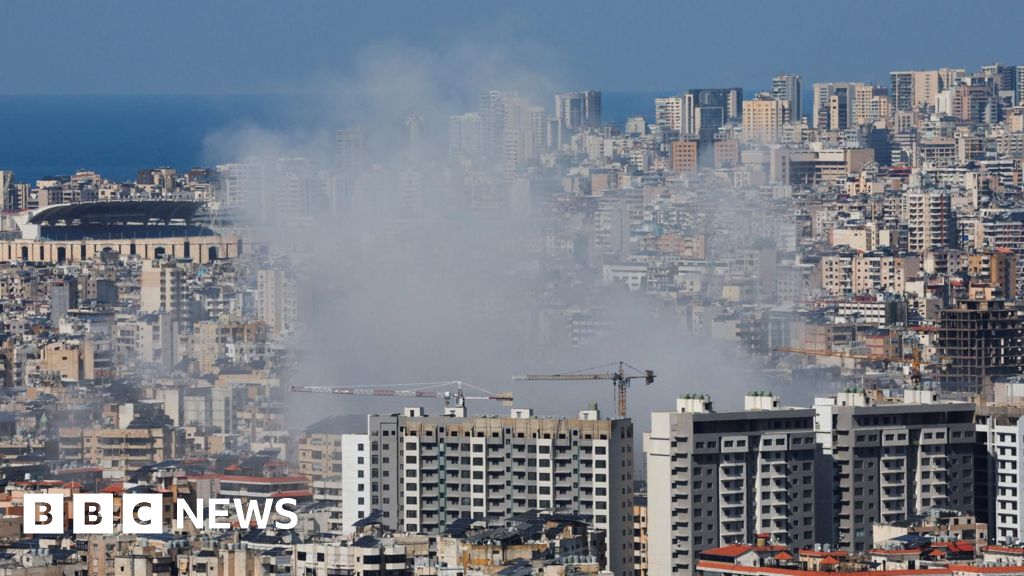
Israel's armed forces have reportedly conducted retaliatory strikes against targets associated with Hezbollah within Lebanese territory, following a significant barrage of rockets and drones launched by the Iran-backed Shia group towards the Israeli city of Haifa. This latest escalation comes as Hezbollah explicitly stated its actions were in direct response to the recent killing of Iran's Supreme Leader, Ayatollah Ali Khamenei, framing their offensive as an act of vengeance for what they termed Khamenei's "pure blood." According to reports from Lebanon's health ministry, these Israeli military operations resulted in the deaths of 31 individuals across Beirut's southern suburbs, an area known for Hezbollah's strong presence, and in southern regions of the country. While the Lebanese authorities confirmed substantial casualties, there were no immediate reports of injuries or fatalities within Israel stemming from Hezbollah's earlier projectile attacks. This rapid exchange of hostilities underscores a dangerous widening of the ongoing regional conflict, drawing Lebanon further into a volatile confrontation that has rapidly intensified across the Middle East since a joint US-Israeli attack on Iran's leadership just days prior. The Israeli Defence Minister, in a stern warning, indicated that Hezbollah would face a "heavy price" for its actions, signaling a potentially prolonged and severe response.
The recent cross-border aggression marks a critical escalation in a broader regional conflict that has rapidly engulfed the Middle East. This wider confrontation ignited following a joint operation by the United States and Israel on Saturday, targeting Iran's leadership and armed forces. In a swift and forceful response, Iran retaliated by launching its own arsenal of missiles and drones towards Israel and several Gulf Arab states hosting American military installations. Hezbollah, a powerful Shia political party and militant group with deep financial and ideological ties to Tehran, had been widely anticipated to enter this burgeoning conflict. Its leader, Naim Qassem, had on Sunday vehemently condemned the assassination of Ayatollah Ali Khamenei, referring to it as "the height of crime." Qassem further declared that his organization was prepared to "undertake our duty of confronting the aggression" by both Israel and the United States, asserting that Hezbollah would not abandon "the field of honour and resistance." This current flare-up also breaks a fragile 15-month ceasefire that had previously halted direct hostilities between Israel and Hezbollah, with the latter citing ongoing Israeli strikes in Lebanon during this period as an additional justification for its recent rocket fire.
The sequence of events unfolded rapidly, with Hezbollah's rocket and drone assault on Haifa occurring around 01:00 local time on Monday. This offensive was explicitly framed by the group as a direct act of vengeance for the killing of Iran's Supreme Leader and as retaliation for alleged Israeli military actions in Lebanon since the previous ceasefire. In response to these attacks, Israel's Defence Minister, Israel Katz, issued a stark warning, stating that he had instructed the Israeli military to "act forcefully" against Hezbollah. Furthermore, Katz escalated the rhetoric significantly by declaring Hezbollah's leader, Naim Qassem, a "marked target for assassination," indicating a profound shift in Israel's strategic approach to the group's leadership. On the Lebanese domestic front, President Joseph Aoun publicly denounced the Israeli strikes, while simultaneously cautioning against the perilous prospect of Lebanon being transformed into a battleground for regional conflicts "that do not concern us." Following these developments, Prime Minister Nawaf Salam announced a decisive governmental response: an immediate prohibition on Hezbollah's military operations within Lebanon, directly linking this unprecedented measure to the group's recent rocket launches.
The Lebanese government's decision to ban Hezbollah's military activities represents a significant internal political development, potentially signaling a critical juncture for the country's sovereignty and its relationship with the powerful Iran-backed group. While President Aoun's denouncement of Israeli strikes aligns with national sentiment, Prime Minister Salam's move to restrict Hezbollah's operations could be interpreted as an attempt to assert state authority and prevent Lebanon from being completely engulfed in a wider regional conflagration. This internal dynamic adds another layer of complexity to an already volatile situation, as it remains to be seen how effectively this ban can be enforced and how Hezbollah, which operates as a state within a state, will respond to such a direct challenge from Beirut. Regionally, the expansion of hostilities to the Israeli-Lebanese border, following the initial US-Israeli strikes on Iran and subsequent Iranian retaliation, confirms fears that the conflict is rapidly metastasizing across the Middle East. Analysts suggest this widening front increases the risk of miscalculation and uncontrolled escalation, potentially drawing in more regional and international actors. The explicit targeting of Hezbollah's leadership by Israel also marks a dangerous precedent, raising the stakes considerably and promising a more brutal phase of confrontation.
In summary, the recent exchange of fire between Israel and Hezbollah, resulting in significant casualties in Lebanon, marks a perilous expansion of the ongoing regional conflict. Hezbollah's stated motive of avenging Iran's Supreme Leader's death, coupled with Israel's vow of a "heavy price" and the declaration of Hezbollah's leader as an assassination target, indicates a severe escalation with potentially far-reaching consequences. Crucially, the Lebanese government's unprecedented move to ban Hezbollah's military activities introduces a new internal dimension, challenging the group's operational freedom within its own borders. As the region braces for further developments, the immediate focus will be on the enforcement of this ban, Hezbollah's reaction to both Israeli threats and domestic restrictions, and the potential for additional regional powers to be drawn into the escalating hostilities. The trajectory of this conflict suggests a period of intense instability, with the risk of a full-scale regional war looming larger than ever.