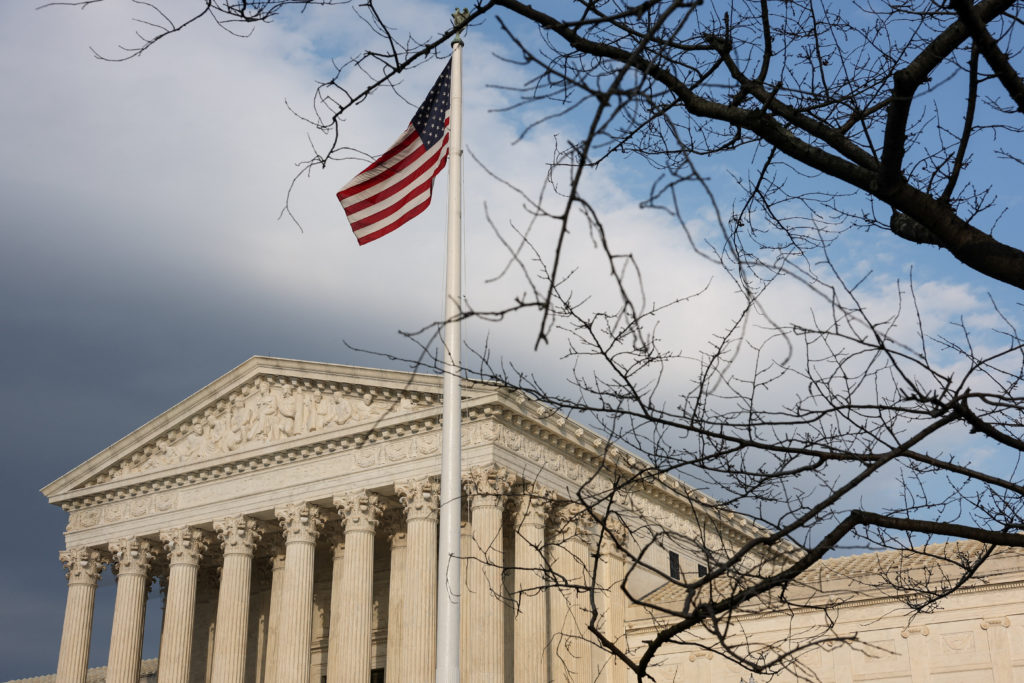
The nation's highest judicial body, the Supreme Court, is currently grappling with a pivotal case that pits individual firearm rights against public safety concerns, specifically concerning individuals who use marijuana and other controlled substances. In a development that has garnered significant attention, the former Republican Trump administration is reportedly taking a stance to defend a federal firearm restriction that prohibits such drug users from possessing weapons. This position marks a notable departure from typical Republican alignment, which often champions expansive Second Amendment rights. Adding another layer of intrigue, this defense is reportedly bolstered by the support of various influential gun-control advocacy groups, organizations that are traditionally associated with and largely aligned with the Democratic political agenda. This unusual bipartisan convergence before the Supreme Court underscores the intricate and often unpredictable nature of legal and political battles surrounding gun ownership in the United States, suggesting that certain public safety considerations can transcend conventional ideological divides. The Court's impending decision in this matter is poised to have profound implications for millions of Americans and could significantly recalibrate the legal framework governing firearm eligibility.
The legal challenge currently under review by the Supreme Court centers on a long-standing federal statute that bars individuals identified as 'unlawful users' of controlled substances from possessing firearms. This prohibition, a fundamental component of broader federal gun laws, has historically been justified as a critical measure to mitigate risks associated with drug use and firearm ownership, often cited as an imperative for public safety. The Court's decision to hear arguments in this matter signals a potential re-evaluation of how these established restrictions intersect with the Second Amendment's constitutional guarantee of the right to keep and bear arms. Legal experts suggest that the case could delve deeply into the historical understanding of firearm ownership, questioning whether such prohibitions align with the nation's founding principles or if they represent a permissible and necessary exercise of governmental power to ensure the welfare of its citizens. The outcome could have far-reaching implications for millions of Americans, particularly in states where marijuana use has been decriminalized or legalized for either medical or recreational purposes.
The specific nature of the political alignment observed in this Supreme Court case is particularly noteworthy and has drawn considerable attention from legal and political observers. The former Republican Trump administration, despite its general advocacy for expansive gun rights and its political base's strong support for Second Amendment protections, is reportedly arguing for the continued enforcement of this particular firearm restriction. This stance places the administration in direct support of a measure that many traditional gun rights advocates might typically challenge as an infringement on constitutional liberties. Concurrently, various prominent organizations dedicated to stricter gun safety regulations, which are frequently associated with Democratic political platforms, are reportedly lending their full support to the administration's defense of the prohibition. This unusual coalition underscores a shared, albeit narrow, interest in maintaining certain categories of firearm restrictions, even if their broader philosophies on gun control diverge significantly. Sources indicate that the arguments presented will likely focus heavily on the government's compelling interest in preventing violence and ensuring public safety, juxtaposed against individual claims of constitutional rights.
This unprecedented political alignment at the Supreme Court could signify a nuanced, albeit specific, shift in the national discourse surrounding gun control. While the broader debate often sees Republicans and gun rights advocates opposing Democrats and gun-control groups, this particular instance reveals a potential consensus on certain types of prohibitions, especially those directly linked to acute public safety concerns like drug impairment. Legal scholars suggest that the Court's ruling could either reinforce the government's long-standing authority to impose restrictions based on user characteristics or, conversely, expand the scope of Second Amendment protections to a wider array of individuals previously excluded. The decision will inevitably influence future legislative efforts and judicial interpretations regarding who qualifies as a 'responsible' gun owner in the eyes of federal law. Furthermore, it could set a crucial precedent for how federal law navigates the growing tension between evolving state drug laws and established federal firearm regulations, potentially impacting how millions of individuals who legally use marijuana in their respective states are treated under federal gun statutes.
To summarize, the Supreme Court is currently engaged in a high-stakes deliberation concerning the constitutionality of federal firearm restrictions applied to individuals who use drugs, including marijuana. This case is particularly notable for the unexpected political alignment it has fostered: the former Republican Trump administration is reportedly advocating for the preservation of this prohibition, a position that has garnered backing from prominent gun-control organizations typically associated with Democratic platforms. This unusual coalition highlights the complex and often intersecting considerations of individual liberties, governmental authority, and the paramount concern for public safety. The Court's eventual ruling is anticipated with keen interest across the political spectrum, as it carries the potential to significantly redefine the scope of Second Amendment rights, establish new precedents for federal gun laws, and clarify the legal standing of individuals who use substances like marijuana, especially in states where such use is legal. Observers will be closely monitoring the outcome, which is expected to cast a long shadow over future legislative debates and judicial interpretations concerning gun ownership and drug policy nationwide.