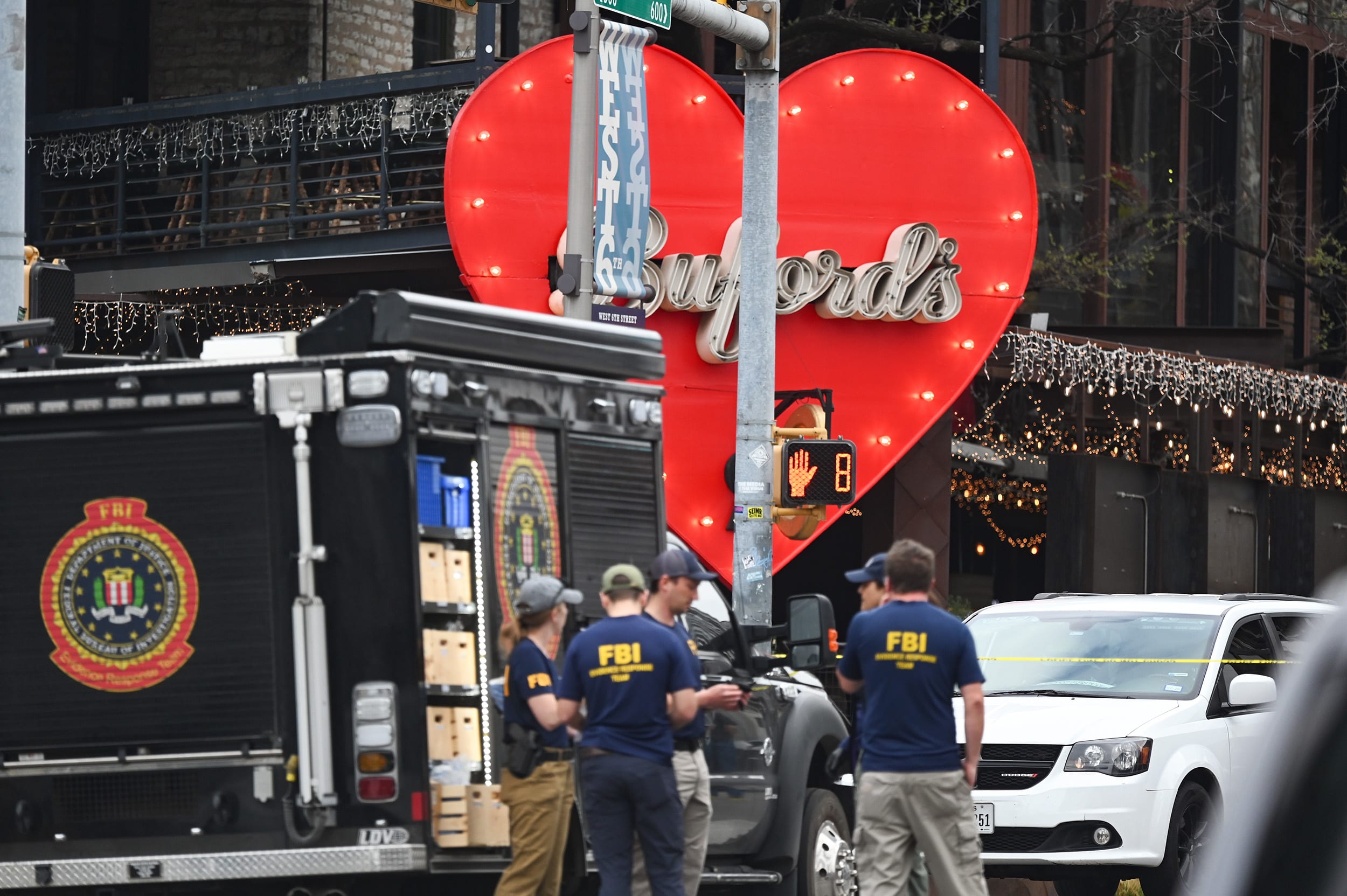
A tragic shooting incident unfolded on Sunday at a popular Austin, Texas, bar, resulting in the deaths of two individuals and leaving fourteen others wounded. The perpetrator, identified by authorities as 53-year-old Ndiaga Diagne, was also among the deceased. The violent event occurred at Buford's Bar on Austin's bustling Sixth Street, a well-known entertainment district. Law enforcement officials, including the Austin Police Department and the Federal Bureau of Investigation, have launched a joint inquiry into the incident. According to reports from Travis County Emergency Medical Services, three of the injured victims remain in critical condition, highlighting the severe impact of the attack. Investigators are actively exploring whether Diagne, a naturalized U.S. citizen originally from Senegal, harbored ideological motivations, specifically examining if the recent U.S. and Israeli military actions against Iran played a role in triggering the violence, as indicated by initial findings from the ongoing investigation.
The devastating attack has cast a somber shadow over Austin's vibrant Sixth Street, an area renowned for its lively nightlife and frequent public gatherings. Austin Police Chief Lisa Davis provided details on the shooter's actions, stating that Diagne's vehicle was observed circling the block multiple times before he engaged in the assault. The chief described how the assailant then activated the vehicle's hazard lights, lowered a window, and opened fire on patrons who were enjoying the patio area of Buford's Bar. This method of attack, targeting an open public space from a vehicle, underscores the calculated nature of the incident. The involvement of the FBI alongside local police from the outset points to the potential gravity of the case, moving beyond a typical criminal investigation to consider broader implications, especially given the early indications of a possible ideological underpinning for the violence that shook the Texas capital.
Further details emerging from the multi-agency investigation underscore the serious nature of the ongoing probe. Alex Doran, an FBI special agent from the bureau's San Antonio field office, addressed the public during a Sunday press conference, confirming that investigators discovered 'indicators' both on the subject and within his vehicle that suggest a 'potential nexus to terrorism.' However, Doran cautioned that it was 'still too early' in the investigative process to definitively determine the exact motivation behind the deadly rampage. The collaboration between the Austin Police Department and the FBI highlights the complexity of the case, requiring extensive resources and expertise to piece together Diagne's motives and actions. In the aftermath, White House Press Secretary Karoline Leavitt confirmed that President Donald Trump was briefed on the shooting, and Texas Governor Greg Abbott also issued a statement regarding the tragic events, signaling the high-level attention the incident has garnered.
The exploration of a 'potential nexus to terrorism' significantly broadens the scope of the investigation, elevating it from a local crime to one with national security implications. Expert perspectives suggest that such early indicators, while not conclusive, necessitate a thorough examination of the perpetrator's background, digital footprint, and any potential affiliations to ascertain if the attack was indeed ideologically driven. This aspect of the inquiry highlights the increasing challenge law enforcement faces in identifying and mitigating threats from individuals who may be radicalized by international events or extremist narratives. The incident also prompts a broader discussion on public safety in popular urban areas, as communities grapple with how to protect open spaces from such unpredictable acts of violence. The potential link to geopolitical tensions, specifically U.S. and Israeli strikes on Iran, underscores how global conflicts can sometimes resonate domestically, inspiring individuals to commit acts of violence far from the original flashpoints.
As Austin and the nation grapple with the aftermath of this tragic event, the focus remains squarely on the ongoing joint investigation by the Austin Police Department and the FBI. The immediate priority is to fully understand the motivations behind Ndiaga Diagne's actions and to provide clarity to the victims' families and the community. While the 'potential nexus to terrorism' is a significant development, officials continue to emphasize that a definitive motive has yet to be established. The recovery of the fourteen injured, particularly the three still in critical condition, will also be a key area of concern in the coming days and weeks. The incident serves as a stark reminder of the vulnerabilities faced by public spaces and the complex challenges confronting law enforcement in an interconnected world where global events can have local, devastating consequences. Further updates from authorities will be crucial in shedding more light on this evolving situation.