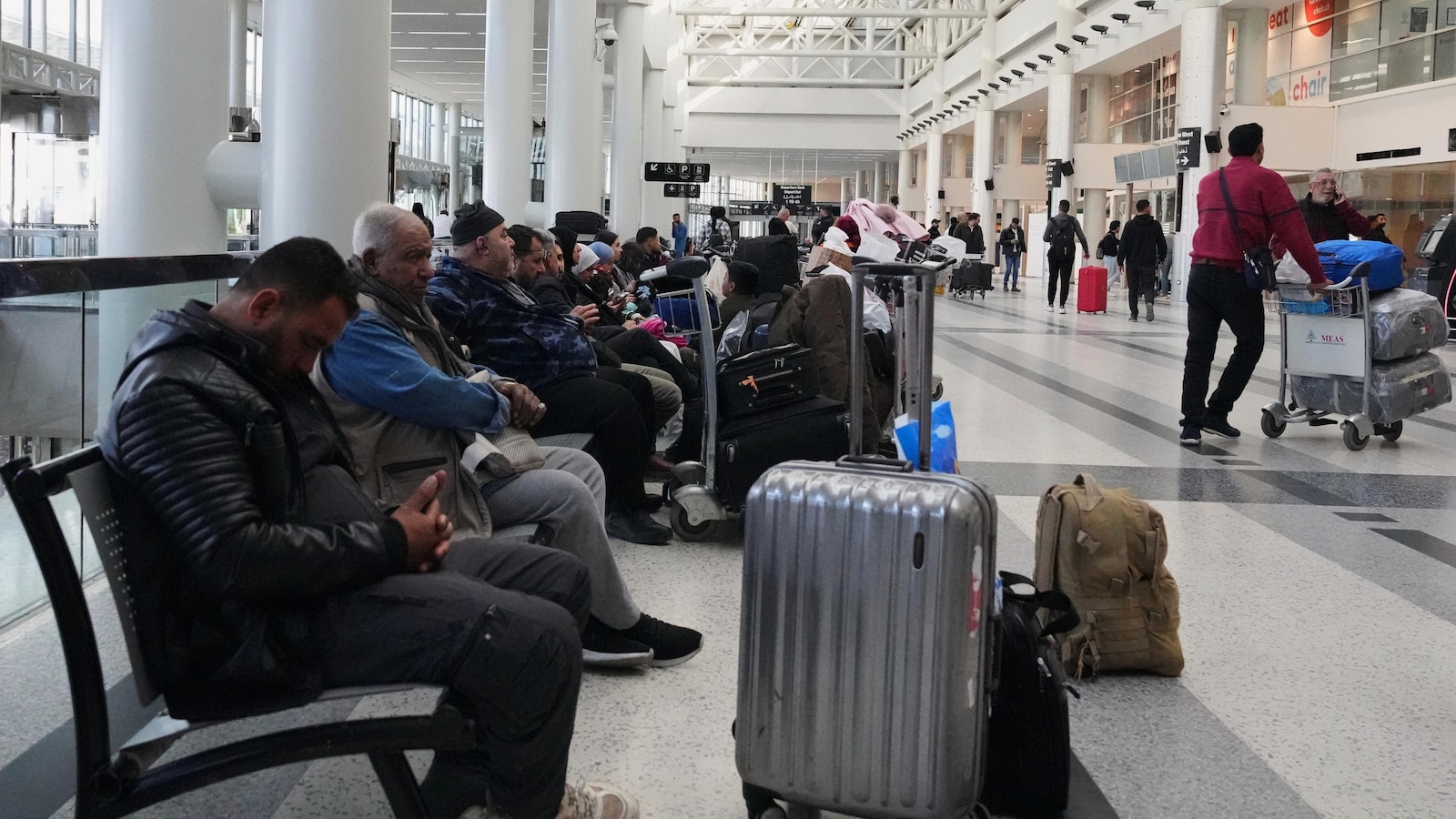
A coordinated military action against Iran by the United States and Israel has triggered extensive disruptions to air travel across the Middle East and beyond, leaving tens of thousands of passengers stranded globally. Reports indicate that the offensive, which commenced on Saturday, led to the immediate closure of national airspaces and the direct impact on several critical airports serving as vital connections between Europe, Africa, and Asia. As the conflict entered its second day on Sunday, numerous Middle Eastern airports remained inaccessible, severely impacting international flight schedules. Major carriers like Emirates Airlines announced the suspension of all flights to and from Dubai until at least Sunday afternoon, while Qatar Airways confirmed its primary hub in Qatar would remain closed until Monday morning. This unprecedented shutdown has created a ripple effect across the global aviation network, forcing diversions and cancellations on a massive scale and highlighting the profound civilian consequences of regional military escalations.
The initial phase of the military operation on Saturday saw an immediate and widespread response from countries across the Middle East, as nations including Israel, Qatar, Syria, Iran, Iraq, Kuwait, and Bahrain moved to close their respective airspaces. This preventative measure was swiftly followed by a 'temporary and partial closure' of airspace over the United Arab Emirates, as announced by its government. Flight tracking data from services like FlightRadar24 corroborated the absence of air traffic over the UAE, underscoring the severity of the situation. These closures collectively led to the grounding of hundreds of thousands of travelers on Saturday alone, with many flights either cancelled outright or diverted to alternative, often distant, destinations. The strategic importance of these Middle Eastern air corridors, which serve as crucial transit points for millions of international passengers annually, meant that the impact of these closures reverberated far beyond the immediate conflict zone, affecting global travel logistics.
The cascading effect of the airspace closures quickly manifested in significant operational challenges for major airlines and airports. Over 1,800 flights operated by prominent Middle Eastern carriers were cancelled as a direct consequence of the restrictions. Aviation analytics firm Cirium highlighted the scale of the disruption, noting that the three principal airlines operating from the affected hubs – Emirates, Qatar Airways, and Etihad – typically facilitate the passage of approximately 90,000 passengers daily through their main airports, with an even greater number destined for various locations within the broader Middle East. Furthermore, officials stated that two airports within the United Arab Emirates reported incidents, with Dubai International Airport, one of the world's busiest and the largest in the UAE, confirming four injuries. The UAE government issued a strong condemnation of what it described as a 'blatant attack involving Iranian ballistic missiles' on Saturday, underscoring the direct impact of the military action on civilian infrastructure.
The extensive disruption to air travel underscores the profound vulnerability of global civilian infrastructure to regional military conflicts. The closure of key aviation hubs like Dubai, Abu Dhabi, and Doha, which are pivotal for connecting continents, not only causes immediate inconvenience to travelers but also carries significant economic implications for the region's vital aviation and tourism sectors. The reliance of international commerce and personal travel on these well-established air routes means that prolonged instability could lead to substantial financial losses for airlines, airports, and related industries. Observers note that the swift, coordinated response by multiple nations to close their airspace reflects the serious security concerns prompted by the U.S.-Israel attack on Iran, highlighting the delicate balance between national security and the free flow of international movement in a highly interconnected world. The events serve as a stark reminder of how geopolitical tensions can rapidly translate into widespread civilian and economic fallout.
In summary, the military action undertaken by the United States and Israel against Iran has resulted in an unprecedented shutdown of airspace across the Middle East, leading to the stranding of tens of thousands of international travelers and the cancellation of thousands of flights. Key aviation hubs, including Dubai and Doha, were rendered inoperable for extended periods, with some airports even reporting direct incidents and injuries. As the situation unfolds, the immediate focus remains on the reopening of airspaces and the gradual resumption of flight operations to alleviate the immense backlog of passengers and cargo. However, the broader implications of this conflict for regional stability and the future of international travel through the Middle East will undoubtedly be a critical area to monitor in the coming days and weeks, as the region grapples with the aftermath of these significant military actions.