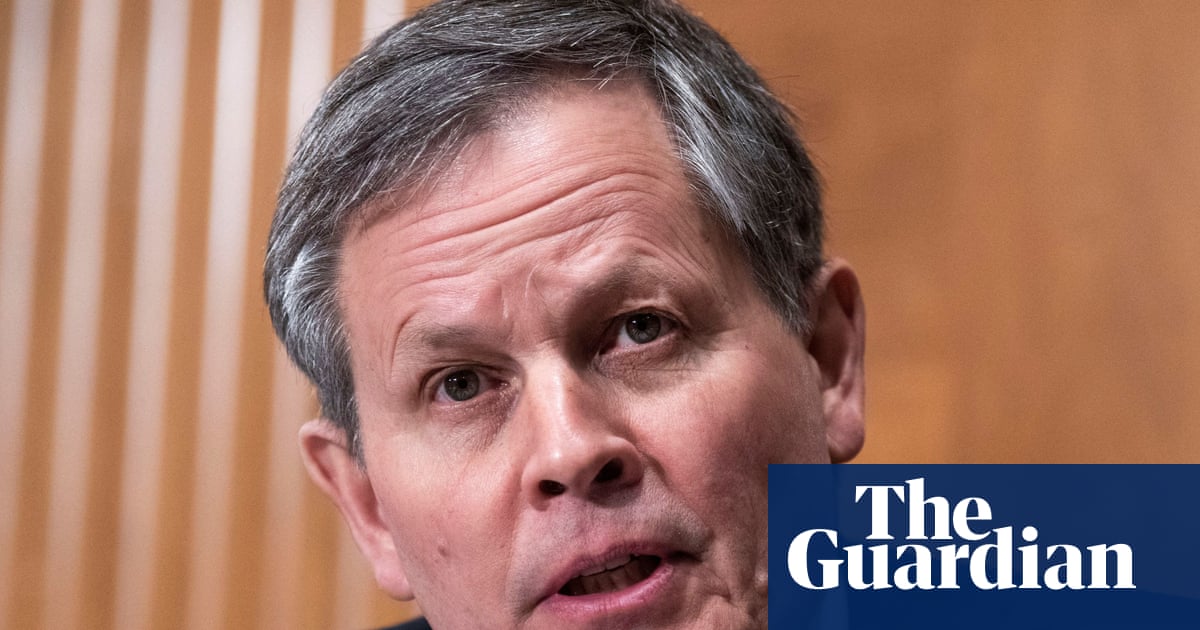
U.S. Senator Steve Daines, a prominent Republican representing Montana and a known political ally of former President Donald Trump, delivered an unexpected announcement on Wednesday, confirming his decision to withdraw from the race for a third term in the Senate. This significant political development unfolded with remarkable timing, occurring just minutes before the official deadline for prospective candidates to submit their necessary paperwork to the Montana Secretary of State’s office for the November general election. Daines, who had been widely expected to seek re-election, confirmed his departure in a public statement, where he notably declared that 'it is time for new leaders.' This abrupt withdrawal has immediately reshaped the political landscape in Montana, creating an unforeseen vacancy for a highly contested Senate seat and triggering a scramble within the Republican party to identify and rally behind a new contender in the eleventh hour. The suddenness of the decision, coming so close to the filing cutoff, underscores the profound and immediate impact on the state's electoral dynamics, leaving political observers and voters alike to grapple with the implications of such a high-profile exit.
The decision by Senator Daines to step aside from his re-election campaign carries substantial weight, particularly given the context of a third term in the United States Senate. Serving multiple terms allows a legislator to accumulate significant seniority, influence, and a deeper understanding of the complex workings of Washington D.C., making Daines's departure a loss of established experience for Montana in the federal legislature. The process for candidates to formally enter an election race in Montana, as in many states, involves strict deadlines for filing declarations of candidacy and other requisite documentation with the Secretary of State's office. These deadlines are critical benchmarks in the electoral calendar, designed to ensure an orderly and transparent process for ballot access. The fact that Daines's withdrawal occurred literally minutes before this crucial cutoff point highlights the extraordinary nature of his decision, leaving virtually no time for conventional political maneuvering or for potential successors to prepare their campaigns. Montana, a state with a complex political identity, often sees competitive races, and a Senate seat holds immense strategic importance for both major parties in their national efforts to control the legislative agenda.
Reports indicate that Senator Daines's formal withdrawal was processed by the Montana Secretary of State’s office just moments before the established filing deadline for the November election. This precise timing is crucial, as it effectively closes the window for any previously undeclared candidates to easily step forward and file their own intentions to run for the seat. Daines's public statement, confirming his resignation from the re-election contest, provided the singular explanation that 'it is time for new leaders,' a phrase that, while clear in its intent to step down, offers little insight into the specific motivations behind such a last-minute change of course. As a known ally of former President Donald Trump, Daines has been a prominent figure within the Republican party, often aligning with the conservative wing and playing a role in national political discourse. His unexpected departure creates an immediate and significant void, not only for the Republican party's strategy in Montana but also for the broader national balance of power in the Senate, where every seat is meticulously contested and holds considerable sway over legislative outcomes. The suddenness of the event means that the party will now need to swiftly navigate the complexities of identifying and endorsing a new candidate under considerable time pressure.
The sudden withdrawal of Senator Steve Daines from the Montana Senate race, particularly as a prominent figure aligned with former President Trump, introduces a significant element of uncertainty into an already dynamic political cycle. Political analysts suggest that such a late-stage departure from a re-election bid, especially by an incumbent seeking a third term, can have profound implications for party strategy and candidate recruitment. For the Republican Party in Montana, the immediate challenge lies in identifying a viable and electable candidate who can effectively step into the race with minimal preparation time. This situation could potentially lead to a more open and unpredictable primary contest, or it might necessitate a rapid consensus-building effort behind a single, previously undeclared individual. Nationally, the vacancy in Montana's Senate race could intensify focus on this particular contest, as both major parties vie for control of the Senate. Daines's status as a 'Trump ally' also raises questions about the future direction of the Republican Party in the state and whether his successor will maintain a similar ideological alignment or represent a different faction within the party. The unexpected nature of this development means that the political landscape of Montana will likely undergo a period of intense realignment and strategic recalibration in the weeks leading up to the November election.
In summary, Senator Steve Daines's eleventh-hour decision to withdraw his candidacy for a third Senate term has created an immediate and significant political vacuum in Montana. His statement, emphasizing a need for 'new leaders,' marks an abrupt end to his re-election campaign just minutes before the official filing deadline. This unexpected move necessitates a swift and decisive response from the Republican Party to identify and support a new candidate capable of competing effectively in the upcoming November election. The implications extend beyond Montana, potentially influencing the national balance of power in the U.S. Senate. Political observers will now closely monitor the unfolding developments, including potential new candidates emerging and the strategies employed by both parties to adapt to this unforeseen electoral shift. The coming weeks are expected to be critical as the political landscape recalibrates in response to this high-profile departure.