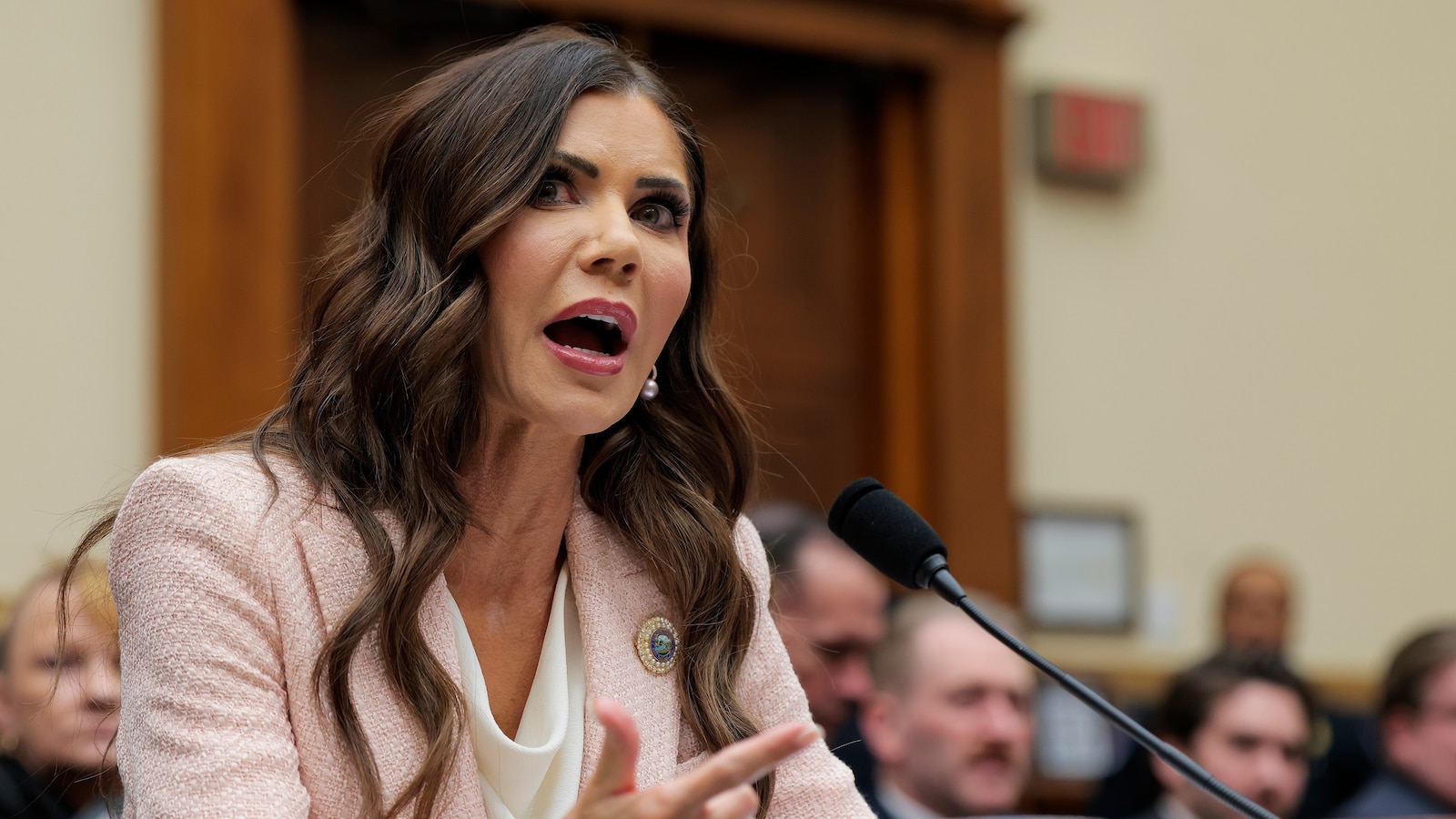
Homeland Security Secretary Kristi Noem is facing serious allegations of providing inaccurate testimony to the Senate Judiciary Committee concerning the involvement of her adviser, Corey Lewandowski, in the approval of Department of Homeland Security (DHS) contracts. Senator Richard Blumenthal (D-Conn.) formally asserted on Wednesday that Secretary Noem's Tuesday statement, where she denied Lewandowski's role in contract approvals, was contradicted by internal agency records. According to a letter dispatched by Senator Blumenthal, evidence suggests that Mr. Lewandowski, who serves as a special government employee, has personally authorized significant financial agreements within the DHS, including at least one multi-million dollar contract. This claim has ignited a congressional inquiry into the veracity of a Cabinet secretary's sworn testimony and the operational scope of a high-profile, yet limited-term, adviser within a critical federal department. The controversy unfolded as Secretary Noem made a follow-up appearance before a House committee on Wednesday, where she was pressed to clarify her earlier remarks.
The backdrop to these accusations involves Secretary Noem's recent engagements with congressional oversight committees, a routine but crucial aspect of federal governance. Her appearance before the Senate Judiciary Committee on Tuesday was part of this process, where lawmakers scrutinize the operations and leadership of federal agencies. The specific line of questioning from Senator Blumenthal focused on Corey Lewandowski, a figure known for his political background, who is currently designated as a special government employee (SGE) within the DHS. This designation typically imposes a cap on the number of days an individual can work for the department, reportedly 130 days in Lewandowski's case, to prevent the appearance of undue influence or circumventing standard hiring procedures. Sources familiar with the department's internal dynamics have characterized Lewandowski's role as effectively that of Noem's de facto chief of staff, suggesting a broader operational involvement than his official title might imply, which further amplifies the significance of his alleged role in contract approvals.
During her testimony before the Senate Judiciary Committee on Tuesday, Secretary Noem was directly questioned by Senator Blumenthal regarding whether Corey Lewandowski held any authority in approving DHS contracts. Her unequivocal response was a denial. However, Senator Blumenthal's subsequent letter, issued on Wednesday night, presented a starkly different account. The senator's communication explicitly stated that internal Department of Homeland Security records reportedly demonstrate Lewandowski's direct involvement in authorizing contracts, specifically mentioning a substantial multi-million dollar agreement. Furthermore, the letter cited current and former DHS personnel who reportedly indicated that Lewandowski's endorsement on a contract effectively signaled the release of funds to contractors. This detailed counter-claim emerged following Noem's appearance before a House committee on Wednesday, where Representative Jared Moskowitz provided her an opportunity to revise her earlier testimony. In response, Secretary Noem reiterated that Lewandowski functions as an adviser to the Department of Homeland Security, without directly retracting or amending her initial statement regarding his contract approval authority.
The allegations leveled against Secretary Noem carry significant implications for accountability and transparency within the federal government. An accusation of false testimony to Congress against a Cabinet secretary is a grave matter, potentially leading to further congressional investigations, ethics reviews, or even legal scrutiny. The discrepancy between Noem's public statement and the alleged internal DHS records, as detailed by Senator Blumenthal, raises questions about the integrity of the department's contracting processes and the oversight of special government employees. The characterization of Lewandowski as a 'de facto chief of staff' by various sources, despite his SGE status and associated work limitations, further complicates the situation. This scenario underscores the critical role of congressional oversight in ensuring that federal officials provide accurate information and that agency operations adhere to established protocols, particularly concerning the allocation of taxpayer funds through contracts. The unfolding situation highlights the delicate balance between political appointments and the strictures of federal service.
The ongoing dispute between Senator Blumenthal and Secretary Noem centers on a fundamental question of truthfulness in congressional testimony and the proper scope of authority for a special government employee. With claims of internal DHS records and employee statements contradicting Secretary Noem's assertion, the issue is poised for further examination. The coming days and weeks will likely see increased pressure on the Department of Homeland Security to address these allegations, potentially through the release of relevant documents or additional testimony. Congressional committees may pursue deeper inquiries into Lewandowski's specific activities and the department's contracting procedures. The resolution of this matter will be crucial for maintaining public trust in government transparency and the integrity of federal officials' interactions with legislative oversight bodies.