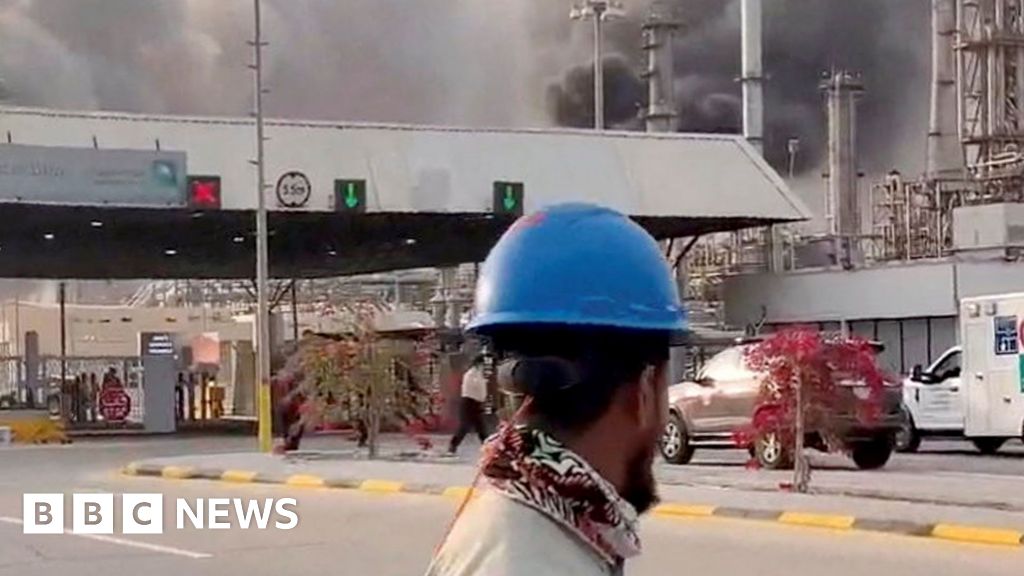
Maritime operations in the strategically vital Strait of Hormuz region have faced significant disruption following reports of at least two vessels being struck by unidentified projectiles. This incident unfolds as Iran continues to engage in retaliatory actions across the Middle East, responding to what it describes as an ongoing offensive by the United States and Israel. The UK Maritime Trade Operations Centre (UKMTO) confirmed that one ship sustained damage while sailing east of this critical trade artery, while another was impacted off the coast of the United Arab Emirates, though it reportedly planned to proceed with its journey. The Strait, a narrow chokepoint, is indispensable for global energy markets, facilitating the transit of approximately one-fifth of the world's oil and gas supplies. The immediate aftermath of these strikes has seen a palpable increase in global oil prices, reflecting widespread concerns over potential supply interruptions and heightened regional instability.
The latest maritime incidents are set against a backdrop of intensifying geopolitical tensions in the Middle East, with Iran issuing explicit warnings to commercial shipping against traversing the Strait of Hormuz. This critical waterway, fundamental to international commerce, has experienced an almost complete halt in international shipping traffic at its entrance, a direct consequence of the perceived risks. According to reports from the ship-tracking platform Kpler, a substantial number of tankers, estimated at around 150, have opted to drop anchor in the open waters of the Gulf, choosing to remain beyond the Strait's confines. Despite this widespread caution, a limited number of vessels, specifically those flagged to Iran and China, were observed navigating through the Strait on the day of the incidents. The broader context involves Iran's ongoing military responses to what it perceives as aggressive actions from the United States and Israel, further exacerbating an already volatile security environment in the region.
While the UKMTO refrained from publicly identifying the specific vessels involved in the recent strikes, further details emerged from other sources. Unnamed maritime security sources, speaking to the news agency Reuters, indicated that a Marshall Islands-flagged oil tanker sustained damage off the coast of Oman. Concurrently, Iranian state television broadcast an unverified claim, asserting that an oil tanker was in the process of sinking after being hit while allegedly attempting to pass through the Strait of Hormuz in an 'illegal' manner. These conflicting and unconfirmed reports underscore the opacity surrounding the incidents. In a significant operational response to the escalating risks, the Danish container shipping giant Maersk announced on Sunday its decision to temporarily suspend all sailings through the Bab el-Mandeb Strait and the Suez Canal. The company stated it would instead reroute its vessels around the Cape of Good Hope, a considerably longer and more costly alternative, highlighting the severe impact of the regional instability on global logistics and supply chains.
The current situation has effectively rendered the Strait of Hormuz impassable for many, a sentiment echoed by industry experts. Homayoun Falakshahi from Kpler, a prominent ship-tracking platform, conveyed to BBC News that the Strait is 'effectively closed' due to the significant threats posed by the ongoing conflict. He elaborated that vessels are taking precautionary measures by avoiding entry, citing the excessively high risks and the dramatic surge in insurance costs associated with navigating the area. Falakshahi further posited that the United States would likely endeavor to safeguard these crucial shipping lanes, an intervention that, if successful, could mitigate a sharp increase in global oil prices. However, he cautioned that a prolonged closure of the Strait would inevitably lead to oil prices climbing 'much, much higher,' indicating severe economic repercussions. The decision by major carriers like Maersk to reroute ships around Africa underscores the gravity of the perceived threat and the immediate economic consequences for international trade.
The recent strikes near the Strait of Hormuz represent a critical escalation in an already tense Middle Eastern landscape, directly impacting global energy security and international shipping. With Iran's explicit warnings and the subsequent halt in commercial traffic, the world faces the immediate prospect of sustained oil price volatility. The unverified claims and attributed reports highlight the complex and often obscure nature of information emanating from the conflict zone. As major shipping lines reroute their operations, the economic ripple effects are already being felt across global supply chains. Observers will now closely monitor the response of international naval forces, particularly the United States, and the duration of this disruption, as these factors will be pivotal in determining the trajectory of global oil markets and the broader stability of maritime trade in the coming weeks.