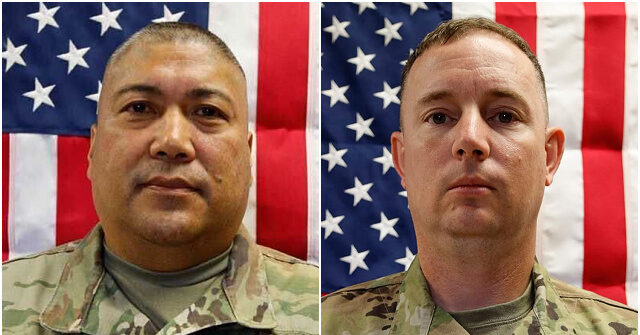
The United States Department of Defense has officially released the final two names of military personnel who tragically lost their lives in connection with recent hostilities involving the Islamic Republic of Iran. These identifications bring the total number of U.S. service members confirmed deceased in the ongoing regional tensions to six. Among the latest individuals named were Chief Warrant Officer 3 Robert Marzan, 54, from Sacramento, California, and Major Jeffrey O’Brien, 45, hailing from Indianola, Iowa. According to reports from the Associated Press, military officials indicated that Chief Warrant Officer Marzan was present at a command center located in Kuwait when it was struck by a drone. He is believed to be the sole fatality directly resulting from that specific incident. The disclosure of these names follows an earlier announcement made on Tuesday, which identified four other fallen soldiers, underscoring the increasing human cost of the complex and volatile situation unfolding across the Middle East.
The identification of Chief Warrant Officer Marzan and Major O’Brien completes the roster of six U.S. military fatalities stemming from the recent escalation of conflict in the Middle East, specifically under the umbrella of what has been designated Operation Epic Fury. Earlier in the week, four other service members were identified: Captain Cody A. Khork, 35, from Winter Haven, Florida; Sergeant 1st Class Noah L. Tietjens, 42, of Bellevue, Nebraska; Sergeant 1st Class Nicole M. Amor, 39, hailing from White Bear Lake, Minnesota; and Sergeant Declan J. Coady, 20, from West Des Moines, Iowa. This series of tragic events unfolded amidst a rapidly deteriorating security landscape. As previously reported by Breitbart News, Secretary of State Marco Rubio issued a stark warning on Monday, advising American citizens in over a dozen Middle Eastern countries to depart the region without delay due to severe safety concerns. This urgent travel advisory was issued in the wake of a significant increase in missile attacks launched by Iran across the Middle East. These Iranian actions, according to reports, were a direct response to a joint operation conducted by the United States and Israel over the preceding weekend, which resulted in the death of Supreme Leader Ayatollah Ali Khamenei. The New York Times further detailed that Iranian forces subsequently targeted at least six distinct U.S. military installations situated throughout the Gulf region, marking a dangerous expansion of direct hostilities.
Following the confirmation of the casualties, political leaders from the home states of the fallen soldiers expressed profound sorrow and offered their condolences to the grieving families. Iowa Governor Kim Reynolds, a Republican, conveyed her deep sadness regarding the deaths of Major Jeffrey O’Brien and Sergeant Declan Coady, both residents of her state. Governor Reynolds stated that their hearts were "broken" by the loss of these "brave Iowa soldiers," emphasizing that they had made "the ultimate sacrifice to secure freedom and peace." Similarly, Florida Governor Ron DeSantis, also a Republican, along with First Lady Casey DeSantis, shared their sorrow upon learning of the death of Army Captain Cody Khork, who hailed from Polk County. Governor DeSantis extended his "deepest condolences" to Captain Khork's family, friends, and fellow soldiers, acknowledging his death occurred "in the line of duty as part of Operation Epic Fury." The ages of the identified service members span a wide range, from the youngest, Sergeant Declan J. Coady at 20, to the most senior, Chief Warrant Officer 3 Robert Marzan at 54, reflecting a diverse group of individuals dedicated to service. Their hometowns, stretching from California and Iowa to Florida, Nebraska, and Minnesota, highlight the national impact of these losses and the widespread reach of military service.
The identification of all six fallen U.S. service members underscores the profound human cost of the escalating geopolitical tensions and military engagements in the Middle East. The sequence of events, beginning with the reported drone strike in Kuwait that claimed Chief Warrant Officer 3 Robert Marzan, followed by broader Iranian missile attacks on multiple U.S. bases across the Gulf region, illustrates a dangerous cycle of retaliation. This pattern of action and counter-action, sparked by the U.S. and Israeli operation resulting in the death of Supreme Leader Ayatollah Ali Khamenei, suggests a significant destabilization of the regional security environment. The urgent advisory for American citizens to evacuate over a dozen Middle Eastern countries, as issued by Secretary of State Marco Rubio, further highlights the perceived and tangible risks to personnel beyond active military zones. The deaths of these six individuals, serving under Operation Epic Fury, serve as a stark reminder of the volatile nature of international relations and the immediate dangers faced by military personnel deployed in such contested areas. The ongoing situation demands careful monitoring, as the potential for further escalation remains a critical concern for regional stability and global security. The breadth of the casualties, both in terms of roles and geographic origins, reflects the wide-reaching impact of these conflicts on American communities.
In summary, the U.S. Department of Defense has now confirmed the identities of all six soldiers who perished amid the recent surge of hostilities in the Middle East, specifically within the framework of Operation Epic Fury. The final two names released, Chief Warrant Officer 3 Robert Marzan and Major Jeffrey O’Brien, join Captain Cody A. Khork, Sergeant 1st Class Noah L. Tietjens, Sergeant 1st Class Nicole M. Amor, and Sergeant Declan J. Coady in the list of those lost. These casualties occurred during a period marked by a drone strike in Kuwait and subsequent widespread Iranian missile attacks on U.S. facilities, which themselves were a response to a U.S.-Israeli operation targeting Iran's Supreme Leader. The expressions of grief from state governors and the urgent travel warnings issued for American citizens underscore the gravity and widespread implications of this escalating conflict. As the situation remains fluid, the international community will undoubtedly be watching closely for any further developments, particularly regarding de-escalation efforts or potential for continued military engagement in the region.