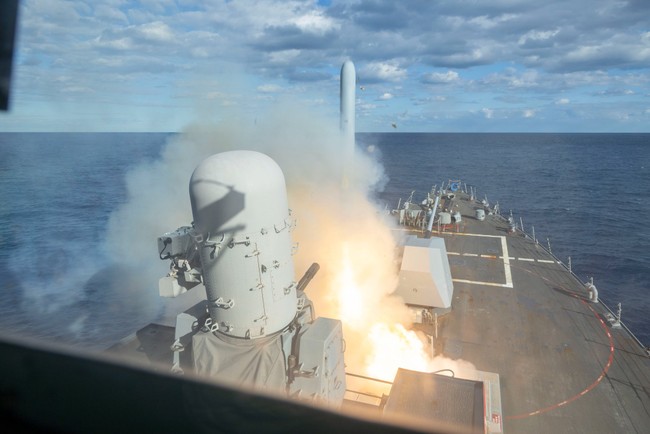
Operation Epic Fury has commanded significant media attention over the past several days and is expected to remain a prominent topic for the foreseeable future. Amidst widespread debate, particularly from various Democrat congressional figures who have expressed disapproval of the military action, a contrasting viewpoint emerged from Republican circles. On Monday morning, NewsTalkSTL's Mike Ferguson in the Morning Show hosted a discussion with former U.S. Senator Jim Talent, a distinguished national security and military affairs expert who previously represented Missouri, alongside a sitting Republican representative. Their insights offered a detailed perspective on the operation's objectives, its strategic timing, and the broader geopolitical implications. According to these Republican voices, the initial phase of Operation Epic Fury primarily targeted residual elements of Iran's integrated air defense infrastructure, aiming to create vulnerabilities for subsequent precision strikes, with the ultimate strategic goal of dismantling Iran's ballistic missile capabilities.
The context surrounding Operation Epic Fury is crucial for understanding its perceived necessity and strategic design. Many Democratic congressional leaders have voiced strong opposition, often linking their criticism to President Trump's role as commander-in-chief. However, former Senator Talent highlighted that the timing of the operation was deliberately chosen, capitalizing on a period when Iran was already considered to be in a weakened state. He drew parallels between the current administration's actions and past presidential military engagements, specifically referencing the Obama administration's operation in Libya, which proceeded without prior congressional authorization. This comparison underscores the established precedent for a president's authority to conduct limited military strikes without immediate legislative approval, suggesting that congressional involvement typically becomes a requirement only when supplemental funding for prolonged operations is necessary. This historical context frames the current debate over war powers, emphasizing the executive branch's inherent capacity for swift military action in specific circumstances.
Delving deeper into the strategic rationale, former Senator Talent outlined the core pillars of Iranian power that Operation Epic Fury seeks to address. He identified these as Iran's nuclear program, its extensive ballistic missile arsenal, and its network of proxy forces, which include groups like Hezbollah, Hamas, Islamic Jihad, and the Houthis. While acknowledging that Iran's nuclear program had been significantly degraded in the preceding year, with reports indicating China's assistance in attempts to rebuild these capabilities, the current operation's primary focus, as articulated by Talent, is on neutralizing the ballistic missile threat. Initial military actions were specifically designed to dismantle remnants of Iran's integrated air defense system, a critical step intended to leave the nation exposed and susceptible to more precise follow-on strikes. This methodical approach, according to the former senator, is central to achieving the overarching strategic objective of eliminating Iran's capacity to launch ballistic missiles, thereby reducing a significant regional threat.
The regional dynamics surrounding Operation Epic Fury were also a key point of discussion, with Senator Talent emphasizing Iran's strategic miscalculations. He suggested that Iran's decision to launch strikes against Gulf States was a significant error, potentially alienating regional players and paving the way for Arab nations to either join or actively support the ongoing operations. Furthermore, Talent underscored Israel's preeminent position as the dominant power in the region, a factor that significantly influences the geopolitical landscape. Regarding the legal framework, the former senator reiterated that presidential authority for conducting limited military engagements is well-established, drawing a clear distinction between such actions and broader declarations of war that would necessitate full congressional approval. He projected that the current operation would likely be short-lived, estimating its duration to be a maximum of 'a couple of weeks,' indicating a targeted and time-bound military intervention rather than an extended conflict.
In summary, the Republican perspective on Operation Epic Fury, as articulated by former Senator Jim Talent and a current representative, paints a picture of a strategically planned military intervention with clear objectives. The operation is designed to systematically dismantle Iran's ballistic missile capabilities by first targeting its air defenses, capitalizing on a perceived moment of Iranian weakness. This approach is framed within established presidential war powers, with congressional involvement anticipated primarily for funding rather than initial authorization. The analysis also highlights potential shifts in regional alliances, with Iran's actions possibly prompting greater cooperation from Arab nations. As Operation Epic Fury continues to unfold, observers will be closely watching its duration, the extent of its impact on Iran's military infrastructure, and any subsequent congressional discussions regarding its funding and long-term implications for regional stability.