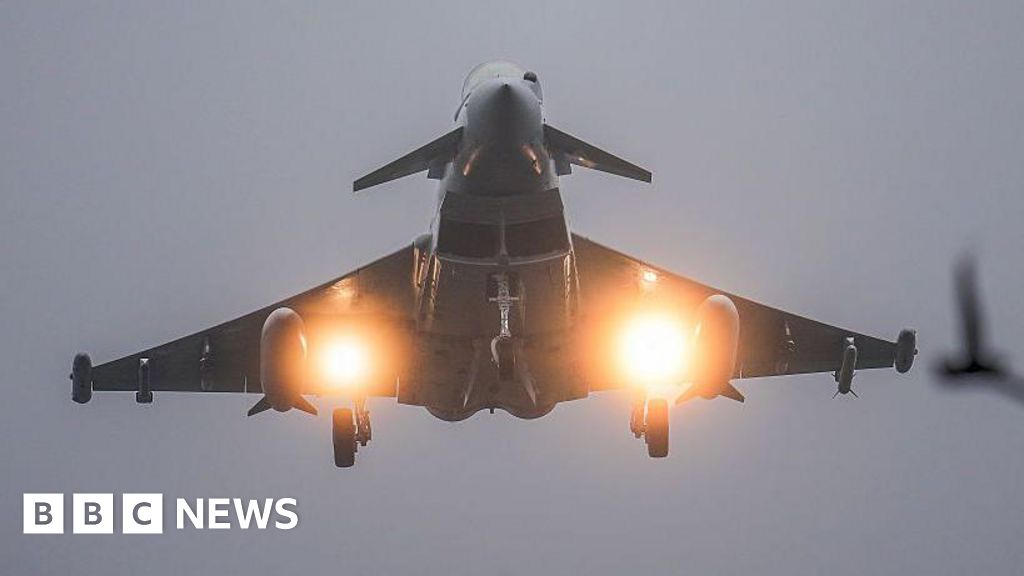
British Prime Minister Sir Keir Starmer has publicly affirmed his government's decision to abstain from the initial US-Israel military actions against Iran, which occurred on Saturday. Speaking at a Downing Street press conference, the Prime Minister underscored the United Kingdom's commitment to its core values and principles, even amidst significant international pressure, as reported by officials. He emphasized that diplomatic engagement and a negotiated resolution represent the most effective path forward in addressing the ongoing tensions. This long-held UK stance, according to the Prime Minister, centers on achieving a settlement that sees Iran relinquish its nuclear ambitions. Concurrently, Sir Keir announced a strategic deployment of four additional Typhoon fighter jets to Qatar, a move intended to bolster regional security. He also cautioned that the broader conflict in the Middle East could persist for an extended period, signaling a complex and evolving geopolitical landscape.
The Prime Minister's resolute position comes against a backdrop of heightened regional instability following the recent strikes. The UK's historical approach to Middle Eastern conflicts has often sought to balance strong alliances with a commitment to diplomatic solutions, particularly concerning Iran's nuclear program. For years, the international community, including the UK, has advocated for a peaceful resolution to concerns surrounding Iran's nuclear capabilities, with a focus on preventing proliferation through comprehensive agreements. The decision to not participate in the initial offensive operations reflects a strategic choice to prioritize de-escalation and dialogue, aligning with the UK's established foreign policy framework that champions a negotiated settlement. This stance also highlights the intricate dynamics of international alliances, where sovereign nations navigate shared security interests alongside independent foreign policy objectives, especially in volatile regions.
The UK's independent course of action drew sharp criticism from US President Donald Trump, who reportedly expressed his disappointment regarding the initial refusal to permit the use of British military facilities for the strikes. President Trump, according to various reports, made pointed remarks about the Prime Minister's leadership, suggesting a departure from historical figures known for decisive action, and characterized the UK's initial decision as 'shocking.' He further indicated that the traditionally robust relationship between the United States and the United Kingdom was not at its previous strength. However, British officials later confirmed that the UK had, by Sunday, acceded to a US request to utilize British military bases, but specifically for defensive operations targeting Iranian missile sites. Sir Keir Starmer, addressing these concerns on Thursday, firmly asserted that the 'special relationship' between the two nations remained intact and fully operational, citing continuous, round-the-clock intelligence sharing as evidence of their enduring partnership.
The UK's nuanced response to the escalating situation in the Middle East signals a complex balancing act between maintaining crucial alliances and asserting independent foreign policy. The Prime Minister's emphasis on diplomatic resolution, even while deploying additional military assets, suggests a strategy aimed at both deterring further aggression and creating space for de-escalation. Analysts suggest this approach could redefine the UK's role on the global stage, demonstrating a willingness to diverge from key allies when national interests or strategic principles dictate. The deployment of Typhoon jets to Qatar, while not directly offensive, serves as a clear signal of the UK's commitment to regional security and its capacity to project power, potentially bolstering its leverage in future diplomatic engagements. This dual strategy underscores the challenges of navigating a volatile geopolitical landscape where military readiness and diplomatic overtures must often coexist.
In summary, Prime Minister Sir Keir Starmer has steadfastly defended the UK's decision to prioritize diplomatic avenues over direct military involvement in the initial strikes against Iran, while simultaneously reinforcing its military presence in the region with additional fighter jets. This approach underscores a commitment to a negotiated settlement for Iran's nuclear program and broader de-escalation efforts. Despite reported friction with the US President over the initial stance, the UK maintains that its 'special relationship' with the United States remains strong, evidenced by ongoing intelligence cooperation and a subsequent agreement for defensive use of UK bases. The coming weeks will likely reveal the effectiveness of this dual strategy of diplomacy and deterrence, as international efforts continue to navigate the complex and enduring conflict in the Middle East.