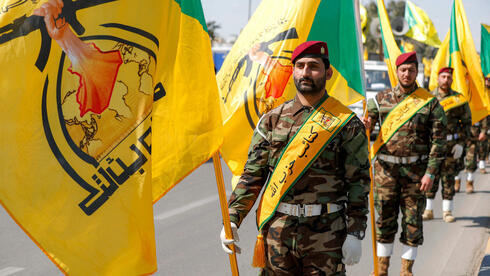
Pro-Iranian militia groups operating within Iraq have reportedly recommenced a significant campaign of attacks, meticulously claiming responsibility for these actions, according to recent reports. This resurgence in activity by various factions, coalescing under the banner of the 'Islamic Resistance in Iraq,' marks a notable escalation in regional tensions. A key indicator of this renewed offensive is the reactivation of a Telegram channel, previously dormant since November 2024, which has now resumed posting detailed claims for operations attributed to these groups. This development signals a strategic shift, with these militias, known for targeting both Israeli sites and American interests across the Middle East, once again asserting their presence on the battlefield. The timing of this renewed aggression appears to coincide with broader regional conflicts, suggesting a coordinated effort to exert influence and pressure within the volatile geopolitical landscape.
The utilization of proxy forces has long been a cornerstone of Iran's foreign policy since the inception of its ayatollah regime, a strategy designed to project power and influence across the Middle East without direct state-on-state confrontation. This network includes prominent groups such as Hezbollah in Lebanon and the Houthi movement in Yemen, with Iraqi pro-Iranian militias forming another critical component of this regional architecture. The 'Islamic Resistance in Iraq' itself is understood to be a relatively recent construct, reportedly established in October 2023. However, sources indicate it functions as an umbrella organization, bringing together several long-standing, Iran-backed militias that have been active for years. This framework gained significant prominence during the recent conflict in Gaza, where it was highly active, and has historically targeted a range of sites within Israel and various American assets throughout the region, underscoring its strategic importance to Tehran's regional objectives.
In the immediate aftermath of what sources describe as 'the start of the war' – an apparent reference to the ongoing regional hostilities – the 'Islamic Resistance in Iraq' has issued a rapid succession of official claims of responsibility. Reports indicate that the group has published four such claims, with one surfacing each day, highlighting a deliberate and consistent communication strategy aimed at asserting their involvement. While the precise definition of this umbrella organization is not considered absolute, it is understood to encompass several well-known and influential Iran-aligned militias. These reportedly include Kataib Sayyid al-Shuhada, Kataib Hezbollah in Iraq, Harakat al-Nujaba, Ansar Allah al-Awfiya, and the Imam Ali Brigades. The collective strength and operational capacity of these constituent groups lend significant weight to the 'Islamic Resistance in Iraq's' renewed offensive, posing a substantial challenge to regional stability and security dynamics.
The resurgence of pro-Iranian militias in Iraq, particularly under the unified 'Islamic Resistance in Iraq' banner, carries significant implications for regional stability and the broader dynamics of proxy warfare. Expert perspectives suggest that this renewed activity could be interpreted as a calibrated response to ongoing geopolitical tensions, potentially aiming to divert attention or apply pressure on adversaries in different theaters. The meticulous claiming of responsibility, often through previously dormant communication channels, indicates a strategic intent to project strength and send clear messages to regional and international actors. This pattern of behavior aligns with Iran's established doctrine of leveraging non-state actors to advance its interests, creating a complex web of deterrence and influence. Analysts will be closely watching whether this escalation remains localized or if it signals a broader coordination effort with other Iranian proxies, such as the Houthis in Yemen, potentially expanding the scope of regional conflict.
The re-emergence of the 'Islamic Resistance in Iraq' as a potent force on the regional stage underscores the persistent challenges to security in the Middle East. With its constituent militias resuming attacks and actively claiming responsibility, the potential for further escalation and destabilization remains high. Observers will be monitoring the nature and targets of future attacks, as well as any potential responses from affected parties, particularly the United States and Israel. The continued reliance on proxy groups by Iran ensures that the region will remain a hotbed of indirect conflict, with the actions of groups like the 'Islamic Resistance in Iraq' serving as critical indicators of evolving geopolitical strategies and the delicate balance of power. The coming weeks will likely reveal the full extent of this renewed offensive and its broader ramifications for regional peace and security.